Tiếng Việt
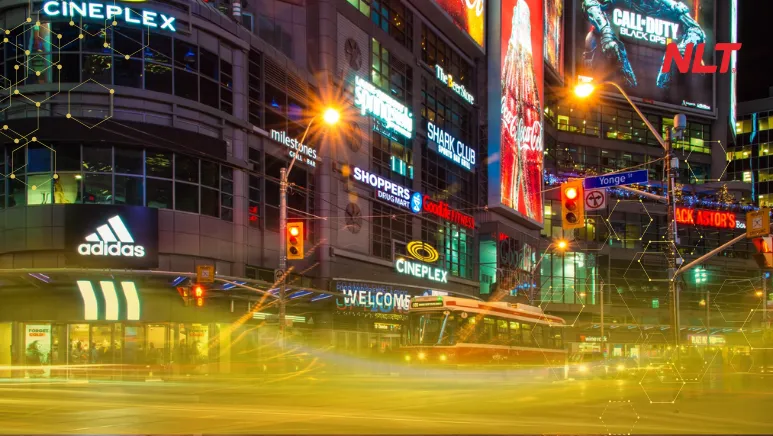
Public square lighting is a symbolic component of public infrastructure projects and requires high standards in aesthetics, safety, and operational efficiency. Because of its importance, investors often apply strict evaluation criteria during the tender process, covering design approach, technical standards, equipment configuration, control technology, as well as long term financial performance and operating costs.
With multiple criteria involved, which factors are decisive in selecting a winning proposal? What key points must contractors clearly address to avoid early elimination and strengthen their competitive position? The following content outlines the most important criteria that help contractors increase their chances of being prioritized by investors.
The investor’s perspective on public square lighting projects
The role of public square lighting in public infrastructure projects
Shaping the city’s nighttime identity: Lighting defines the square’s night image, closely connected to landmark architecture and community cultural activities.
Ensuring safety and usability of public space: Compliant illuminance, glare control, and uniformity enable safe movement, better visibility, and support security operations.
An ideal venue for events and community activities: A properly designed public square lighting system enhances performance quality, user experience, and operational stability during large scale events.
Investment objectives for public square lighting
- Maintaining nighttime activity: The lighting system provides stable brightness and balanced distribution, allowing people to move and gather without dark areas or excessive glare.
- Enhancing aesthetics and creating a unique identity: Lighting not only illuminates but also highlights monuments, fountains, greenery, and signature architecture, contributing to the square’s nighttime character.
- Improving community experience: Proper lighting layout optimizes the square’s functionality for events, cultural and artistic activities, and daily community use.
- Improving operational efficiency, security, and urban management: Public square lighting supports security and surveillance and, when combined with smart control, helps optimize energy use and reduce long term operating costs.
How investors evaluate tender packages
When assessing a public square lighting tender, investors typically evaluate proposals based on clear groups of criteria:
- Technical: Compliance with urban lighting standards, meeting requirements for illuminance, glare, uniformity, color rendering index, and appropriate color temperature, glare control, high IP and IK protection ratings, and clear, complete lighting simulations.
- Aesthetics: Lighting style aligned with architectural character, well designed focal points, clear visual simulations, and consistency with surrounding landscape and architecture.
- Financial: Total investment aligned with budget, reasonable operating and maintenance costs, long equipment lifespan, good return on investment, and clear night time economic benefits.
- Safety and operation: Standard compliant lightning and surge protection, safe electrical cabinets and cabling, designs that are easy to control and maintain, and stable system operation with fault monitoring capability.
- Contractor capability: Experience in similar projects, proven design and construction capacity, complete equipment certifications, clear schedule commitments, and well defined after sales support.
Investor concerns when approving public square lighting projects
When approving a public square lighting tender, investors typically consider several risk factors. Common concerns include:
- Risk of cost overruns and budget waste: Non optimized designs or inappropriate equipment selection can cause actual costs to exceed the initial budget.
- Risk of negative public or media feedback: Excessive brightness, incorrect color tones, or poorly balanced layouts can trigger public dissatisfaction and harm the project’s image.
- Risk of difficult operation and maintenance: Non integrated systems and hard to replace equipment increase maintenance costs and disrupt activities, especially in squares frequently used for events.
- Legal, audit, and inspection risks: Technical documentation that does not meet standards or equipment lacking clear certification can create problems during acceptance, settlement, inspection, or audit processes.
Technical criteria for approving public square lighting tender packages
Public square lighting design standards under Vietnamese regulations
Public square lighting design must comply with Vietnamese standards for public lighting, including but not limited to:
- QCVN 07-7:2016/BXD – Urban lighting regulation: Specifies requirements for public lighting systems in squares, parks, and streets, including illuminance levels, pole layout, electrical systems, safety, and operational requirements.
- TCXDVN 333:2005 – Outdoor lighting design standard: Applies to luminaires and outdoor lighting systems in public works and urban infrastructure, regulating lighting for ground surfaces, pedestrian paths, squares, and open spaces.
- TCVN 13608:2023 – National standard for outdoor artificial lighting: Defines technical requirements for the design, construction, and renovation of public lighting systems, prioritizing LED light sources and ensuring efficiency, durability, and safety.
Compliance with these standards not only ensures the legal validity of the lighting design proposal but also serves as a basis to demonstrate the safety, sustainability, and professionalism of the public square lighting system.
Illuminance, glare, and uniformity
These are the three core parameters that determine the quality of a public square lighting solution. Specifically:
- Illuminance (Lux): Defines brightness levels for each functional area such as activity spaces, walkways, monuments, or event zones. Inappropriate illuminance can create dark spots or cause energy waste and visual discomfort for users.
- Glare: Directly affects visual comfort and safety. The lighting system must control glare within TCVN limits to avoid dazzling effects and ensure safe movement within the square.
- Uniformity: Reflects how evenly light is distributed across the entire area. Poor uniformity creates noticeable bright and dark patches, reducing aesthetics and visibility. This parameter is typically demonstrated through lighting simulation software in tender documents to prove the feasibility of the proposed solution.
Color rendering index and color temperature
Color rendering index (CRI) and correlated color temperature (CCT) have a significant impact on how users perceive the public square environment. A high CRI enables accurate color reproduction of monuments, greenery, water features, and architectural details, enhancing depth and aesthetic value of the landscape.
Meanwhile, color temperature determines the overall character of the lighting. Warm light creates a friendly and intimate atmosphere suitable for cultural squares, while neutral white or cooler tones convey a modern feeling, appropriate for large scale public squares.
Consistency in color temperature across the entire area is essential to avoid color mismatch and preserve the visual identity of the space.
Glare control and limitation of light trespass
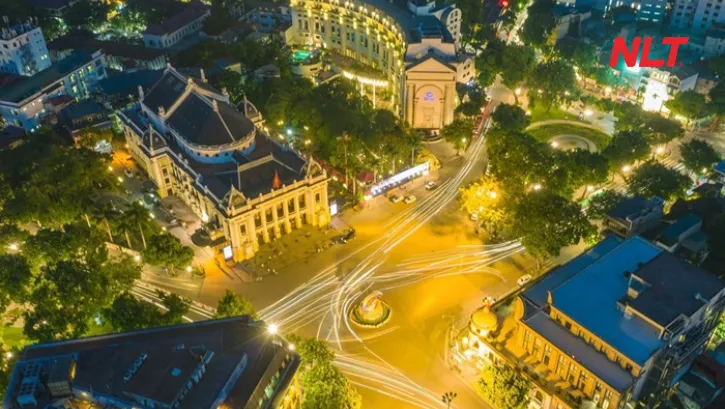
A compliant public square lighting system must effectively control glare and light trespass, allowing people to move comfortably without visual discomfort along walkways, photo areas, security camera zones, or event spaces.
Light should be confined within the intended usage area and must not spill into surrounding residential buildings or neighboring structures. Solutions such as adjusting beam angles, using anti glare accessories, and applying dedicated optical lenses are implemented to optimize lighting quality.
IP and IK protection ratings and outdoor durability
Public square lighting equipment operates continuously in outdoor environments, making high IP and IK ratings essential for stable operation, reduced risks, and optimized maintenance costs:
- IP65 to IP67: Dust and water resistance suitable for pole lights, in ground luminaires, spotlights, and architectural floodlights.
- IK08 to IK10: Mechanical impact resistance, critical for public spaces with high pedestrian traffic to prevent damage from physical impact.
- Weather resistant materials: ADC12 die cast aluminum, tempered glass, and standard compliant powder coating help resist corrosion and extend system lifespan in outdoor conditions.
Selection of luminaires, luminous flux, and public square pole layout
- Selecting appropriate luminaire types for each zone: High mast lighting for large open areas, landscape poles for walkways, in ground lights, spotlights, accent lights for architectural highlights, and linear lighting to create visual depth and spatial definition.
- Calculating luminous flux, wattage, and number of fixtures: Lighting proposals must be simulated to verify illuminance, uniformity, and glare levels. Inaccurate calculations can result in excessive brightness and energy waste or insufficient lighting that fails to meet standards.
- Pole placement aligned with architecture and internal circulation: Poles should be positioned in harmony with architectural layout, greenery, and focal points, while maintaining safe setbacks from walkways and internal traffic routes. Pole height must be calculated according to spatial scale to ensure even light distribution, minimize glare, and maintain safety.
Power supply system, cabling, grounding, and technical safety
- Safe cable routing design: Cables may be installed underground, within conduits, or cable trays depending on site conditions, but must ensure moisture resistance, waterproofing, and avoid conflicts with other infrastructure systems.
- Grounding and electrical safety measures: The system must comply with grounding standards to minimize leakage and ensure safety under harsh weather conditions, especially in crowded public spaces.
- Circuit separation by zone for easier control and maintenance: Dividing lighting circuits by area allows flexible operation based on scenarios, simplifies maintenance, and reduces impact in case of system faults.
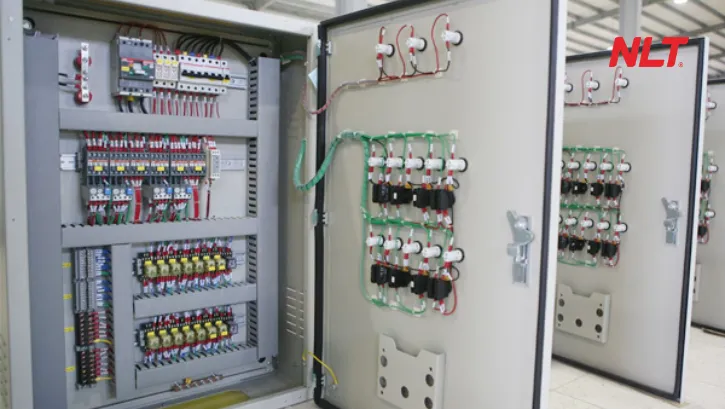
- Electrical cabinets meeting protection standards and proper placement: Cabinets must be dust-proof and waterproof, accessible yet secure. Protective devices such as circuit breakers, MCCBs, and surge protection must be fully installed to ensure stable and safe operation.
Aesthetic criteria and lighting design concept for public squares
Lighting style and urban architecture
The selection of color temperature, lighting direction, and lighting rhythm must be carefully calculated to enhance materials, architectural lines, and spatial proportions. An effective lighting concept is one that establishes a consistent “lighting language” aligned with the architecture, creating sufficient emphasis while maintaining overall balance within the urban space.
Accent lighting for monuments and landscape elements
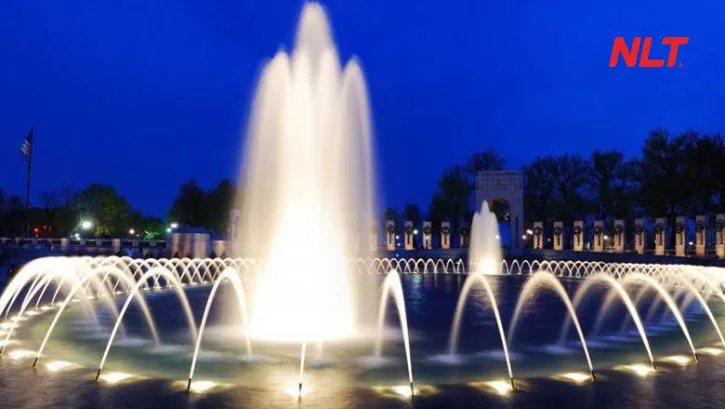
Elements such as monuments, fountains, reliefs, green areas, and public artworks serve as the central identity of a public square. Accent lighting must be designed with subtlety to clearly define forms, create visual depth, and convey cultural and historical values, while effectively controlling shadows and glare to ensure a complete and comfortable viewing experience.
Event and festival spaces within public squares
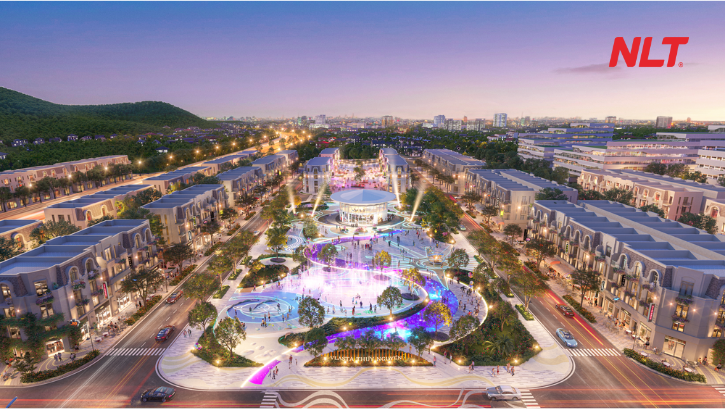
Public squares frequently host community activities, therefore the lighting system must support multiple usage scenarios, including daily activities, festivals, performances, parades, and special events. Lighting must be flexible enough to adapt to different event requirements.
For squares that incorporate performance features such as fountains or outdoor stages, integrating public square musical fountain systems can significantly enhance attraction and user experience, transforming the square into a nighttime focal point.
Consistency with surrounding landscape lighting
Public square lighting should be designed in harmony with adjacent parks, pedestrian streets, surrounding building façades, and the broader landscape lighting system. Consistency in color temperature, light intensity, and visual style ensures a cohesive nighttime environment, avoids visual conflict, and meets the requirements of large scale urban projects.
>> See more: The role of park and landscape lighting in modern urban developments
Financial criteria and investment efficiency in public square lighting
Total investment value of the public square lighting tender package compared to project budget
When evaluating public square lighting tenders, the first consideration is the alignment between total investment value and the allocated budget for all related components:
- Public square LED luminaires and accessories.
- Lighting poles, foundations, and mounting structures.
- Control cabinets, cabling, and power supply systems.
- Labor and actual installation costs.
- Associated infrastructure components.
A competitive proposal must clearly explain its cost basis, demonstrate that the selected equipment is appropriate and sufficient, minimize variations, and prevent cost overruns during implementation. Investors typically prioritize proposals that offer:
- Rational configurations without unnecessary equipment.
- Clear BOQ tables with transparent quantities.
- Construction solutions that help reduce infrastructure costs.
Comparison of operating costs between LED lighting solutions
Operating cost is a key differentiator among public square lighting solutions due to long operating hours and large illuminated areas. Investors typically require:
- Comparison of luminous efficacy among luminaire options.
- Actual power consumption and power factor.
- Smart control capabilities with time based dimming.
- Lighting distribution efficiency demonstrated through simulation software.
Contractors are expected to provide:
- Annual energy consumption comparisons for each option.
- Optical simulations proving compliance with illuminance and uniformity standards without increasing power demand.
- Flexible control solutions that contribute to energy cost savings.

Equipment lifespan, maintenance costs, and replacement over the project lifecycle
As public squares experience high foot traffic, continuous operation, and limited technical intervention opportunities, lighting systems must be durable and require minimal maintenance. Common evaluation criteria include:
- LED lifetime based on LM80 and TM21 standards.
- Driver quality and resistance to moisture and surge voltage.
- Appropriate IP and IK protection ratings for outdoor environments.
- Corrosion resistant and weather resistant materials.
Contractors must demonstrate:
- Lumen depreciation curves over time.
- Estimated maintenance frequency and component replacement costs.
- Technologies ensuring long term reliability in public environments.
Payback analysis and nighttime economic value generated by public square lighting
Beyond basic illumination, public squares serve as venues for events, festivals, and community activities that attract visitors and enhance urban vitality, contributing to the nighttime economy. A compliant lighting system can increase attractiveness, usability, and urban identity through the following aspects:
- Return on investment models based on energy savings and reduced maintenance costs.
- Potential for nighttime space activation enabled by high quality lighting.
- Artistic lighting effects that enhance recognition and identity of the public square.
Operational safety and maintenance criteria for public square lighting systems
Electrical and mechanical safety in public squares
The lighting system must ensure absolute operational safety in public spaces:
- Electrical insulation, grounding, and leakage protection in compliance with TCVN/IEC standards for all equipment.
- Appropriate IP and IK protection ratings based on installation locations, especially in areas accessible to children or with high community activity.
- Structural calculations ensuring load bearing capacity and resistance to tilting or collapse of lighting poles, arms, and mounting structures.
- Mechanical testing certifications for each piece of equipment included in the CO/CQ documentation.
Required documentation includes:
- Detailed drawings of foundation–pole–arm connections.
- Wind load and vibration calculations specific to the public square environment.
- Fixation solutions to prevent tipping, collision, or damage during large scale public events.
Electrical cabinet and control system design
Electrical cabinets are considered the “heart” of a public square lighting system. Therefore, investors typically require contractors to clearly demonstrate protection, power distribution, and control capabilities:
- Cabinet installation locations that avoid flooding, direct exposure to rain and sunlight, and mechanical impact.
- Full protection devices including circuit breakers, MCCB, ELCB/leakage protection, short circuit and overload protection.
- Well organized internal cabinet layout with neat wiring, clear phase busbars, circuit numbering, and connection diagrams.
- High IP protection ratings for outdoor electrical cabinets.
Required supporting evidence includes:
- Electrical cabinet layout drawings, schematic diagrams, and equipment lists.
- Photos of previously installed cabinets or standard cabinet catalogues.
- Water resistance, dust protection, and anti corrosion solutions for outdoor cabinet installation.
Lightning protection and surge protection capability
Public squares are open environments with high exposure to lightning and voltage fluctuations. Investors will carefully assess the contractor’s power protection design through the following aspects:
- Installation of surge protection devices (SPD) on power supply lines for each lighting circuit.
- Safe grounding systems achieving grounding resistance values in compliance with standards.
- Overvoltage and overcurrent protection for each lighting group and driver.
- Clear explanation of LED driver surge withstand capability and corresponding test certifications.
Documentation requirements include:
- Lightning protection and power protection schematics within the electrical cabinet.
- Technical documents for SPD, MCCB, ELCB and related protection devices.
- Periodic grounding inspection and testing procedures during operation.
Maintenance and luminaire replacement plans
A professional tender submission must not only present a design solution but also clearly demonstrate maintenance capability. Investors typically require the following:
- Periodic maintenance plans including frequency, inspection items, manpower, and maintenance equipment.
- Lamp replacement procedures detailing execution time and safety measures during access.
- Solutions to minimize area closure and avoid disruption to community activities.
- Lists of easily replaceable components, supply lead times, and warranty policies.
Required supporting documents include:
- Nighttime or off peak maintenance execution methods.
- Detailed maintenance procedures with clear checklists.
- Documentation proving the service life of luminaires, drivers, and materials.
Smart technology criteria in public square lighting
Scenario based and time based lighting control
In public square lighting, scenario based control enables system flexibility for weekdays, weekends, peak and off peak hours, and special events. Smooth transitions help optimize energy consumption, reduce waste, and ensure lighting suitability for different usage purposes, including:
- Description of scheduling and control capabilities for various lighting scenarios.
- Automatic dimming mechanisms based on time schedules or environmental sensors.
- Mode switching functions for events, festivals, and special occasions.
- System stability during frequent scenario changes.
Integration with smart city platforms
Modern public square lighting systems must be compatible with smart city management platforms, enabling centralized monitoring of operating status, on/off schedules, and energy consumption. Centralized connectivity and management help optimize operations, reduce manpower, enhance transparency, and provide a foundation for future expansion, demonstrated through the following aspects:
- IoT compatibility, communication protocols, and integration capability with urban control centers.
- Remote management dashboards or software with real time monitoring features.
- System scalability and multi device connectivity.
- Data security, access control, and user permission management.

Remote monitoring and fault alert systems
In high traffic public spaces, lighting systems must be capable of detecting faults and issuing timely alerts to prevent service disruption. Remote monitoring enables tracking of equipment status, operating hours, and energy consumption, reflected through the following elements:
- Lists of automatic alerts such as power loss, overvoltage, lamp failure, and driver malfunction.
- Alert reception and handling workflows with historical fault logging capability.
- Collected operational data including operating hours, energy consumption, and lumen depreciation trends.
- Reporting synchronization and export functions for management purposes.
Legal documentation and contractor capability criteria for public square lighting projects
Compliance with public lighting standards
In public square lighting tender documents, compliance with standards is a mandatory requirement. Investors need to see that the proposed solution fully meets regulations on urban lighting, electrical safety, and outdoor installation in order to ensure legal validity during appraisal and reduce risks in auditing and construction, including:
- A list of applicable TCVN, IEC, CIE standards or local regulations.
- A compliance matrix matching standards with each design parameter (illuminance, glare, CRI, UGR, etc.).
- Evidence of compliance with electrical safety, grounding, outdoor installation, and mechanical protection requirements.
- Lighting simulation documents or technical calculations demonstrating compliance with required standard values.
Experience in similar public square lighting projects
Experience in implementing comparable projects is a key criterion for assessing contractor capability. Public square lighting projects require simultaneous handling of technical, aesthetic, underground electrical, and public safety aspects. This capability is demonstrated through:
- A list of completed projects, including images and scale information.
- The contractor’s role in each project (design, equipment supply, construction, operation, etc.).
- Technical challenges addressed and practical solutions applied.
- Evaluation letters, acceptance records, or completion confirmations from project owners.
Certification and quality of lighting equipment
All equipment used must have clear origin and verified quality. Certifications such as CO, CQ, IP/IK ratings, photometric testing, and LM80/TM21 lifetime reports form the basis for evaluating durability, safety, and long term operational performance, including:
- CO and CQ certificates for each type of luminaire, pole, control cabinet, and accessory.
- IP and IK test results, photometric test reports, and LM80/TM21 lifetime data.
- Manufacturing certifications such as ISO 9001, ISO 14001, and related standards.
- Technical datasheets with detailed specifications and illustrative images.
Construction schedule, warranty, and after sales service
Public square lighting projects are often implemented in complex environments involving landscaping, underground electrical systems, and public spaces. Therefore, construction schedule control, safety measures, and warranty and after sales plans are critical criteria for investors when evaluating contractor reliability. Tender documents should clearly present:
- Phase based schedules covering preparation, construction, and acceptance.
- Safe construction measures in high traffic public areas.
- Warranty, maintenance, and post handover operational support plans.
- Commitments on schedule, responsible personnel, and construction equipment.
Tender evaluation and approval process for public square lighting packages
Preparation steps for public square lighting tender documents
The preparation stage of tender documents determines the quality of the entire public square lighting bidding process. Investors must clearly define technical criteria, scope of work, lighting standards, and evaluation methods to ensure that all bidders prepare proposals based on the same framework:
- Definition of detailed technical requirements: lighting levels, CRI, glare limits, luminaire efficiency, optical requirements, and applicable TCVN/CIE standards.
- Clear definition of scope of work: lighting pole layout, underground electrical systems and control cabinets, architectural lighting elements, and lighting simulation requirements.
- Equipment lists and certification requirements: CO, CQ, IP/IK, photometric and lifetime testing, and material standards.
- Description of evaluation methodology: technical, aesthetic, and financial weighting; pass or fail criteria; minimum technical requirements.
- Contract conditions and schedule: implementation milestones, testing and acceptance requirements, and warranty terms.

Technical, aesthetic, and financial scoring methods in public square lighting tenders
Evaluation committees do not only assess whether proposals comply with standards, but also whether contractors truly understand the public square lighting challenge. Therefore, scoring is typically based on three key groups:
- Technical: luminaire efficiency, material durability, lumen depreciation, glare control, compliant lighting simulations demonstrating uniformity, and adherence to TCVN standards.
- Aesthetic: lighting composition, overall coherence, ability to highlight architectural focal points, and suitability for the urban nighttime environment.
- Financial: bid price, projected operation and maintenance costs, equipment lifetime, and life cycle cost analysis.
Common mistakes leading to disqualification of public square lighting tenders
Even with strong technical solutions, many proposals are eliminated early due to basic mistakes:
- Parameters not compliant with TCVN or lack of evidence of applied standards.
- Absence of lighting simulations, or simulations that do not match actual site conditions.
- Missing equipment certifications such as CO, CQ, or failure to provide IP/IK and LM/TM test reports.
- Incorrect quantities or missing items, including mismatched equipment lists, omitted accessories, or undeclared control cabinets and cabling.
- Inadequate construction methodology, lacking safety measures or clear acceptance procedures.
Investors typically consider these issues as signs of insufficient preparation, leading to direct elimination at the technical evaluation stage.
Suggestions for contractors when preparing public square lighting tender documents
How to present a clear technical proposal for the project owner
When preparing a public square lighting submission, the technical proposal should follow a check, cross reference, and evaluation logic, rather than listing isolated parameters. Contractors should clearly identify the applicable urban public lighting standards for the project, then map each functional zone of the square to the relevant criteria.
Key parameters such as illuminance, glare, color rendering index (CRI), and luminaire wattage should be summarized in a table, with brief notes explaining the intended use and the level of compliance. In addition, the proposal should clearly state the glare control approach, beam angles, mounting heights, and equipment types so the project owner can quickly assess feasibility.
Provide convincing lighting renderings for the evaluation committee
In a public square lighting submission, lighting renderings are one of the most direct tools to convince the evaluation committee. Simulations should reflect real site conditions and clearly show the nighttime lighting structure, architectural focal points, and uniformity across the entire area.
Renderings should include multiple viewpoints, from overall scenes to key zones, and be directly linked to luminaire layout drawings and technical specifications. Combining simulation images with layout drawings makes it easier for the committee to verify alignment between the design intent and the on site implementation approach.
Optimize pricing competitiveness while maintaining system quality
Cost optimization in public square lighting does not mean cutting quality. Contractors should build pricing based on lighting performance, equipment lifetime, and long term operating costs, rather than focusing only on upfront investment.
Selecting compliant, high efficiency, low maintenance equipment helps reduce life cycle costs. The submission should clearly explain long term economic benefits such as energy savings, lower replacement costs, and expandability, which strengthens competitiveness and sustainability.
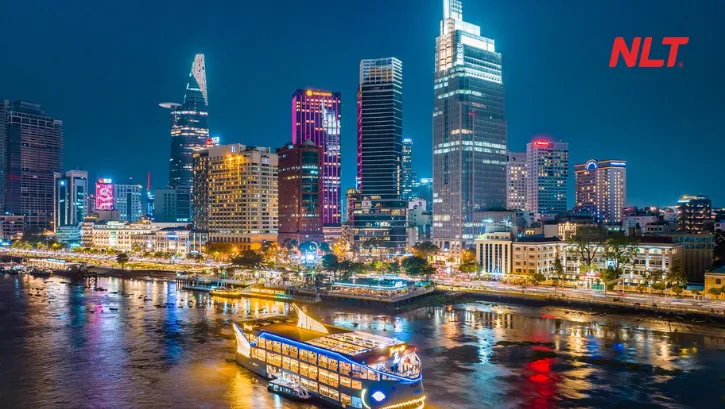
Public square lighting is not just a basic lighting scope. It is a critical part of public space infrastructure. NLT Group provides design and construction capabilities for standard compliant lighting systems that deliver strong aesthetics and long term operational efficiency.
If you are looking for an optimized lighting solution for an upcoming project, contact NLT Group for fast and complete consultation.
Nam Long Technology Investment Group (NLT Group)
- Hotline: 0911 379 581
- Email: kinhdoanh@nlt-group.com
- TIN: 0313339640
- Address: 43T Ho Van Hue Street, Duc Nhuan Ward, Ho Chi Minh City