Tiếng Việt
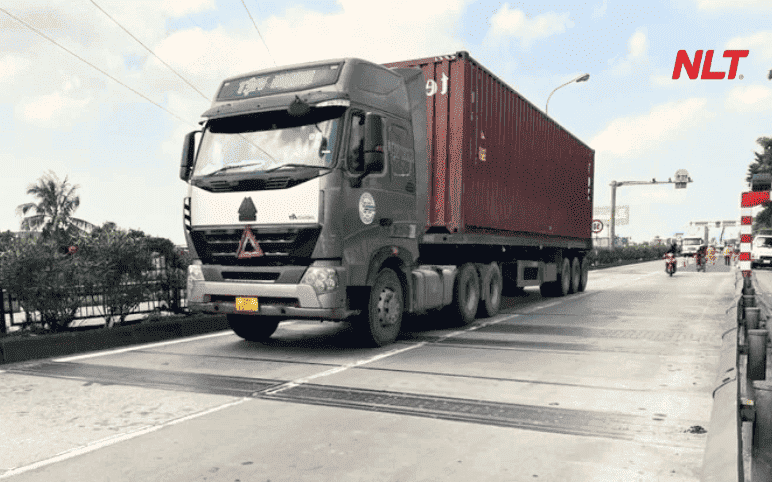
Truck weigh stations play an important role in controlling vehicle loads, ensuring compliance with traffic regulations, and protecting infrastructure. With the development of technology, smart truck weigh stations have emerged, providing optimal management solutions for businesses and transport authorities.
What is a truck weigh station?
A truck weigh station is a system designed to measure the load of vehicles, especially trucks and container vehicles. This system is typically installed at strategic locations such as industrial zone entrances, factories, seaports, or along major roads to check vehicle loads and ensure traffic safety.
A truck weigh station is not merely a mechanical device but also includes load sensors, management software, and data storage systems. These components operate synchronously to provide accurate information on total vehicle weight, axle loads, and related data such as license plate number, weighing time, and weighing location.
The important role of truck weigh stations
Protecting transport infrastructure
Truck weigh stations help control and limit this situation by measuring loads and ensuring trucks comply with permitted weight regulations. This contributes to extending the lifespan of roads and bridges and reducing infrastructure repair and maintenance costs.
Ensuring traffic safety
Overloaded trucks are prone to imbalance while moving, leading to a high risk of accidents. Weigh stations help detect and prevent overloaded vehicles before they enter traffic. This protects human life and the property of all road users.
Compliance with legal regulations
Regulations on truck load limits are issued to ensure safety and protect infrastructure. Using weigh stations helps transport companies avoid legal violations, thereby minimizing the risk of administrative penalties or operational suspension.
Improving transport management efficiency
Smart truck weigh stations integrate IoT technology and management software to record load data, time, and vehicle routes. Businesses can easily monitor and manage transport operations in a transparent and efficient manner.
Reducing operating costs
Detecting overloaded vehicles helps reduce fuel consumption and vehicle maintenance costs. Automated weighing and storage of vehicle information such as load, images, and license plates reduce management time and effort. The system operates 24/7 and can be managed remotely through IoT, AI, and GIS Cloud technology platforms, helping save labor and operational costs.
Enhancing load data transparency
- Real time load data storage: The smart vehicle weighing system of NLT Group uses IoT, AI, and GIS Cloud technologies to automatically and continuously collect, store, and manage vehicle load data.
- Integration with management systems: Data from weigh stations can be stored on a central server and displayed via a website, allowing intuitive monitoring, inspection, and data reconciliation.
- Transparent reporting to authorities: Information including load weight, images, license plates, date and time, and location is fully stored, enabling authorities to easily monitor and handle violations.
- Reducing operating costs and improving efficiency: This automated system not only minimizes manual management costs but also reduces errors and processing time.
Environmentally friendly
Reducing overloaded vehicles helps limit harmful emissions released into the environment. Many modern truck weigh stations are designed to use renewable energy sources such as solar energy, contributing to sustainable environmental protection.
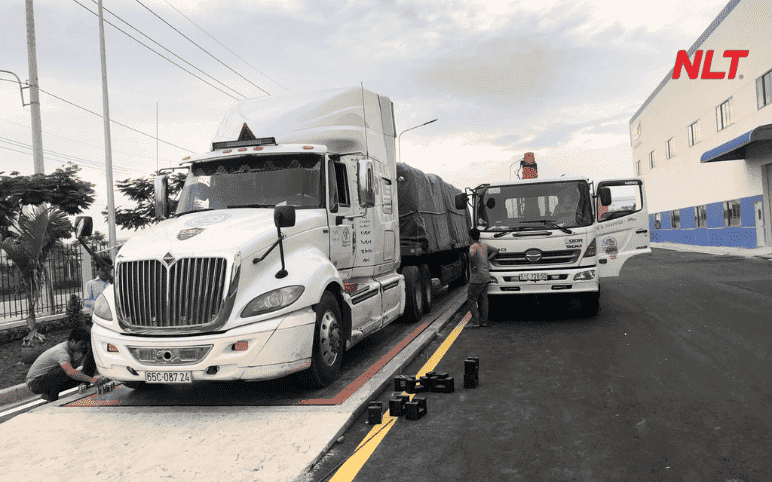
Common types of truck weigh stations
are designed in various formats to meet the needs of businesses and government authorities. Below are the most common types of truck weigh stations in use today:
Static weigh stations
Characteristics: Trucks must come to a complete stop on the weighing platform to measure the load. This type of weigh station is typically installed permanently at locations such as factory entrances, seaports, or toll stations.
Advantages:
- High accuracy.
- Suitable for environments with moderate truck traffic volumes.
Applications: Checking cargo loads at factories, warehouses, or industrial zones.
Weigh in motion stations
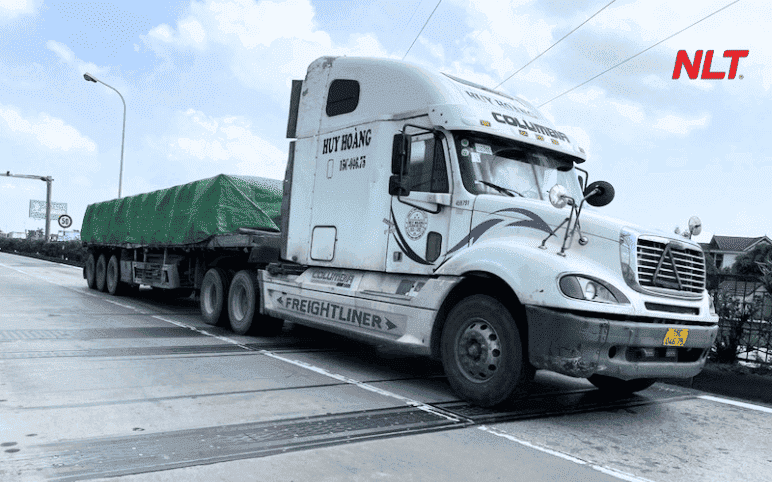
Characteristics: Allow vehicle load measurement while the truck is moving at a low speed. The system uses dynamic sensors to measure axle loads and total vehicle weight.
Advantages:
- Fast weighing speed.
- No disruption to traffic flow.
Applications: Used at mobile load control points or on roads with high traffic volumes.
Mobile weigh stations
Characteristics: Compact design, easy to install and relocate. Mobile weigh stations can be quickly deployed at different locations.
Advantages:
- High flexibility.
- Lower investment cost compared to fixed weigh stations.
Applications: Suitable for temporary load inspections or projects with short term operation periods.
Electronic weigh stations
Characteristics: Use load sensors (load cells) to measure and transmit data to a control center. Load information is displayed on screens or stored in software systems.
Advantages:
- High accuracy.
- Fast and convenient data connectivity.
Applications: Businesses that require professional and efficient monitoring and management of vehicle loads.
SEE MORE: 8 criteria to consider before installing an electronic weigh station
Automated truck weigh stations
Characteristics: Integrate AI and IoT technologies, allowing fully automated vehicle weighing without human intervention. The system can automatically store and analyze data.
Advantages:
- Fully automated, minimizing errors.
- Remote connectivity with 24/7 monitoring capability.
Applications: Load management on major roads, in industrial zones, and at transport ports.
Benefits of using smart truck weigh stations
- Optimizing costs: Using smart truck weigh stations weigh stations helps businesses save labor costs, minimize operational errors, and improve work productivity.
- High accuracy: Modern systems such as AI based truck weighing provide accurate data, supporting better management and meeting international standards.
- Flexible connectivity: Thanks to IoT integration, automated truck weigh stations can transmit data to management centers quickly and efficiently.
- Ease of use: Today’s truck weigh stations are designed to be user friendly, easy to deploy, and simple to maintain. This is especially important for small businesses and government authorities.
Conclusion
Truck weigh stations are not only tools for measuring vehicle loads but also modern management solutions that support businesses and government agencies in protecting transport infrastructure, optimizing logistics operations, and ensuring social safety. With the development of Industry 4.0 technologies, truck weigh stations are becoming increasingly intelligent, accurate, and efficient, meeting all demands in the transport and logistics sectors.
Contact information
If you are looking for an effective and modern vehicle load management solution, please contact NLT Group for detailed consultation and optimal support. We are committed to delivering high quality products and services that meet all your needs.
Nam Long Technology Investment Group (NLT Group)
- Hotline: 0911 379 581
- Email: kinhdoanh@nlt-group.com
- TIN: 0313339640
- Address: 43T Ho Van Hue Street, Duc Nhuan Ward, Ho Chi Minh City
Contact us today for free consultation and experience the most advanced smart vehicle weighing systems from NLT Group.