Tiếng Việt
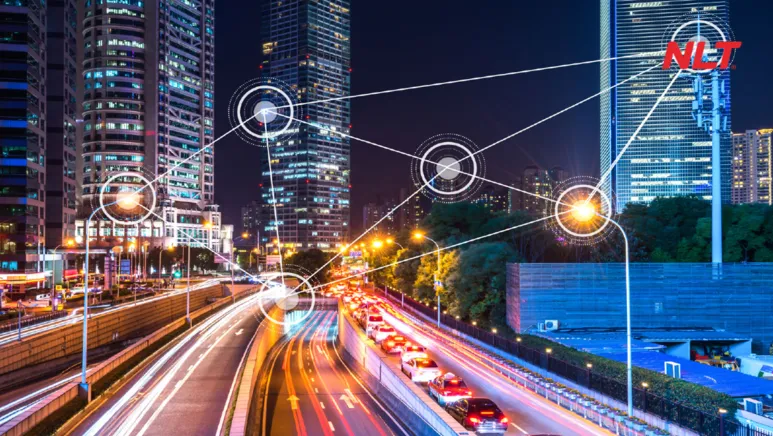
Across many streets, lighting still does not fully meet the needs of safe mobility, especially during peak hours or in adverse weather conditions. The cause is not only the number of luminaires, but also the way traditional lighting systems are operated and adjusted, which is often not flexible enough to reflect real-world conditions. For this reason, smart street lighting systems have emerged as an advanced solution, promising benefits that many people may not initially anticipate. Let us explore how these systems actually work to improve safety on every street.
Street lighting and the challenge of nighttime traffic safety
What is street lighting and why does it directly affect safety?
Street lighting refers to the entire system of luminaires installed along traffic routes, from small alleys and internal roads in industrial zones to national highways and expressways.
From a technical perspective, the purpose of street lighting is to ensure parameters such as illuminance, luminance, and uniformity meet standards, thereby creating favorable conditions for road users.
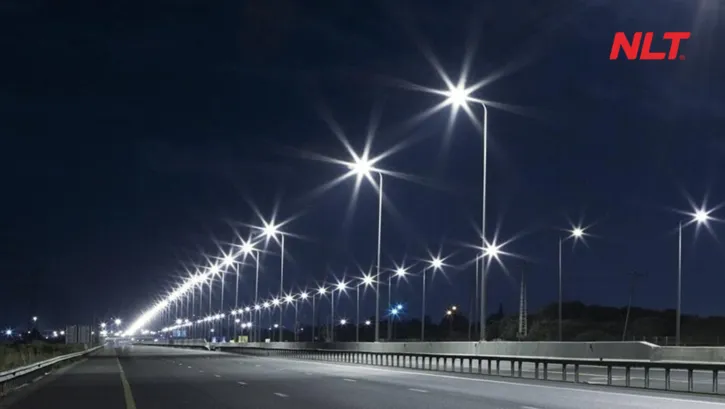
From a practical standpoint, the effectiveness of street lighting is clearly reflected in its ability to:
- Help drivers recognize the road at a sufficient distance to react in time.
- Identify pedestrians, cyclists, and obstacles before it is too late.
- Observe traffic signs, lane markings, medians, and road edges, reducing the risk of lane deviation or loss of orientation.
Good street lighting serves as the first layer of protection for nighttime traffic safety, and its role is often more critical than traffic signs, speed bumps, or surveillance cameras.
Risks caused by insufficient light, excessive light, and glare
Street lighting is a fundamental element of traffic safety, but improper design or adjustment can create risks. Insufficient lighting, excessive lighting, or glare can all directly affect a driver’s ability to observe and react.
- Insufficient lighting reduces the ability to detect obstacles, making pedestrians and cyclists harder to see, especially when wearing dark clothing. Low contrast also causes road surface details to appear unclear.
- Excessive lighting or incorrect aiming forces the eyes to constantly adapt, reducing reaction speed. Light shining directly into oncoming drivers’ field of view, or reflections from wet road surfaces, can further reduce the ability to detect low-profile objects.
- Glare occurs when luminaires are installed at incorrect heights, angles, or with unsuitable optics, or when high-intensity light sources such as advertising boards or LED screens are present. This can cause temporary loss of visibility, which on highways may extend over hundreds of meters.
Therefore, smart street lighting systems should be designed to provide sufficient illumination, precise distribution, and flexible adjustment based on real conditions, thereby optimizing visibility and improving traffic safety.
Accident black spots and common lighting issues
Analysis of accident maps shows that many high-risk locations are found at complex intersections, sharp curves, bridges, tunnels, entrances to industrial zones, bus terminals, or densely populated residential areas. These locations often present elevated risk due to inadequate lighting.
Common issues at these points include:
- Faulty luminaires left unrepaired for long periods.
- Lighting layouts that do not focus on hazardous zones such as pedestrian crossings, side roads, or curved sections.
- Piecemeal replacement of luminaires with mismatched optics, resulting in uneven light distribution with alternating bright and dark patches.
As a result, drivers often perceive danger only when they are already very close to it. At high speeds, in poor weather, or when drivers are fatigued, these limitations significantly increase accident risk. These issues can be effectively addressed through smart street lighting systems.
Limitations of traditional street lighting compared with smart street lighting systems
Fixed operation with limited flexibility
Many roads today still operate on fixed schedules, lights turn on and off at preset times with nearly constant brightness throughout the night.
In reality, traffic volume and travel conditions vary significantly by time and location. Between 6:00 p.m. and 10:00 p.m., traffic density is often high, while after 11:00 p.m., many roads become quiet, mainly used by freight and long-distance vehicles. Traditional lighting systems cannot respond to these changes, as they only switch on or off according to preset schedules. The result is wasted energy and lighting conditions that are not optimized for visibility or safety.
Difficulty in monitoring and handling faults
With traditional systems, detecting and repairing faulty lights is challenging. Management units often have to rely on public reports or manual inspections, which consume time and manpower.
Without remote monitoring, several issues arise:
- The exact location of faulty luminaires cannot be identified quickly.
- Repairs cannot be prioritized at accident black spots or high-traffic areas.
- There is no data to assess whether lighting levels meet safety standards.
These limitations prevent traditional systems from operating efficiently and flexibly, directly affecting visibility and traffic safety.
Uneven light distribution
After multiple partial upgrades, such as replacing some luminaires, adding a few poles, or changing lamp types, many roads now suffer from uneven light distribution. Some sections are overly bright, while others remain dim, and pole spacing is inconsistent.
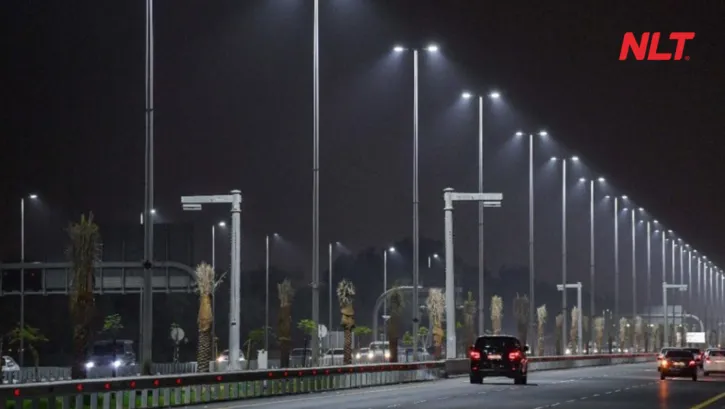
In some cases, luminaires are not properly aimed, with light spilling into roadside areas while the roadway itself remains underlit. Critical zones such as pedestrian crossings, intersections, or curves, where enhanced illumination is essential for safety, are often overlooked.
Inability to meet sustainability and data integration requirements
Many local authorities are moving toward energy efficiency, emission reduction, and digitalized infrastructure management. Traditional street lighting systems, however, often present several limitations:
- High-power luminaires with low efficiency that cannot be adjusted flexibly to match traffic demand.
- Control infrastructure that is not ready for remote connectivity or data collection.
- Inability to integrate with intelligent transportation systems, cameras, or sensors.
These constraints make it difficult to evaluate investment efficiency and to make decisions based on real operational data when maintaining legacy systems.
Technology platform of smart street lighting systems
Multi-layer system architecture
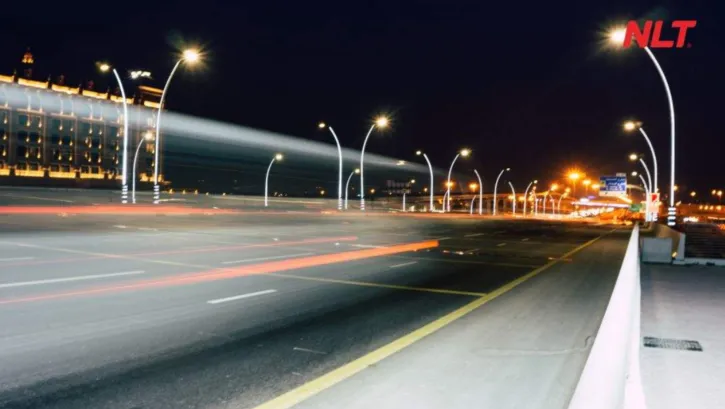
A modern smart lighting system is typically designed with four main layers. Each layer has a distinct role while working in close coordination to improve operational efficiency and monitoring.
- Field Level: includes LED luminaires, lamp-mounted controllers, and sensors that monitor movement, ambient light, and environmental conditions.
- Communication Level: responsible for data transmission via RF mesh, LoRaWAN, NB-IoT, or 4G/5G networks.
- Platform Level: centralized management and monitoring, featuring GIS maps, dashboards, and fault alerts.
- Integration Level: connects with intelligent transportation systems, traffic operation centers, and other urban management platforms.
When deployed in a synchronized manner, this multi-layer architecture allows the lighting system to remain flexible, easy to control, and highly effective in supporting urban infrastructure management.
Key system components
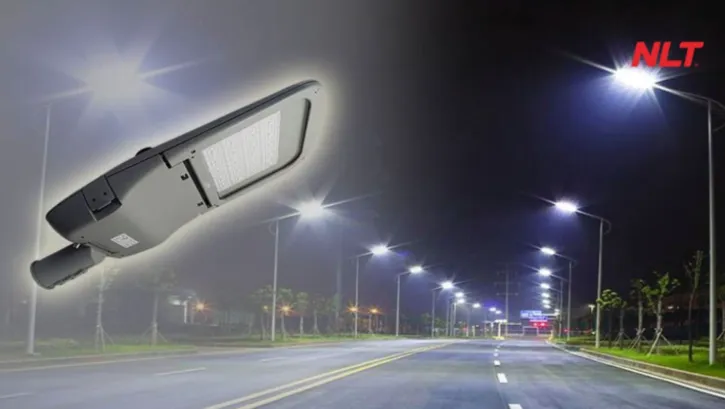
- Street LED luminaires: designed with optics tailored to different road types such as urban streets, highways, and residential areas. They offer high efficiency and dimming capability while maintaining lighting quality. Typical correlated color temperature ranges from 3000 to 4000K, providing clear visibility without causing glare.
- Lamp controllers: installed on each luminaire, enabling brightness control at the individual or group level. They also record operational status such as on or off state, dimming level, current, voltage, and technical faults.
- Sensors: monitor traffic movement and flow, detect the presence of pedestrians, motorcycles, or vehicles. Ambient light sensors determine when lights should be switched on, and can be combined with the weather or visibility sensors depending on configuration.
Working together, these components allow the lighting system to respond dynamically to real road conditions rather than operating on a fixed schedule, thereby improving visibility and traffic safety.
Connectivity and data transmission
Smart street lighting systems are only truly effective when devices are reliably connected and operational data is continuously transmitted. The communication layer plays a critical role by enabling constant information exchange between LED luminaires, controllers, sensors, and the monitoring center.
- Stable connectivity: advanced protocols such as RF mesh, LoRaWAN, NB-IoT, or 4G/5G ensure consistent signal transmission, even in the presence of obstacles, harsh weather, or on roads far from urban centers.
- Data security: all operational data is encrypted and strictly controlled to prevent unauthorized access and protect the entire lighting network.
- Synchronized operation: robust connectivity allows the system to automatically receive sensor data, adjust brightness by time, area, or situation, and synchronize lighting scenarios to optimize performance and enhance traffic safety.
With this tightly integrated connectivity structure, the entire lighting system operates intelligently, flexibly, and reliably, forming a solid foundation for modern urban infrastructure management.
Brightness adjustment and operating scenarios
One of the key advantages of smart street lighting systems is their ability to adjust brightness flexibly in direct support of traffic safety.
- Time-based dimming: during peak hours, higher brightness levels are maintained to support heavy traffic. During off-peak hours, brightness is reduced while still meeting minimum safety requirements.
- Area-based dimming: intersections, roundabouts, and entrances to industrial zones are prioritized with higher illumination, while straight road sections with good visibility can be dimmed to save energy.
- Special scenarios: during festivals, events, or unusual traffic conditions, lighting can be temporarily adjusted. In adverse weather such as rain or fog, the system automatically increases brightness and adjusts beam direction to ensure clear visibility for road users.
Applying flexible lighting scenarios by time, area, and real conditions enables the system to maintain effective illumination and support traffic safety in all situations.
>> See more: A comprehensive overview of NLT Group’s smart street lighting systems
How smart street lighting systems enhance traffic safety
Real-time sensor-based lighting adjustment
Smart street lighting systems operate based on real-time sensor data rather than fixed schedules, optimizing visibility and traffic safety.
- Traffic-responsive adjustment: when vehicle volume suddenly increases on a road section, the system automatically raises brightness levels to improve visibility and reduce collision risk.
- Pedestrian and small vehicle response: sensors detect pedestrians, motorcycles, or bicycles near crossings and adjust lighting to improve early detection.
- Guiding light effect: luminaires illuminate progressively along the direction of travel, helping drivers perceive routes and distances between obstacles more clearly.
This flexibility is particularly important near industrial zones during shift changes, densely populated residential areas with many motorcycles and bicycles, as well as service areas, terminals, or wholesale markets operating at night. Lighting remains sufficient while adapting to real conditions, enhancing visibility and traffic safety.
Early warning of operational anomalies
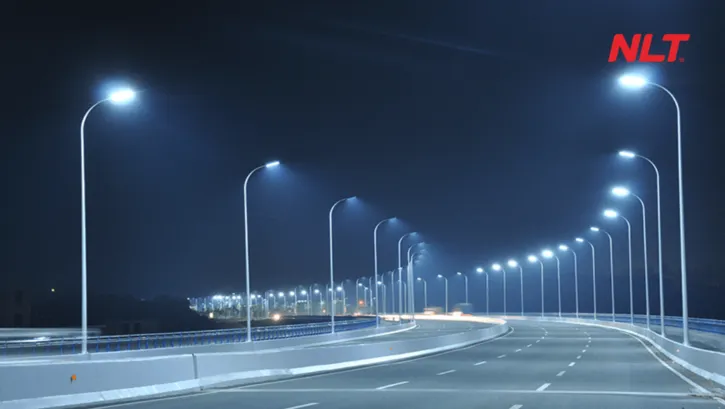
Smart street lighting systems are designed for continuous monitoring, enabling immediate fault detection rather than relying on public reports.
- Lamp status monitoring: automatically identifies issues such as outages, flickering, overheating, or overcurrent, pinpointing the exact pole with a problem.
- Instant alerts: data is transmitted to the control center, displaying the precise location of faults and helping managers assess impact and prioritize response.
- Priority for critical locations: faults at accident black spots, complex intersections, or crowded areas are flagged and addressed first to ensure traffic safety.
This monitoring and alert mechanism minimizes prolonged dark sections of road and allows proactive maintenance, maintaining lighting safety standards and reducing risk and liability in the event of accidents.
Automatic optimization based on environmental conditions
Nighttime conditions constantly change, from clear skies and dry roads to heavy rain, standing water, or reduced visibility. Smart street lighting systems are designed to adapt to these variations.
- Brightness enhancement when needed: automatically increases illumination when natural light decreases due to rain, fog, or heavy cloud cover.
- Environmental adaptation: reduces glare caused by external light sources such as billboards, LED screens, or roadside lighting.
- Stable illumination: maintains uniform lighting levels and limits abrupt changes between road sections, allowing drivers to see clearly without eye strain.
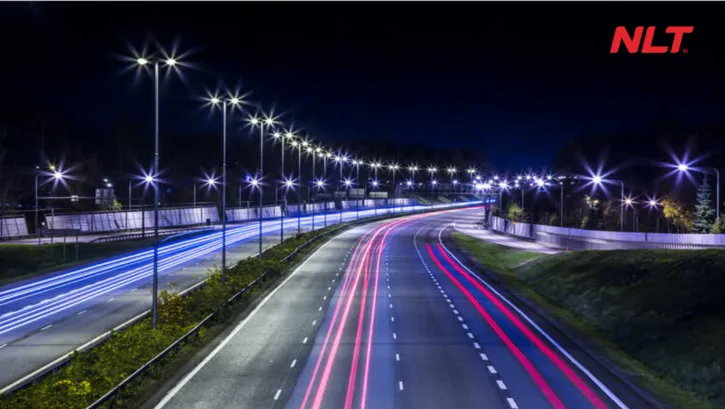
This mechanism improves visibility and reduces risk, ensuring traffic safety even under complex weather and environmental conditions.
Integration with cameras and traffic sensors
When smart street lighting systems are connected with ITS platforms, cameras, and traffic sensors, traffic safety management reaches a new level.
- Direct data acquisition: the system receives real-time information on congestion, accidents, or traffic incidents from cameras and sensors.
- Situation-based lighting adjustment: brightness can be immediately increased on affected road sections to improve visibility and support emergency response.
- Violation control support: in areas prone to illegal stopping or parking, the system can combine camera data with lighting adjustments and electronic signage to provide warnings or support enforcement.
In this way, street lighting not only ensures visibility but also becomes an integrated component of intelligent traffic management, directly contributing to improved safety and operational efficiency.
Enhanced area security through integrated lighting and surveillance
Combining adequate lighting with synchronized surveillance significantly improves security along roads and urban areas.
- Detection of abnormal behavior: violations, unauthorized gatherings, or theft are more easily identified with consistent lighting and camera imagery.
- Improved sense of safety: pedestrians and drivers experience better visibility and a stronger feeling of security at night.
- Enhanced area image: roads, urban zones, and industrial parks appear more professional and orderly, creating a positive impression for partners and investors.
As a result, when lighting and surveillance operate in sync, smart street lighting systems contribute to improved security and more effective urban management.
Applications of smart lighting in specialized traffic areas
Bridges, tunnels, and curved road sections
Special locations such as tunnels, bridges, and curved sections often carry a higher accident risk due to limited visibility or the need for quick driver reactions. Applying smart street lighting systems in these areas helps adjust lighting appropriately, supporting safer observation and movement:
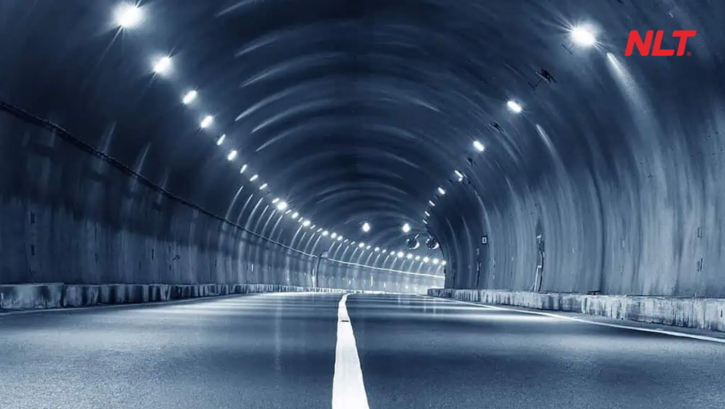
- Tunnel entrances: when moving from bright outdoor conditions into a tunnel, drivers’ eyes need time to adapt to lower light levels. Smart street lighting systems can gradually increase brightness before the tunnel entrance and then smoothly reduce it inside, minimizing light shock and improving visual comfort and safety.
- Bridges, especially curved bridges: lighting is focused along guardrails, beams, and bridge edges to create clear visual boundaries for traffic lanes. Intersections with access roads or areas prone to sudden lane changes are prioritized for enhanced illumination to support orientation.
- Hazardous curves: brightness is increased along curved sections, combined with illuminated road signs and markings. Luminaire optics are designed to emphasize road edges and medians, helping drivers accurately identify direction and reduce risk.
National highways, expressways, and main urban corridors
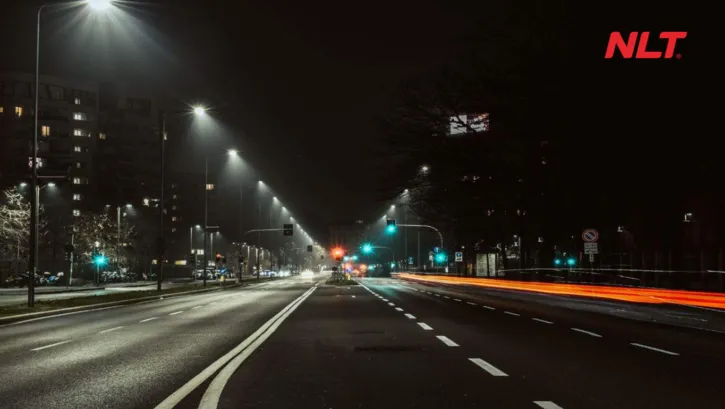
On high-speed roads, even small driver errors can lead to serious consequences. Smart street lighting systems play a critical role in reducing risk at sensitive locations:
- Merging, diverging points, and grade-separated interchanges: the system can intensify focused lighting to help drivers clearly recognize routes and hazardous crossings.
- Time-based adjustment: flexible dimming ensures sufficient lighting for safety during peak hours while saving energy during periods of low traffic.
- Integration with warning systems: combining electronic signage and early warnings creates a continuous safety corridor that supports driver orientation and timely reaction.
- Routes connecting industrial zones, ports, and terminals: adjusting lighting according to peak truck traffic hours helps maintain optimal visibility and reduce collision risk.
Residential areas, schools, hospitals, and high-pedestrian zones
Areas with high pedestrian density, especially involving children and the elderly, require particular attention to lighting. Smart street lighting systems are designed to optimize visibility and safety in these locations:
- Schools and hospitals: lighting is concentrated at crosswalks, bus stops, and main entrances. Brightness levels are adjusted for peak periods such as school dismissal times, visiting hours, or shift changes to ensure optimal visibility when pedestrian flow is high.
- Residential areas and new urban zones: systems combine traffic lighting with landscape lighting while avoiding direct light into building facades, ensuring safety while protecting residents’ privacy.
Benefits for investors implementing smart street lighting systems
Enhanced safety and reduced management liability
Smart street lighting systems provide accurate data on lighting status and illumination levels for each route, helping management bodies:
- Ensure safety: monitor and demonstrate that key roads consistently maintain minimum lighting levels, reducing accident risk and hazardous situations.
- Support decision-making: continuously recorded operational data serves as a reference when coordinating with authorities or planning traffic safety upgrades.
- Reduce complaints and feedback: rapid detection and resolution of lamp failures or insufficient lighting help prevent prolonged “dark road” sections.
As a result, the system not only improves traffic safety but also supports effective risk management and enhances the social responsibility of managing authorities.
Operating cost savings
An effectively implemented smart street lighting system balances traffic safety with cost efficiency:
- Intelligent brightness control: the system reduces power in low-traffic periods or areas while maintaining minimum safety lighting levels.
- Extended equipment lifespan: by avoiding constant operation at maximum output, lamp and controller lifespans are improved, reducing replacement frequency.
- Planned maintenance: accurate operational data enables scheduled maintenance, minimizing reactive repairs and saving labor and costs.
When properly designed and configured, the total lifecycle cost of a smart system is often lower than that of traditional lighting, while maintaining optimal traffic safety.
Digital data for planning and decision-making
Smart street lighting systems provide highly valuable operational data for investors and infrastructure managers. Instead of relying on observation or sporadic feedback, this data enables precise evaluation of each road segment’s performance.
- Detailed reports by route and control cabinet: identify which sections operate efficiently and which suffer from lighting or energy consumption issues.
- Analysis of consumption and light distribution: clearly determine areas with excessive lighting, insufficient lighting, or uneven distribution to guide adjustments.
- Support for upgrade and expansion planning: decisions on lamp replacement, pole additions, or optical adjustments are based on real data rather than assumptions, optimizing budgets and performance.
- Foundation for long-term planning: continuous operational data helps align lighting infrastructure with traffic planning, urban development, and other infrastructure projects, ensuring safe and efficient operation over time.
>> Read more: How smart lighting enhances safety and optimizes urban operations
NLT Group – A partner for deploying smart street lighting systems in Industry 4.0 cities
Experience in traffic and urban lighting
NLT Group has accumulated many years of experience in designing, deploying, and operating lighting systems for both traffic and urban environments. Key areas include:
- Traffic lighting: implementation on national highways, main urban corridors, and industrial zones, ensuring adequate illuminance, uniform light distribution, and safety for all vehicle types.
- Urban and infrastructure lighting: deployment along coastal routes, bridges, and new urban developments, combining traffic lighting with landscape lighting to optimize both user experience and operational safety.
NLT Group’s differentiation lies in its ability to understand and adapt to Vietnam’s operational context, from climate conditions and urban structures to technical and management requirements of investors and authorities. This understanding ensures that each project achieves technical effectiveness while remaining practical in real-world operation.
>> See more: NLT Group’s smart and energy-efficient urban lighting solutions
Integrated solutions from equipment to control
NLT Group provides comprehensive street lighting solutions covering equipment, control systems, and management platforms:
- Lighting equipment: dedicated street LED luminaires designed for various road types, from urban streets and highways to industrial zones.
- Control systems: controllers installed on each luminaire and intelligent central control cabinets enable brightness adjustment, operational monitoring, and fault alerts.
- Management platform: centralized monitoring and control software integrated with GIS maps to track every pole and route, while storing operational data for analysis and reporting.
The solution architecture is designed to be open, ready to integrate with existing systems such as ITS platforms, traffic operation centers, or smart city command centers. This allows phased implementation, starting with pilot routes or test areas and expanding based on real-world performance evaluation.
>> See more: Smart street lighting solutions with dedicated LED luminaires
Commitment to operational safety and cost optimization
In smart street lighting projects, NLT Group adopts a comprehensive approach that ensures both safety and cost efficiency:
- Assessment and analysis: surveying each route to identify risk levels, traffic flow, and priority safety points.
- Equipment configuration and operating scenarios: recommending suitable luminaires, controllers, sensors, and dimming scenarios to deliver optimal lighting for drivers while saving energy when demand is low.
- Lifecycle cost consulting: analyzing investment, operation, and maintenance costs to help investors make data-driven, long-term decisions.
- Implementation support: accompanying projects from pilot phases, fine-tuning operating scenarios based on real traffic patterns, through to scaling and integration with other smart traffic and urban monitoring systems.
This approach enables investors to maintain maximum safety for road users while proactively and transparently managing costs.
In practice, the effectiveness of smart street lighting systems cannot be assessed solely through theory or descriptions. Implementing pilot sections or test segments allows accurate evaluation of illumination levels, energy consumption, feedback from road users and authorities, and optimization of dimming scenarios, sensor configurations, and operating models. This is a necessary step to enhance traffic safety on critical routes such as accident black spots, main industrial access roads, urban areas, or high-traffic highways at night.
If you are seeking an optimized smart street lighting solution for roads, industrial zones, or urban areas, NLT Group is ready to support you from consultation and design through deployment and operation. Contact us today to receive a lighting solution tailored to your real-world needs.
Nam Long Technology Investment Group (NLT Group)
- Hotline: 0911 379 581
- Email: kinhdoanh@nlt-group.com
- TIN:0313339640.
- Address: 43T Ho Van Hue Street, Duc Nhuan Ward, Ho Chi Minh City