Tiếng Việt
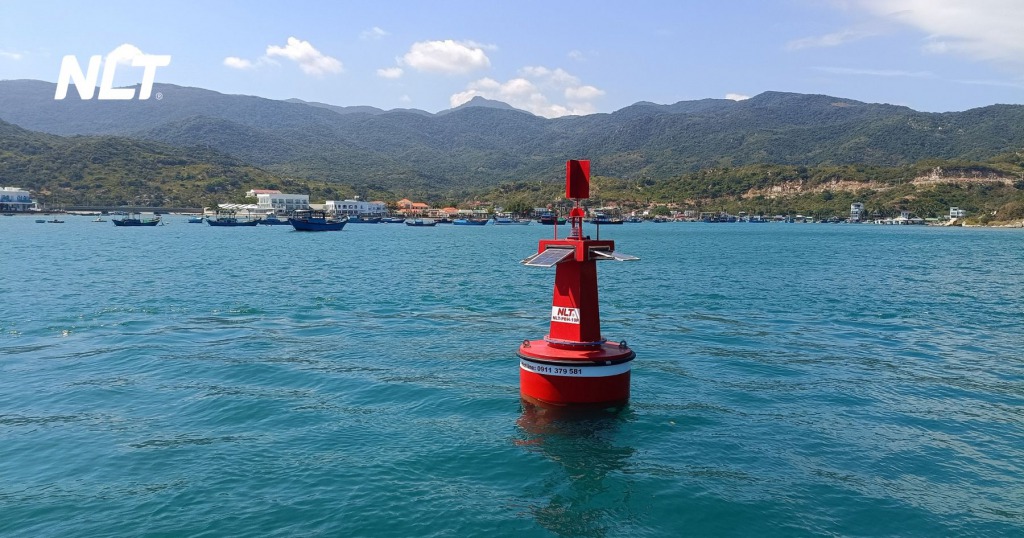
Navigation buoys that appear to float simply on the water are actually the result of a rigorous engineering material selection process. As demands for durability, reduced weight, and corrosion resistance continue to rise, FRP composite materials are increasingly becoming the preferred choice in the design and manufacturing of inland waterway buoys. NLT Group will help you understand what FRP is, why it is widely favored, and how it is applied in modern navigation aid systems.
What is FRP composite material?

Concept and composition (Resin + Fiberglass)
FRP Composite (Fiberglass Reinforced Plastic) is a synthetic material formed from two main components:
- Resin matrix: such as polyester, epoxy, or vinyl ester, which acts as the binding and shaping agent.
Fiberglass reinforcement: provides structural strength, improves tensile performance, prevents cracking, and enhances impact resistance.
These two components combine to create a material that is both flexible and strong, capable of being molded into complex shapes while maintaining long-term structural stability.
Unlike homogeneous materials such as metals or standard plastics, FRP is a heterogeneous composite. Its fiber ratio and weaving method can be adjusted to suit specific applications, from technical panels to load-bearing buoy structures.
General advantages of FRP composite compared to traditional materials
FRP is widely used across many industries thanks to several outstanding benefits:
- Weighs 4 – 5 times less than steel, reducing overall load and simplifying transportation and installation.
- Resistant to rust and decay, even in saltwater or chemically active environments.
- Easy to mold into complex shapes, suitable for aerodynamic designs or specialized structures such as floating buoys, cylinders, or cones.
- Excellent electrical and thermal insulation, making it safe for integrated electronics like lights, GPS, and batteries.
- Long service life, can maintain mechanical performance for 8 – 12 years with proper maintenance.
Compared with steel, aluminum, or conventional plastics, FRP offers a balanced combination of durability, corrosion resistance, and lightweight performance.
Why FRP composite is suitable for inland and coastal waterway environments
Inland and coastal waterway environments are constantly exposed to:
- High humidity, saltwater, and brackish water that corrode metals.
- Wave action, currents, and minor impacts from passing vessels.
- Temperature fluctuations, UV radiation, sea winds, and acid rain that accelerate material aging.
FRP addresses most of these challenges because it has:
- High chemical inertness, resisting saltwater and mild acids.
- Strong UV resistance when coated with gelcoat or UV-protective epoxy.
- Good shape recovery and flexibility, avoiding brittle fractures common in rigid plastics.
For these reasons, FRP is especially suitable for buoy bodies, topmarks, or outer protective shells, areas requiring durability without necessarily bearing heavy loads like steel.
>> See more: Everything you need to know about inland waterway navigation buoys (Updated 2025)
Applications of FRP composite in navigation buoy structures
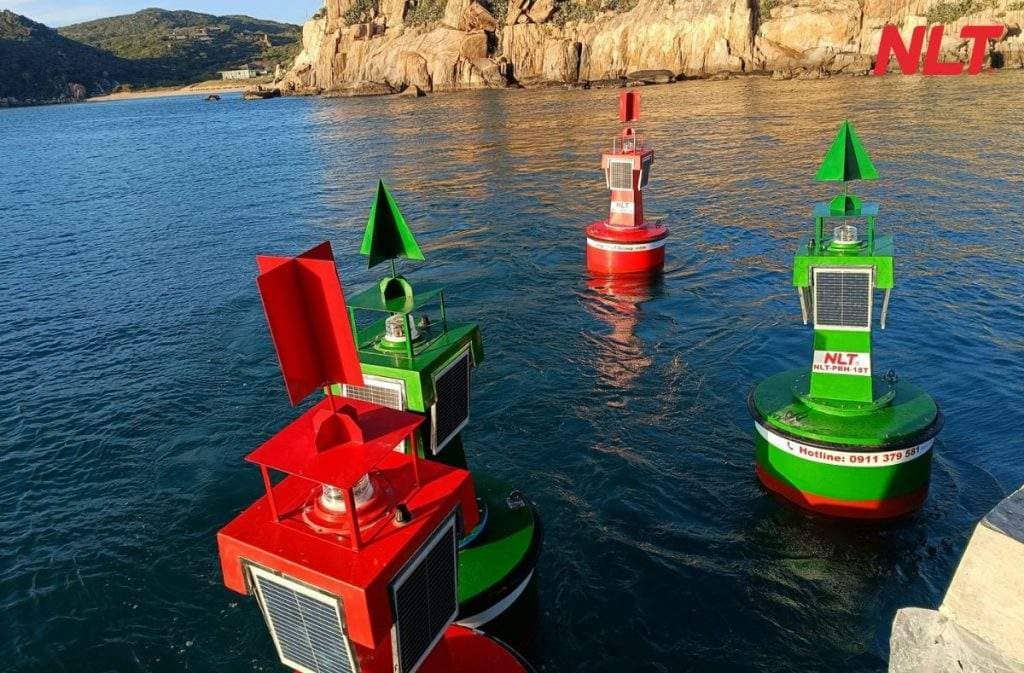
Where FRP is used: buoy body, topmark, and protective housing
In modern navigation buoy design, FRP is rarely used for the entire structure but is commonly applied to components that require light weight, durability, and corrosion resistance, including:
- Topmark (identification mark): FRP’s flexibility allows it to be molded into cones, cylinders, X-shapes, and other standardized signaling forms while remaining lightweight and corrosion-resistant.
- Outer shell of the buoy body: Acts as a protective “armor” layer for the internal core, resisting UV exposure, saltwater, light impacts, and harsh environments.
- Electronic equipment housing: Such as light enclosures, GPS covers, or LoRa communication units, areas requiring insulation, waterproofing, and easy maintenance.
FRP surfaces can also be finished with colored gelcoat (red, green, yellow, etc.) during manufacturing, eliminating the need for additional painting while maintaining long-lasting color and reducing maintenance costs.
Integrating FRP with steel frames, HDPE, and energy systems
Modern buoys are multi-material systems where FRP functions as a lightweight structural or protective layer, while primary load-bearing elements remain:
- Galvanized steel or stainless steel for lifting frames, anchor shackles, and load-bearing shafts.
- HDPE or polyurethane foam for buoyancy cores.
- FRP outer layers to enhance durability, aesthetics, and weight reduction.
Thanks to its insulation and waterproof properties, FRP is also ideal for integrating solar lights, battery systems, GPS modules, and tilt sensors without risk of short circuits or water ingress.
Can FRP composite be used in smart buoys?
Absolutely. FRP composite is not only suitable for traditional buoys but is increasingly preferred in smart buoy design because:
- Its lightweight nature reduces stress on anchoring systems.
- It does not block radio signals, making it ideal for LoRa or NB-IoT communication.
- Strong insulation properties help protect internal electronics.
- Sensor modules can be integrated directly during the molding process.
Several buoy models from major suppliers such as NLT Group and international manufacturers like Tideland already use FRP composite for entire topmarks and sensor-integrated light housings, demonstrating the material’s effectiveness in modern navigation aid systems.
Outstanding advantages of FRP composite material in waterway transportation
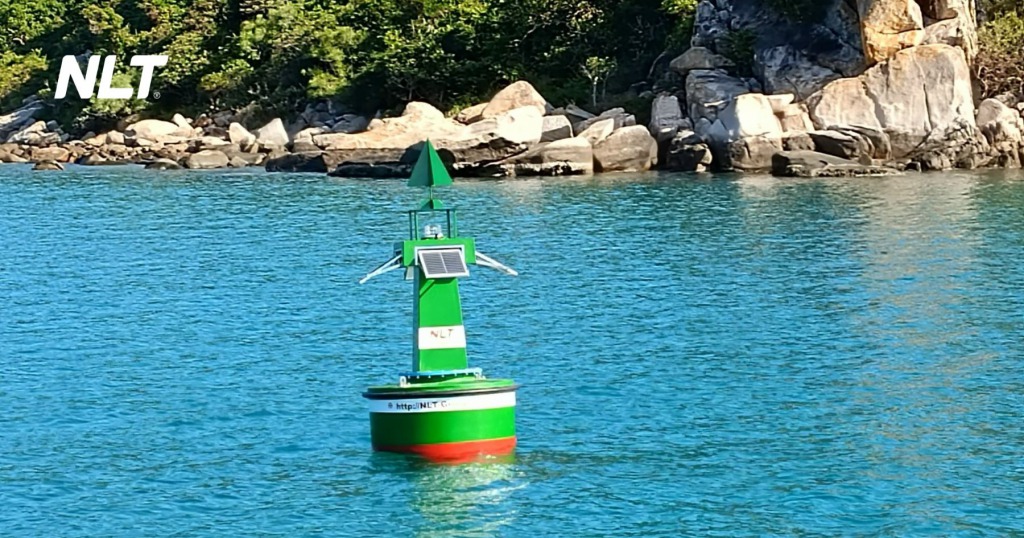
Lightweight design helps reduce anchoring and operating costs
FRP composite material has a density of only about 1.5–2.0 g/cm³, equal to one-quarter of steel and half of aluminum. When FRP is used for topmarks or buoy outer shells, it can:
- Reduce the total buoy weight
- Make transportation, launching, and installation easier
- Lower the pulling force on anchoring systems, especially useful for deep-water or strong-current mooring buoys
Reducing buoy weight not only improves installation efficiency but also extends the lifespan of attached equipment such as lights, mounting brackets, and solar panels.
Corrosion resistance and durability in brackish or saltwater
FRP composite is non-metallic, so it does not rust even in environments such as:
- Saltwater or brackish water
- Acid rain or salt spray
- Industrial chemical exposure near ports or industrial canals
Compared with steel that requires galvanization, aluminum that can suffer galvanic corrosion, or plastics that may age quickly, FRP maintains its shape, color, and durability for many years when properly maintained.
Easy fabrication and precise shaping
Thanks to flexible molding capabilities, FRP composite allows:
- Manufacturing cylindrical, conical, or aerodynamic buoy shapes
- Embedding logos, identification codes, or markings directly on the surface
- Integrating technical grooves or mounting areas without weakening the structure
This flexibility makes FRP highly suitable for projects requiring diverse designs tailored to specific inland waterways or seaports.
Limitations and challenges when using FRP composite material
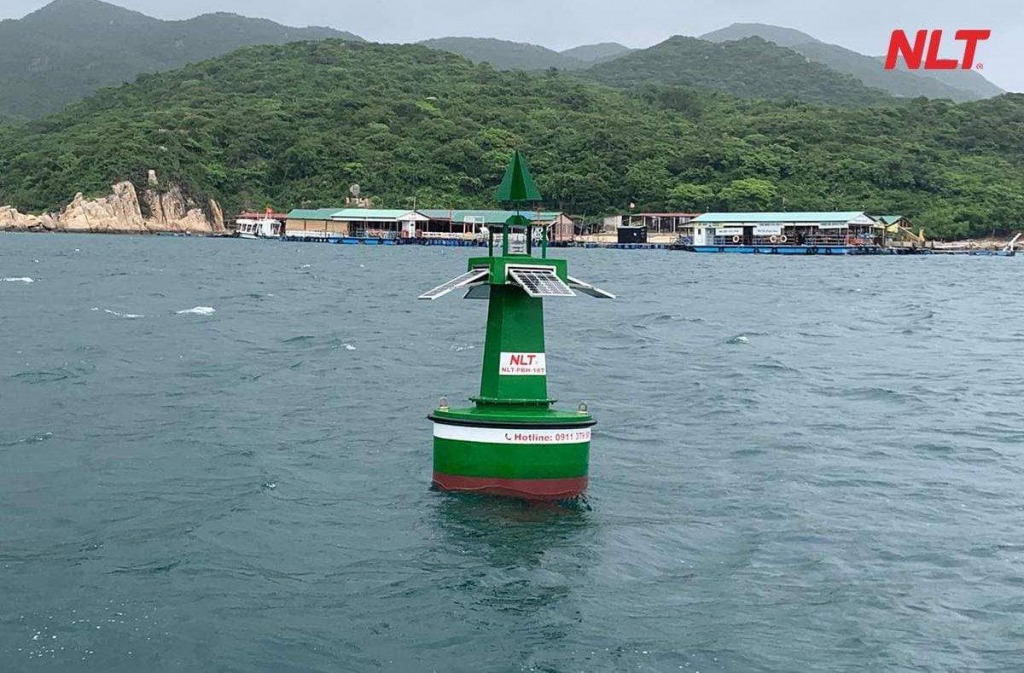
Lower load-bearing capacity than steel, requires supporting structures
Although FRP has better tensile strength than conventional plastics, it is still significantly weaker than galvanized or stainless steel:
- FRP may crack or break under sudden heavy impact, such as large vessel collisions
- Without reinforcement by steel frames or internal cores, FRP can deform under strong wind or fast currents
Therefore, in practice FRP is often used for outer shells or topmarks, while internal structural components remain metallic to ensure overall stability.
UV aging risk without protective coating
Fiberglass itself has strong chemical resistance, but the resin matrix — especially polyester resin — is sensitive to ultraviolet radiation:
- Prolonged sun exposure can cause chalking, fading, or loss of surface gloss
- Micro-cracks or gelcoat peeling may occur if protection is inadequate
For outdoor durability beyond five years, FRP surfaces must be coated with UV protection such as gelcoat, epoxy, or specialized PU coatings.
Higher raw material cost compared to common industrial plastics
Compared with HDPE or ABS, FRP composite typically costs 20–40% more due to:
- More complex industrial molding processes
- Skilled labor requirements for fiber and resin handling
- Special storage conditions for materials (humidity and temperature control)
However, the higher initial cost is often offset by longer service life, lower maintenance needs, and improved performance, especially in marine or high-traffic waterway environments.
Comparison of FRP composite with other buoy manufacturing materials
The table below summarizes four common materials used in modern navigation buoy design: FRP composite, HDPE, carbon fiber composite, and hot-dip galvanized steel.
| Criteria | FRP (Fiberglass) | HDPE | Carbon fiber composite | Hot-dip galvanized steel |
| Weight | Light (~1.8 g/cm³) | Very light (~0.95 g/cm³) | Extremely light, lighter than FRP | Heavy (~7.85 g/cm³) |
| Corrosion resistance | Very good with UV coating | Good, non-rusting | Excellent but brittle | Good if galvanization remains intact |
| Load-bearing capacity | Medium – needs reinforcement Low, easily dented | Load-bearing capacity | Higher than FRP but brittle and hard to repair | Very high – primary structural material |
| Fabrication flexibility | Flexible, easy to mold | Easy but limited complex shapes | Difficult, requires advanced techniques | Easy machining but limited shaping flexibility |
| Electronic compatibility | Excellent – non-conductive, signal-friendly | Good | Good | Poor – conductive and may block signals |
| Material cost | Medium to high | Lowest among four | Very high (3–5× FRP) | Medium to low per unit mass |
| Typical buoy applications | Topmarks, light housings, outer shells | Floating bodies, foam coverings | High-end equipment, drones, premium positioning buoys | Anchor shackles, frames, load-bearing shafts |
Conclusion
FRP composite is an ideal material for navigation buoys thanks to its high durability, lightweight structure, strong corrosion resistance, and ease of shaping. Although auxiliary structural reinforcement is still required in load-bearing components, proper application and protection allow FRP to optimize costs, extend service life, and reduce maintenance efforts for modern waterway navigation systems.
FAQ
Is FRP composite prone to cracking after long-term outdoor use?
No. When coated with UV-resistant gelcoat or epoxy, FRP can operate stably outdoors for over 8–10 years without cracking or becoming brittle. However, if left unprotected under prolonged sunlight, the FRP surface may experience aging, chalking, or micro-cracking.
Can the entire buoy body be made from FRP composite?
Yes, but internal reinforcement is required. To ensure buoyancy and impact resistance, FRP buoy bodies are typically hollow-molded with waterproof foam cores or supported by internal steel frames. This requires careful engineering calculations based on designs approved by relevant authorities.
Can FRP composite buoys be recycled after damage?
Recycling is difficult in the conventional sense. FRP is a thermoset material and cannot be remelted for re-molding. However, it can be crushed and reused as secondary reinforcement material or as an additive in concrete, similar to recycled fiberglass.
Can FRP composite withstand strong waves or vessel collisions?
FRP can withstand typical wave conditions (generally below level 7). However, it is not recommended for locations with a high risk of direct heavy vessel impact. In anchorage zones or near ports, FRP should be combined with steel cores or elastic buffering layers to ensure structural safety.
Is FRP more expensive than HDPE?
Yes. By weight, FRP typically costs about 1.5–2.2 times more than HDPE due to:
– More complex manufacturing processes (molds and skilled labor required)
– Higher raw material costs (resin and fiberglass)
– Protective coatings and surface finishing requirements
However, for components requiring complex shapes, long-lasting color durability, or integrated electronics, FRP can be more cost-efficient in the long term due to reduced maintenance needs.