Tiếng Việt
Urban lighting standards play an important role in building modern and safe cities. In this article, NLT Group invites you to explore in detail the latest urban street lighting standards.
Scope of application of urban lighting standards
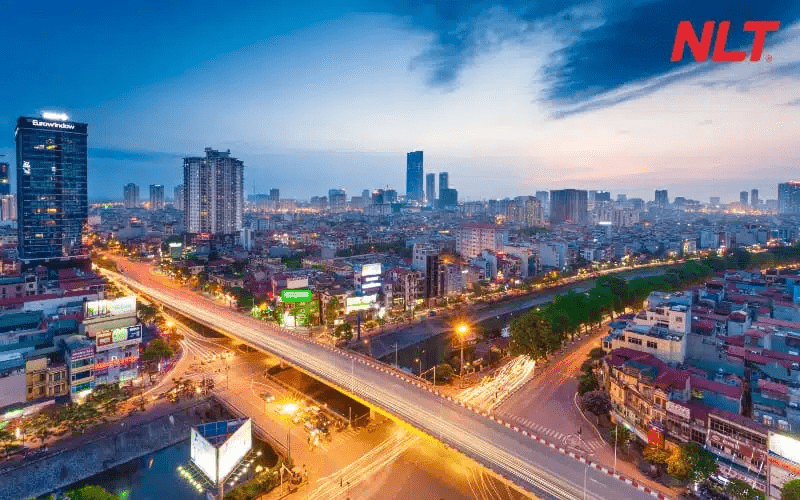
Urban lighting standards apply to artificial lighting systems for urban roads, streets, and squares, including:
- Outdoor public transport areas, bridges, and pedestrian paths.
- Areas outside commercial centers, exhibition fairs, schools, hospitals, and headquarters.
- Parks and flower gardens.
- Architectural works of art, monuments, and fountains.
- Urban works and outdoor sports facilities.
General criteria in urban lighting standards
Urban lighting standards are based on the following criteria sources:
- Lighting engineering – Terminology and definitions: TCVN 4400: 57.
- Technical design regulations for roads, streets, and urban squares: TCXD 104: 1983.
- Regulations on electrical installations and power line systems: 11 TCN 19: 1984.
- Technical requirements for street lighting luminaires: TCVN 5828: 1984.
- Safety regulations for power grids in construction: TCVN 4086: 1985.
- Technical standards for grounding and neutral connection of electrical equipment: TCVN 4756: 1989. See more: Explore the process of designing and constructing smart urban lighting systems
Technical requirements in urban lighting standards
Below is the classification table of streets, roads, and squares according to urban lighting technical requirements:
Types of streets and squares
| Urban road grade | Main function of roads, streets, and squares | Design speed (km/h) | Lighting class |
|---|---|---|---|
| Urban main street | Expressway | High speed traffic between grade I urban areas, between cities and residential clusters within urban systems. Grade separated intersections. | 120 |
| Grade I road | Continuous traffic connecting residential areas, public centers, and industrial zones linked to expressways within urban areas. Grade separated intersections. | 100 | A |
| Grade II street | Controlled traffic within urban areas connecting industrial zones, residential areas, and public centers to grade I main streets. Grade separated intersections. | 80 | A |
| Regional level | Regional road | Connection within residential areas linked to urban main streets. | 80 |
| Transport road | Transport of industrial goods and construction materials outside residential areas, warehouses, and industrial zones. | 80 | B |
| Internal road | Residential road | Connection between sub residential areas and regional roads without public transport. | 60 |
| Industrial and warehouse road | Transportation of industrial goods and construction materials within industrial and warehouse areas connected to transport roads and other roads. | 60 | C |
| Square | Main city square | A | |
| Square in front of bridges and traffic squares | A | ||
| Square in front of stations | A | ||
| Squares at major intersections and transport hubs | A | ||
| Squares in front of public gathering places and public works | B |
Structural and safety requirements of lighting systems
According to urban lighting standards, lighting systems must achieve high energy efficiency. Lighting equipment must have good durability and maintain stable optical characteristics when operating outdoors. In addition, equipment must meet minimum IP protection ratings along with other regulatory requirements.
Electrical protection class
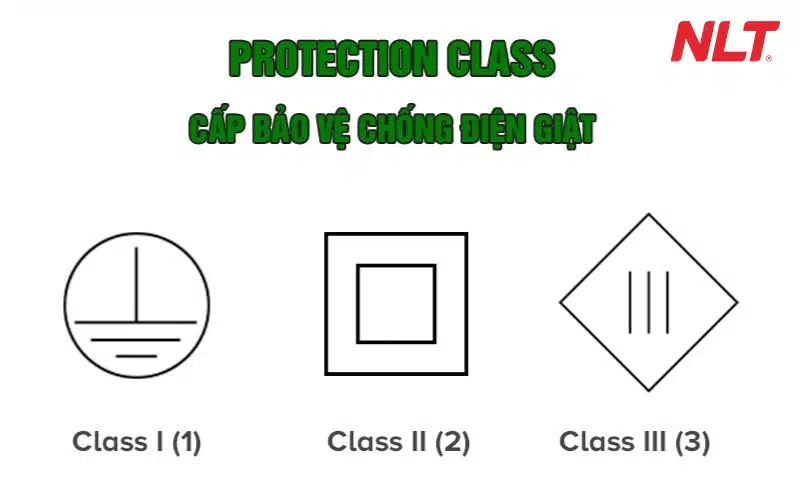
The electrical protection class indicates the insulation capability of equipment. This rating is regulated by the international standard IEC 61140 from the International Electrotechnical Commission IEC. Accordingly, all lighting equipment used in urban lighting systems must meet insulation class I and II requirements.
>> See more: Smart lighting solutions contributing to urban development
IP rating
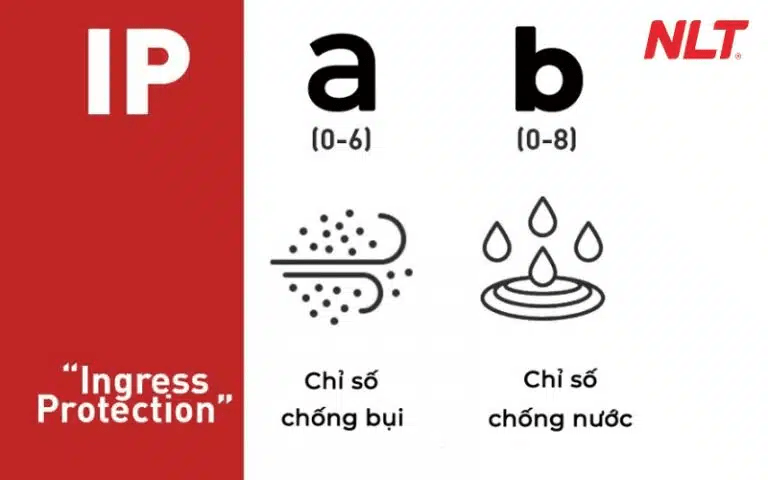
To meet urban lighting standards, luminaires used in urban lighting systems must comply with TCVN 5825: 1994. In addition, luminaires must meet the minimum IP ratings specified in the following table:
| No. | Application environment | Minimum protection rating |
|---|---|---|
| 1 | Low dust, low pollution, non corrosive environment | 22 |
| 2 | Medium pollution, moderate dust and corrosion | 44 |
| 3 | Heavy pollution and corrosion | Optical part: 54 Other parts: 44 |
| 4 | Luminaires installed below 3m height | 44 |
| 5 | In tunnels and bridge structures | 55 |
Electrical grid requirements of the lighting system
Street lighting systems must meet the following three requirements to comply with urban lighting standards:
- Use a unified three phase power grid with grounded neutral 380/200V for power supply.
- Install electrical networks in accordance with standard 11 TCN 19-84 regulations on electrical line systems.
- Select conductor cross sections based on three factors: location of the power supply station, lamp capacity, and voltage drop not exceeding 5% at the furthest luminaire.
Control requirements for the lighting system
The lighting system must ensure the following functions to enable individual and centralized control systems:
- Switching on and off the urban lighting system.
- Lighting control, including turning off part of the street lighting.
- Allowing manual operation by managers.
Conclusion
Through this article, NLT Group hopes you have gained an understanding of the latest urban lighting standards. This will help you choose suitable LED street lighting products for your projects. If you are interested in street lighting solutions, contact us for free consultation.
Nam Long Technology Investment Group (NLT Group)
- Hotline: 0911 379 581
- Email: kinhdoanh@nlt-group.com
- TIN: 0313339640
- Address: 43T Ho Van Hue Street, Duc Nhuan Ward, Ho Chi Minh City