Tiếng Việt
In architectural lighting, visual effects are only truly sustainable when the selected configuration is correct and the system operates reliably over time. Rather than pursuing the lowest purchase price, projects should aim for an optimized solution that balances visual impact, durability in the given environment, and long-term maintainability. Based on this approach, the article below summarizes key principles for selecting architectural lighting equipment at a good price, while also explaining how to read quotations to verify configurations and reduce potential risks.
Tips for buying architectural lighting equipment at the right price
Prioritize the intended visual effect for each area
Architectural lighting is not simply about installing fixtures to achieve sufficient brightness. It is a process of composing light to guide visual attention, create spatial rhythm, and highlight architectural depth. From this perspective, the project scope should be divided by area to select the most appropriate configuration:
- Main facades: emphasize architecture, materials, massing, and depth.
- Pathways and plazas: prioritize visual safety, limit glare, and avoid light spill.
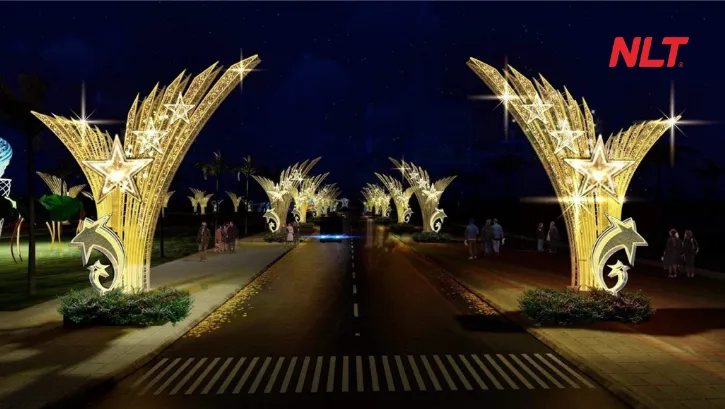
- Focal points (gates, logos, sculptures, fountains, etc.): create clear visual impact to enhance recognition.
- Trees and landscape elements: use soft, natural lighting and avoid harsh direct illumination.
Once the visual objectives are clearly defined for each zone, selecting architectural lighting at a good price becomes a technical decision rather than an intuitive one. For outdoor projects, well-placed focal lighting often creates stronger spatial depth than uniform illumination across the entire site.
>> Read more: How should lighting effects be zoned correctly for parks, landscapes, water features, and walkways?
Choose the right beam angle to optimize fixture quantity
In practice, many projects incur unnecessary costs due to beam angles that do not match the spatial conditions or design intent. Each beam angle serves a different purpose:
- Narrow beam: creates strong focal points and long throw distances, but may cause glare if poorly positioned.
- Wide beam: provides soft, even coverage but can increase power consumption if not carefully controlled.
- Oval or elliptical beam: suitable for elongated surfaces such as facades, columns, or ribbed architectural details.
When requesting quotations for architectural lighting, ask suppliers to clearly specify beam angles by model, intended mounting distances, and whether each fixture is meant for accent or general coverage.
Select configurations based on the actual installation environment
Indoor and outdoor lighting operate under very different conditions, so configurations must be matched to the real environment:
- For outdoor use (rain, dust, sunlight, and coastal areas with salt exposure), prioritize appropriate IP ratings, corrosion-resistant materials and coatings, effective thermal management, and waterproof accessories and connectors to minimize water ingress and long-term deterioration.
- For indoor use, the focus shifts to light quality and comfort, high CRI for natural color rendering of materials and interiors, suitable color temperature for each area, glare control for close viewing or prolonged use, and dimming solutions when atmosphere needs to change throughout the day.
Architectural lighting equipment at a good price must first be suitable for its environment. A lower upfront cost paired with an incorrect environmental specification often leads to higher repair and replacement costs over time.
Choose only the level of control truly needed
Not every project requires a complex control system. Many installations only need scheduled on/off control, time-based dimming, or zoning by function. In some cases, smart lighting controls can be introduced to support centralized management and operational optimization. The key is ensuring that the control solution matches real operational needs and the capabilities of the management team.
- Scheduled on/off: suitable for projects with fixed operating hours.
- Time-based dimming: reduces energy consumption and avoids unnecessary brightness late at night.
- Zoned operation: allows flexibility by area and simplifies management and maintenance.
- Color-changing or scene control: should only be selected when there is a clear need and dedicated operators.
When selecting architectural lighting at a good price, control configuration should be defined according to the operating plan, covering responsibility, dimming requirements, zoning principles, and the scope of scenes, to avoid over investment.
Prioritize fixtures that are easy to replace and maintain
In architectural lighting, return on investment is measured not only at commissioning but also through stable operation and convenient maintenance over many years. When selecting fixtures, prioritize types that are easy to service and replace:
- Clear product codes and specifications to ensure accurate reordering.
- Widely used product lines rather than overly specialized models, ensuring long-term availability of spare parts.
- Designs that allow easy access for maintenance, quick component replacement, and minimal dismantling.
- Compatible accessories and connectors that preserve waterproofing and cable integrity during replacement.
- Logical circuit zoning and connections so servicing one point does not disrupt an entire area.
From this perspective, architectural lighting equipment at a good price should be understood as a choice that helps control operating costs and minimizes system downtime throughout its lifecycle.
>> Read more: The long-term benefits of architectural lighting systems
What should be prepared when requesting a quotation for architectural lighting equipment at a good price?
List of implementation areas and intended visual effects
To ensure the quotation truly reflects actual needs, the scope of work should be clearly presented by area, together with the corresponding visual objectives. There is no need for lengthy explanations. Simply naming each area correctly and briefly stating the intended effect is enough for the configuration to be developed in the right direction. The minimum information should include:
- List of areas: facade A, gate B, walkway C, plaza D, etc.
- Visual objectives: mass highlighting, accent lighting, uniform wash, material emphasis, creation of focal points, etc.
- Expected operating time: nightly operating hours, whether dimming is required during late hours.
This approach helps quotations for architectural lighting equipment at a good price stay aligned with project objectives while reducing issues caused by insufficient input data.
Estimated budget
To keep the quotation aligned with objectives and avoid repeated revisions, the budget should be clearly stated from the outset. Instead of providing only a single total figure, it is better to present it in a structured way so the implementation team can define the correct scope and investment level:
- Total estimated budget for the entire project (budget range or maximum cap).
- Estimated budget by area if the project includes multiple zones (lobby, walkways, landscape, water features, etc.).
- Budget allocation principles: which areas require higher investment for strong visual impact and which areas can be optimized for cost.
This presentation helps the quotation focus on the essentials, avoids spreading configurations evenly without purpose, and minimizes adjustments during finalization.
Control requirements, from simple on/off to color-changing scenes
Control systems are often the factor that creates the largest price differences between quotations, as they directly involve drivers, controllers, signal cabling, and power supply strategies. If control requirements are not defined from the beginning, configurations may be “assumed by habit”, leading either to over-investment or to insufficient support for real-world operation. When requesting a quotation, clearly specify the desired level of control based on one of the following common groups:
- Scheduled on/off.
- On/off combined with zoning.
- Dimming by time schedule.
- Color changing or scene-based operation.
For requirements involving dimming or higher, quotations for architectural lighting equipment at a good price should include the scope of operational handover, such as basic configuration, user guidance, and principles for scene setup. This ensures the system is used as intended in the design and remains stable in operation.
What should a quotation for architectural lighting equipment at a good price include?
Fixture list by area, with model codes and quantities
The quotation should be structured by “area – fixture type – model code – quantity” so that each fixture can be verified for the correct location. For example, facades may use linear grazers with a specific model; gates or logos may use spotlights; walkways may use in-ground lights or bollards with defined codes.
The key point is that each line item must include a model code and basic specifications for cross-checking. Generic descriptions such as “18W LED light” or “outdoor lighting fixture” provide no basis for verifying configuration and make it difficult to ensure the quality of architectural lighting equipment at a good price during acceptance.
Drivers, control systems, and power supply strategy
In many projects, cost overruns arise not from the fixtures themselves but from drivers and control systems. Therefore, a quotation for architectural lighting equipment at a good price must clearly state the driver configuration and power supply principles to avoid changes during construction. Minimum information should include:
- Driver type: remote or integrated, compatibility specifications, and installation method.
- Power supply strategy: location of electrical cabinets, branch distribution, and zoning principles.
- Control type: on/off, dimming, or applicable control protocols.
When drivers, power supply, and controls are clearly defined, the quotation becomes easier to verify and helps prevent additional costs beyond the original estimate.
Installation materials and accessories
For outdoor systems, accessories and installation materials have a direct impact on operational stability. A quotation for architectural lighting equipment at a good price should not separate fixtures from on-site protection components, especially at connection points and cable routes. Commonly required items include:
- Connection accessories: waterproof connectors, junction boxes, waterproofing materials.
- Cable infrastructure: power cables, signal cables, protective conduits or flexible conduits.
- Mounting accessories: brackets, clamps, stainless steel bolts, and fixing hardware suited to site conditions.
If a quotation focuses only on fixture prices while omitting accessories and materials, the likelihood of cost overruns during construction is high, undermining the goal of optimizing an architectural lighting equipment package at a good price.
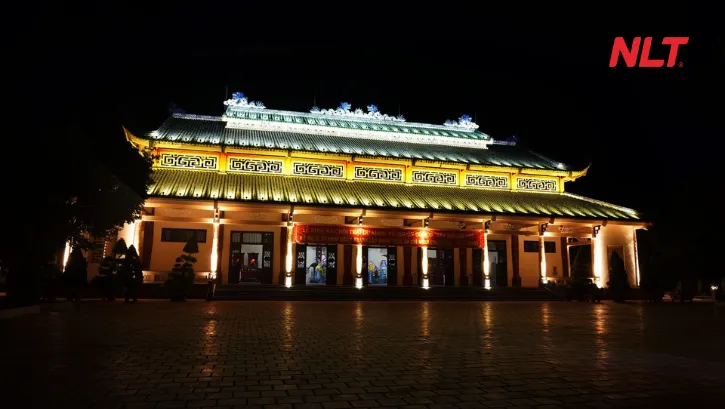
Technical services and warranty conditions for architectural lighting equipment at a good price
Service and warranty terms should be clearly stated as a basis for acceptance and operation, rather than limited to a single warranty period line. For projects requiring continuous operation or public facilities, this section is essential for post-handover risk control. The quotation should clearly specify:
- Warranty conditions: environmental conditions, installation standards, power supply requirements, and operating criteria.
- Issue handling procedures: response times, repair or replacement methods, and scope of responsibility.
- Technical support scope: testing, fine-tuning, operational training, and handover documentation.
When these elements are clearly presented, a quotation for architectural lighting equipment at a good price becomes practical throughout the project lifecycle, from configuration verification to maintenance and warranty support.
4 steps to read quotations for architectural lighting equipment at a good price and avoid choosing the wrong configuration
Compare fixtures by wattage, luminous flux, and beam angle
Wattage only reflects power consumption, not lighting effect. Two fixtures with the same wattage can produce very different results if their optical systems or light distribution differ. When comparing items in a quotation, it is better to follow this order of priority:
- Area objective: uniform wash or accent lighting, surface or mass emphasis.
- Beam angle: narrow, wide, or oval/elliptical based on the surface being lit.
- Luminous flux and light distribution: lumen output and distribution characteristics (focus vs. spread).
- Wattage: use only as a supporting reference at the final step.
If a quotation lists only wattage and omits beam angle and optical specifications, there is not enough basis to evaluate whether the architectural lighting equipment is truly good value, as the effect and configuration cannot be verified.
>> See more: Tips for choosing facade LED lighting without increasing fixture quantity
Check the driver for stability and dimming performance
The driver directly affects operational stability. An unsuitable or low-quality driver often leads to flickering during dimming, uneven brightness transitions, reduced lifespan, and color shift over time. In quotations for architectural lighting equipment at a good price, driver details should be clearly stated and verifiable. Key items to look for include:
- Driver type: remote or integrated, model and manufacturer.
- Dimming protocol: compatibility with the required control system.
- Operational stability: smooth dimming performance with minimal flicker.
When driver specifications are clearly described, delivery configuration and real-world performance are easier to assess from the quotation stage.
Review control systems based on operational needs and scalability
Control systems that match actual needs help optimize operation and costs. Overly complex control, on the other hand, can inflate budgets and complicate daily use. Therefore, the quotation should reflect control solutions aligned with project objectives and clearly state future expandability. A quotation for architectural lighting equipment at a good price should include:
- Control devices: timers, controllers, gateways.
- Zoning principles: by area, route, or function.
- Software or applications: if centralized management is included.
- Scalability: whether adding new zones requires changes to system architecture.
Clear information here helps avoid missing control items or investing in unsuitable control systems.
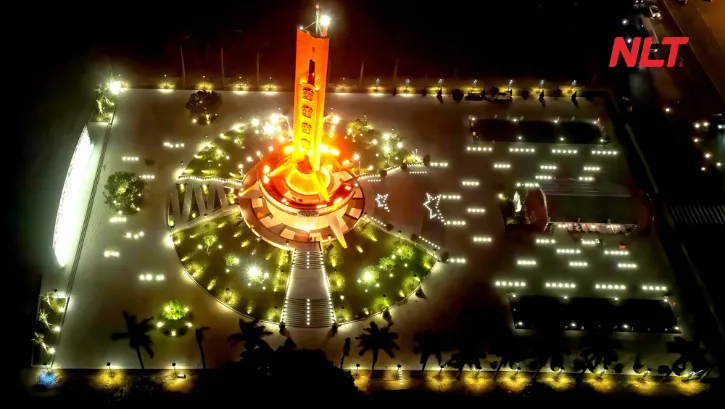
Review materials and technical services included in the quotation
In outdoor architectural lighting, purchasing fixtures essentially means purchasing a complete system. Missing materials or technical services at any stage can affect overall operational stability. Therefore, reviewing commonly overlooked items is essential before finalizing a quotation for architectural lighting equipment at a good price. Key items to check include:
- Waterproof connectors and accessories: connectors, junction boxes, waterproofing materials.
- Electrical protection: surge protection where required, cabinet protection solutions.
- Testing and aiming: nighttime testing, beam angle adjustment based on viewing points.
- Handover documentation: operation manuals, system configuration, acceptance criteria.
When materials and services are fully included, the lighting configuration is easier to accept and post-installation risks are significantly reduced.
5 key specifications that must appear in a quotation for architectural lighting equipment at a good price
Optical system and beam angle by viewing point
The optical system defines beam shape and quality. At the same wattage, different optics create different perceptions of focus, spread, and sharpness. In a quotation for architectural lighting equipment at a good price, this section should provide enough detail to verify alignment with design intent and real viewing conditions, especially for public spaces with changing viewpoints. Recommended information includes:
- Beam angle.
- Optical configuration: lenses or reflectors, if specified by model.
- Recommended installation distance based on beam angle and lighting objective.
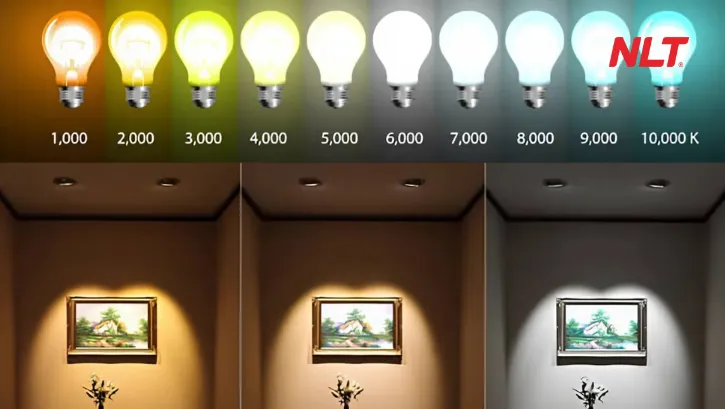
Light color and color rendering index (CRI)
Correlated color temperature defines warm, neutral, or cool tones, while CRI reflects how accurately colors appear on material surfaces. A quotation for architectural lighting equipment at a good price must clearly state both to avoid discrepancies between design visuals and actual installation.
- Stone, tile, wood: usually benefit from warmer tones to enhance depth.
- Metal, glass, modern architecture: may suit neutral or cooler tones depending on design language.
There is no universal configuration for all projects, but the quotation must include sufficient data for alignment from the start.
IP rating and housing material
The IP rating indicates dust and water protection, while housing material determines resistance to weather and corrosion. For outdoor projects, these specifications directly affect durability and operating costs. Therefore, quotations for architectural lighting equipment at a good price should clearly state IP ratings and housing materials for each product line rather than using generic descriptions. A simple rule applies: outdoor-use configurations without clear IP ratings and housing materials lack sufficient technical basis.
Driver specifications and dimming method
The driver determines stability and dimming quality. For projects requiring scheduled dimming, crowded areas, or filming, driver quality is especially critical due to its impact on smooth transitions and flicker control. A quotation for architectural lighting equipment at a good price should specify:
- Whether dimming is supported.
- The dimming method used.
- Compatibility with the proposed control system.
Waterproof connectors and installation standards
On-site connections and waterproofing are small details that often cause the most issues if not properly specified. Therefore, quotations for architectural lighting equipment at a good price should clearly describe accessory configurations and basic installation principles to prevent missing materials or on-site changes. Information should include:
- Types of waterproof connectors used by area or circuit.
- Junction boxes, cable routing, and cable protection methods.
- Recommended basic installation standards for connections, waterproofing, and mechanical protection.
Overall, architectural lighting equipment at a good price is not defined solely by the fixture itself, but by a complete configuration that includes optics, drivers, and protective accessories to ensure long-term, stable operation.
Signs that a lighting quotation is unclear
Vague descriptions with no model codes or reference specifications
Quotations that only state “architectural LED lighting” or “36W fixture” without model codes or basic specifications provide no solid basis for comparing suppliers. In such cases, selecting architectural lighting equipment at a good price often becomes subjective, while actual configurations may differ significantly.
No clear driver specification or delivery configuration commitment
Drivers and delivery configuration determine operational performance. If a quotation does not specify the driver or clearly commit to delivering the agreed configuration, the risk of substitution with “equivalent” alternatives is high. At a minimum, a quotation for architectural lighting equipment at a good price must clearly state the associated configuration and the principles used to guarantee that configuration at handover.
Missing waterproof accessories and outdoor surge protection solutions
For outdoor systems, connection and waterproofing accessories directly affect system stability. Quotations that omit waterproof connectors, junction boxes, sealing materials, or fail to address surge protection where electrical risks exist often lead to cost overruns during installation and higher failure risks during operation. A proper quotation for architectural lighting equipment at a good price must clearly include protective accessories, not just the fixture body.
No zoning by lighting area
Quotations that do not separate items by lighting area often result in a uniform scope that is difficult to control in terms of localized effects and area based costs. When design adjustments or budget optimization are needed, reducing or modifying configurations becomes arbitrary, weakening the investor’s ability to control the architectural lighting solution effectively.
No testing, handover, or acceptance criteria
The absence of testing, aiming, and acceptance criteria makes handover overly dependent on subjective judgment and often leads to prolonged revisions. A quotation for architectural lighting equipment at a good price should at least include:
- Nighttime testing and aiming based on viewing points and lighting objectives.
- Basic handover documentation such as configuration details, system diagrams, and operation guidelines.
- Descriptive acceptance criteria covering scope and evaluation principles.
When these items are clearly stated, the quotation becomes easier to verify and significantly reduces risks during acceptance and operation.
Architectural lighting equipment at a good price should be evaluated based on the overall value of the configuration, not merely unit prices. When lighting objectives are clearly defined by area and the quotation fully specifies optics, beam angles, luminous output, drivers, control approach, accessories, and handover scope, the project gains transparent reference points, avoids configuration errors, and maintains effective cost control throughout the system’s lifecycle.
If your project requires selecting architectural lighting equipment at a good price with the correct configuration, stable performance, and optimized long term operating costs, NLT Group can support you from site survey and area based configuration proposals to technical documentation standardization and implementation assistance. Contact NLT Group today to receive a solution tailored to your project and lighting objectives.
Nam Long Technology Investment Group (NLT Group)
- Hotline: 0911 379 581
- Email: kinhdoanh@nlt-group.com
- TIN: 0313339640
- Address: 43T Ho Van Hue Street, Duc Nhuan Ward, Ho Chi Minh City