Tiếng Việt
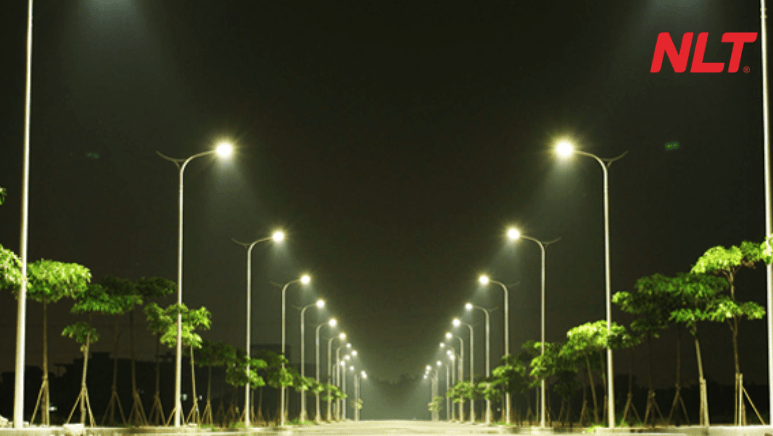
Smart street lighting today is no longer just about illuminating roads, but has become a core component of modern urban technical infrastructure. The transition to smart street lighting systems helps cities optimize energy use, reduce operating costs, improve safety levels and gradually move toward a sustainable smart city model.
Serious issues if cities do not adopt smart street lighting
Energy waste and operating budget pressure
Traditional street lighting systems consume large amounts of electricity and cannot adjust brightness based on actual demand. Operating at full capacity throughout the night leads to significant energy waste, costing cities billions each year and placing heavy pressure on urban operating budgets. This issue is especially critical on roads, in residential areas and in parks with a high density of lighting fixtures.
Limited control over lighting quality across entire routes
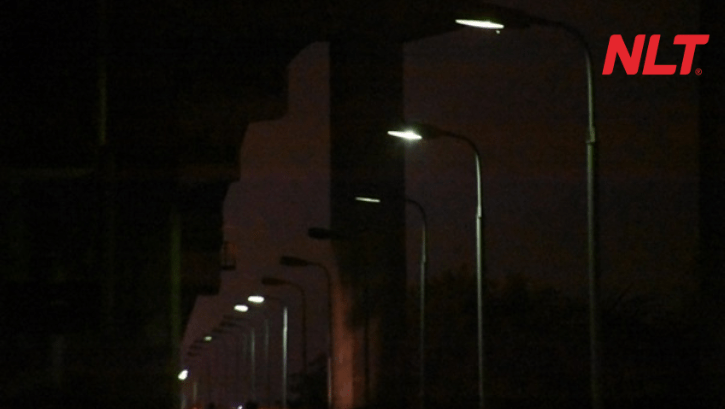
Without smart street lighting, management authorities have little visibility into the condition of individual lights. Dim, faulty or flickering lamps can remain unnoticed for days, directly affecting visibility for residents and reducing traffic safety at night.
Manual maintenance and delayed fault detection
Conventional systems lack remote fault alerts, meaning maintenance teams often discover issues only after citizen reports or scheduled inspections. This approach is labor intensive, slows down repairs and increases safety risks in areas where lights remain out of service for extended periods.
Urbanization pressure and the need for sustainable infrastructure
As cities expand, the scale and complexity of lighting management grow rapidly. Maintaining outdated systems makes it difficult to meet modern lighting standards or integrate IoT, data platforms and centralized management software. This slows progress toward smart city development and directly affects quality of life, public security and local emission reduction targets.
What is smart street lighting and how does it differ from traditional systems?

The concept of smart street lighting
Smart street lighting refers to lighting systems that are automatically controlled using IoT technology, sensors and centralized management software. Instead of fixed on off schedules, the system can adjust brightness based on traffic flow, ambient light conditions or preconfigured scenarios. As a result, cities save energy, enhance safety and operate lighting infrastructure more efficiently than with traditional street lights.
Basic structure of a smart street lighting system
A typical smart street lighting system includes four main components:
- High efficiency LED luminaires: that consume less power, offer long service life and provide stable light output.
- Controllers and sensors: that detect movement, ambient light levels and lamp operating status.
- IoT, PLC or 4G and 5G communication infrastructure: to connect lighting points to a central system.
- Centralized management software: for real time monitoring, brightness control, scenario scheduling and fault alerts.
Together, these components form an integrated system that optimizes both operation and maintenance.

>> See more: Smart lighting products from NLT Group
Comparison between smart street lighting and traditional street lighting
| Criteria | Traditional street lighting | Smart street lighting |
| Lighting technology | Sodium/halogen lamps, low efficiency | High-efficiency LED lighting |
| Control method | Manual operation or fixed timers | Automatic control via sensors and programmable scenarios |
| Monitoring | No remote monitoring | Real-time monitoring of each individual light |
| Maintenance | Manual inspection, labor-intensive | Automatic fault alerts, faster maintenance |
| Energy efficiency | Low | 50–70% energy savings depending on configuration |
| Smart city integration | Not supported | Easy integration with IoT, AI, and Cloud platforms |
Core technologies in smart street lighting

High-efficiency LED luminaires with long lifespan
LED luminaires are the core of smart street lighting systems thanks to their high luminous efficiency and significantly lower power consumption compared to sodium or halogen lamps. Their long lifespan and outdoor durability help maintain stable illumination, reduce replacement and maintenance costs, and ensure roads, parks, and residential areas remain safely lit while optimizing long-term operating budgets.
Motion sensors and ambient light sensors
Smart sensors act as the “eyes” of the lighting system. Motion sensors automatically increase brightness when pedestrians or vehicles are detected and reduce output when areas are unoccupied to save energy. Ambient light sensors allow luminaires to detect natural light levels and adjust accordingly, avoiding unnecessary operation. As a result, smart street lighting systems optimize energy use while maintaining safety and performance.
Remote control via IoT and wireless or PLC networks
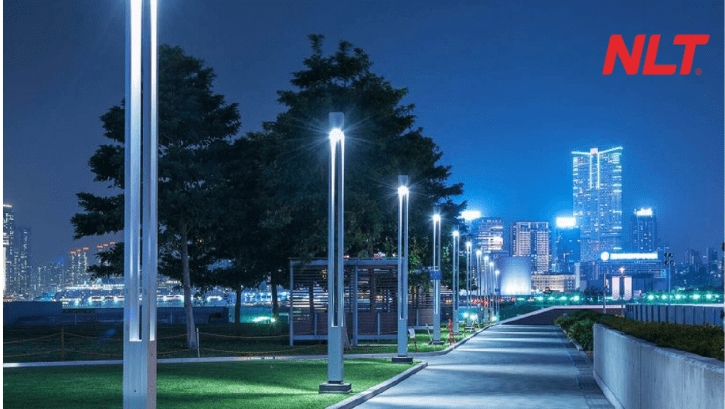
Smart lighting systems can be remotely controlled via IoT or PLC, 4G, or 5G networks, enabling on and off control, brightness adjustment, and scenario-based scheduling. Parameters such as power consumption, voltage, temperature, and equipment faults are transmitted to the control center in real time, allowing authorities to monitor the entire network without manual inspections.
Centralized software platform with real-time monitoring
All luminaires are connected and visualized on a GIS-based management platform. Operators can:
- Monitor the status of each individual light
- Adjust lighting configurations by zone
- Receive instant fault alerts
- Analyze energy consumption by day, week, or month
Data-driven management enables faster, more accurate decisions and proactive maintenance and upgrade planning.
Integration with smart city platforms
A key advantage of smart street lighting is its ability to integrate with smart city platforms such as traffic management, security, environmental monitoring, and energy systems. When connected to a centralized smart city platform, data is synchronized in real time, enabling seamless urban management, higher automation levels, and consistently optimized lighting across all routes.
Benefits of smart street lighting

Energy savings and reduced budget expenditure
High-efficiency LED luminaires combined with sensor-based dimming significantly reduce energy consumption. Lights brighten only when vehicles or pedestrians are present, delivering substantial annual cost savings, especially in cities with extensive lighting networks.
Improved traffic safety and public security at night
Stable illumination with appropriate brightness improves visibility and reduces nighttime accidents. When movement is detected, the system automatically increases brightness in high-traffic areas, while ensuring public spaces remain well lit to help deter security risks.
Reduced emissions and progress toward green, sustainable cities
Smart lighting systems continuously record luminaire status, energy consumption, and technical faults in real time. This enables centralized monitoring, automated operation, faster incident response, and improved urban management efficiency, contributing to lower emissions and sustainable development goals.
Enhanced aesthetics and distinctive nighttime urban identity
LED lighting allows flexible adjustment of color temperature, brightness, and lighting effects, helping create distinctive streets, squares, and residential areas at night. Precise light control delivers vibrant urban spaces while keeping operating costs under control.
Automated management and data-driven decision support
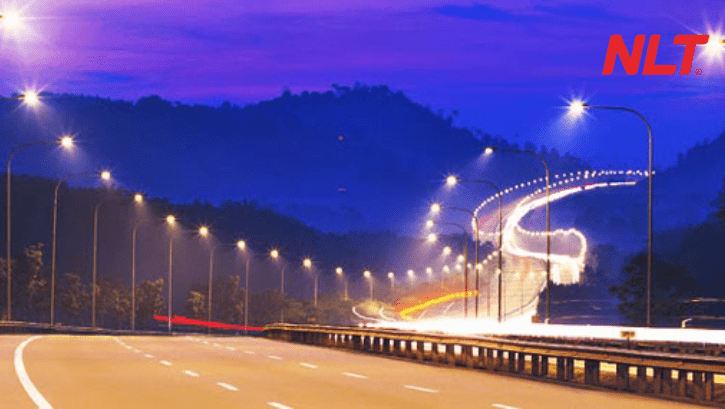
Smart lighting systems collect real-time data on luminaire status, energy use, and faults. Authorities can manage the entire network from a central platform, automate operations, resolve issues more quickly, and significantly improve urban management efficiency.
>> See more: Key advantages of smart lighting systems
Smart street lighting projects implemented by NLT Group
Street lighting for urban developments and residential areas
In residential and urban development projects, street lighting is a critical component for nighttime safety and urban identity.
When implementing internal road infrastructure, NLT integrates street lighting systems that comply with lighting standards and are uniformly installed along routes to ensure appropriate illuminance and uniformity. As a result, newly developed residential areas benefit from safe, well-lit nighttime environments that support daily life.

Smart street lighting on major traffic routes
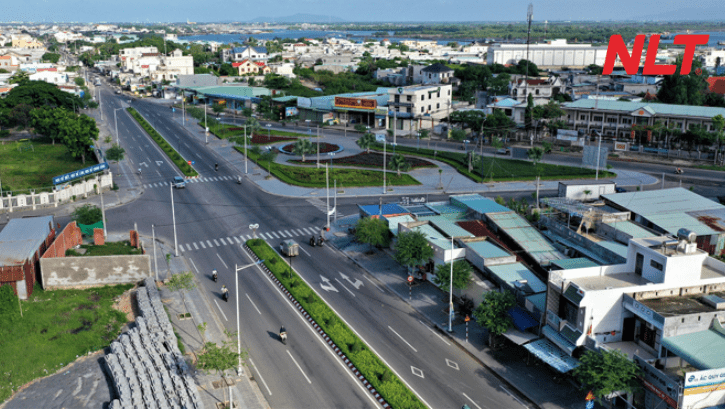
On main roads, boulevards, and high-traffic areas, lighting systems must balance safety and energy efficiency. Infrastructure projects implemented by NLT emphasize high-efficiency LED solutions with uniform illumination, minimized dark spots and glare, and enhanced nighttime visibility.
These systems are also designed to support future smart control upgrades, enabling remote monitoring and flexible brightness adjustment to further improve lighting quality across entire routes.
Renewable energy street lighting and centralized management models
Current smart street lighting trends focus on energy savings, emission reduction, and optimized operating costs. The integration of LED luminaires with renewable energy sources such as solar power, IoT-based control systems, and centralized management platforms enables cities to proactively control lighting levels, monitor each luminaire’s status, and automatically receive fault alerts in real time.

With comprehensive capabilities spanning design, construction, operation, and maintenance, and extensive experience across nationwide projects, NLT Group confidently meets the stringent requirements of investors. NLT’s smart lighting solutions consistently deliver high performance, durability, and stability, while remaining scalable and easily integrable with future smart city platforms.
If you are seeking a reliable smart street lighting provider that optimizes costs and ensures long-term operation, contact NLT Group for tailored consultation.
Nam Long Technology Investment Group (NLT Group)
- Hotline: 0911 379 581
- Email: kinhdoanh@nlt-group.com
- TIN: 0313339640
- Address: 43T Ho Van Hue Street, Duc Nhuan Ward, Ho Chi Minh City