Tiếng Việt
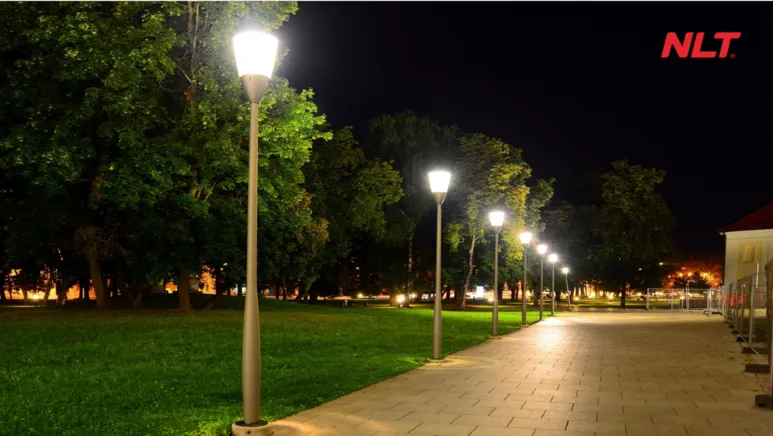
Modern park lighting is no longer just “install enough lights to make it bright”. It is a night time spatial planning challenge. An effective system must handle three layers in harmony: greenery and landscape elements, water features, and internal walkways. When designed properly, park landscape lighting improves safety, enhances user experience, optimizes operating costs, and sustains the project image over the long term.
What values does effective park lighting deliver?
Improved safety and security for night time users
The core purpose of park lighting is to ensure visibility and a sense of safety. Internal walkways, paths around lakes, steps, bridges, parking areas, and similar zones need appropriate illuminance to reduce risks of tripping, slipping, and collisions.
An effective park lighting system minimizes dark zones and blind spots, supports security oversight and video surveillance, and keeps sightlines clear. Stable light without flicker and without harsh glare helps users orient themselves and move comfortably.
Enhanced landscape aesthetics and project identity
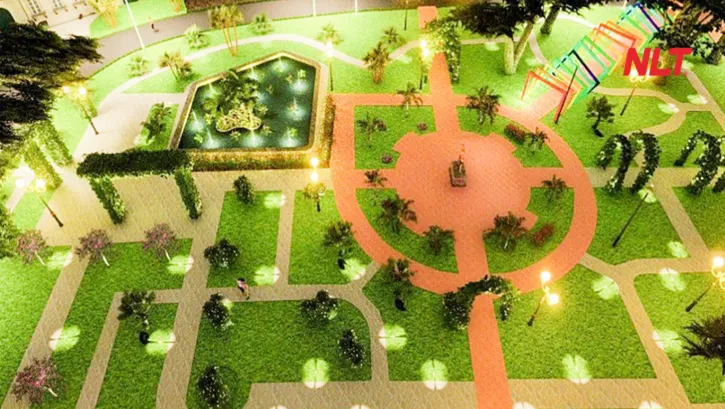
When planned properly, lighting gives the night scene a distinctive character and a consistent visual language aligned with the projects architecture:
- Large trees, signature tree clusters, sculptures, and decorative bridges can be accented with uplights or spotlights to create layered depth.
- Water features can be treated with indirect light to leverage reflections and increase visual depth across the area.
- Walkways, steps, seating, and railings can integrate linear lighting or concealed light for a refined feel rather than a harsh look.
Extended usable hours and increased surrounding property value
When park lighting meets both technical and aesthetic requirements, the space is no longer limited to daytime use. Residents and visitors can walk, exercise, and gather in the evening under safe and comfortable lighting conditions. Lakes, fountains, plazas, and playgrounds become night time attractions, increasing utilization of the entire complex.
Urban areas with well invested park lighting often present a more complete city image, supporting commercial value and nearby real estate potential.
Design principles for park lighting that integrates landscape, water features, and internal walkways
Layer lighting by function
- Functional lighting layer: provides lighting for walkways, plazas, sports zones, and shared activity areas with suitable illuminance and uniformity per standards.
- Landscape lighting layer: highlights greenery, water features, walls, and decorative elements to add depth.
- Accent lighting layer: focuses on identity elements such as gateways, logos, sculptures, and signature structures to create clear focal points.
Balance brightness and reduce glare
In park lighting design, optics must be selected to avoid direct light into users eyes or glare for distant observers.
Brightness contrast between primary and secondary areas should stay within a reasonable range so eyes do not constantly readjust. Color temperature should be consistent, with warm to neutral tones preferred for landscapes and internal walkways to create a relaxing atmosphere.
Maintain a unified lighting concept across the site
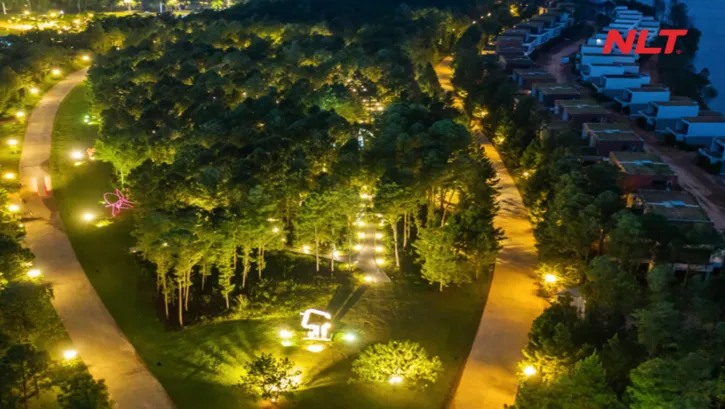
Lighting tone, fixture design, and how linear lighting and accents are handled should be consistent to avoid a “different style in every zone” look.
Technical standards for equipment (IP, IK, corrosion resistance, control method, etc.) should be unified to simplify operation and maintenance. The way landscape lighting, water features, and internal walkways are combined should follow one consistent “lighting language” throughout.
>>See more: Standards you should know when designing lighting for parks and public spaces
Park lighting solutions for greenery and landscape areas
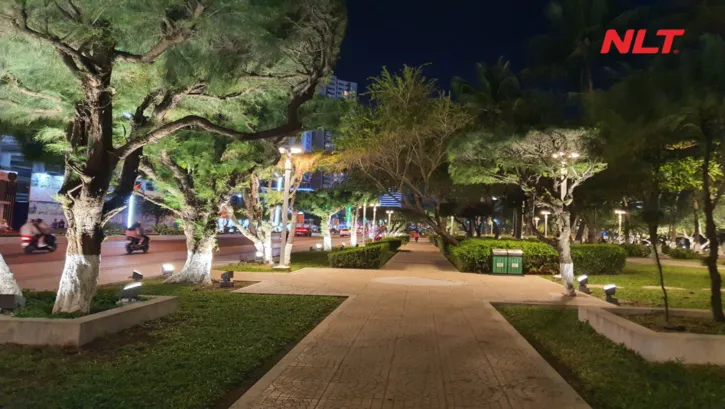
Lighting for lawns, flowerbeds and low planting
Use bollards, stake lights, or low power in ground lights to spread light evenly across surfaces, avoiding overly bright or overly dark patches. Fixture positions should be calculated so light covers lawns and path edges without shining directly into pedestrians eyes.
Fixtures should be outdoor LED with wide beam optics and good color rendering to reproduce greens and flower colors accurately.
Lighting for large trees and architectural focal points
Uplights and spotlights can be placed at the base or concealed locations, aimed with controlled direction to emphasize trunks, canopies, or architectural details. Multiple layers of light with different intensities can add depth, but glare and spill light must remain controlled.
For distinctive park structures, park lighting can combine wall washing with accents to define form and avoid a flat appearance.
Integrating light with paths, seating, and small landscape features
Linear lights and concealed LED strips in steps, deck edges, handrails, balustrades, and benches create continuous guidance lines and support wayfinding.
Features such as planters, stone arrangements, and decorative walls can be softly lit to create visual interest, but overuse should be avoided to prevent visual clutter. Concealed lighting should be prioritized so users see the light, not the fixture.
Park lighting solutions for water feature areas
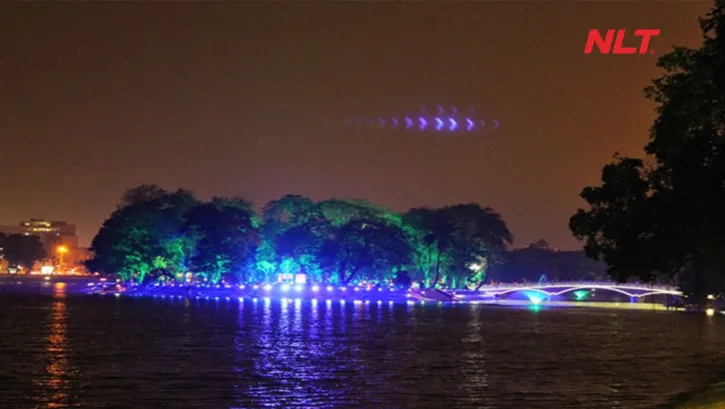
Lighting for lakes, canals, and streams
Shoreline lights or in ground lights along promenades and embankment edges, aimed downward to the water surface, can create clear illuminated contours while avoiding direct glare to users.
In the overall park lighting plan, reflections from surrounding trees and structures should be leveraged to create effects, reducing the need for too many fixtures inside the water. Light levels near water should be lower than internal walkways to keep the atmosphere soft and to avoid glare.
Lighting for fountains and jets, including musical fountain integration
For fountains and jets, use dedicated underwater lights with appropriate waterproofing and corrosion resistance. You can combine single color lighting or RGB or RGBW and program lighting scenes by time, holidays, or events.
In many projects, this is also an ideal zone for artistic lighting 4.0 solutions, combining dynamic lighting with water and sound to create a distinctive night time focal point.
Fixture positioning must ensure water and light effects support each other and do not cause glare for viewers at close range.
>> See now: Applications of musical fountains and fountains in park design
Electrical safety standards and maintenance for water area lighting
Equipment installed in or near water must meet suitable IP protection levels, with measures to prevent leakage current and corrosion. Electrical cabinets, junction boxes, and power cables should be placed in dry locations, protected, and inspected regularly.
In park lighting planning, maintenance access should be considered from the design stage, such as technical access paths, shallow water zones, and drainage valves, so underwater light servicing does not significantly disrupt overall operations.
Park lighting solutions for internal walkways
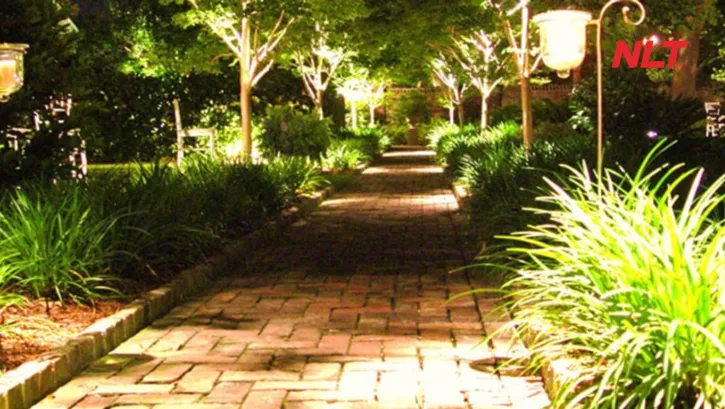
Pedestrian paths, lakeside promenades, and green corridors
Low pole lights and bollards should be arranged with appropriate spacing, mounting height, and beam direction to create continuous light along the route. Light should focus on walking surfaces and step edges, not shine directly toward users faces.
Lighting levels should be sufficient to identify obstacles and distinguish paving materials while maintaining a calm atmosphere, not turning the park into a roadway lighting environment.
In practice, criteria such as illuminance, uniformity, and flexible control used in smart street lighting can be adjusted and applied to internal walkways, especially main routes with higher foot traffic.
Plazas, playgrounds, and outdoor sports areas
Within the overall park lighting plan, plazas and playgrounds often use high pole lights combined with floodlights, calculated to achieve standard illuminance and uniformity while minimizing localized dark spots.
For sports fields, refer to the relevant sports lighting standards to ensure suitable conditions and safe movement.
Intersections, wayfinding signs, and special functional zones
At path intersections, lighting should be increased so users can clearly see directions and turning points. Directional signs, park maps, and emergency exits should have dedicated lighting so they remain readable under varied conditions.
Restrooms, guard rooms, and technical stations should be clearly lit so they are easy to locate and better support operations and security.
Smart park lighting technology applications
Using high efficiency LED fixtures to save energy
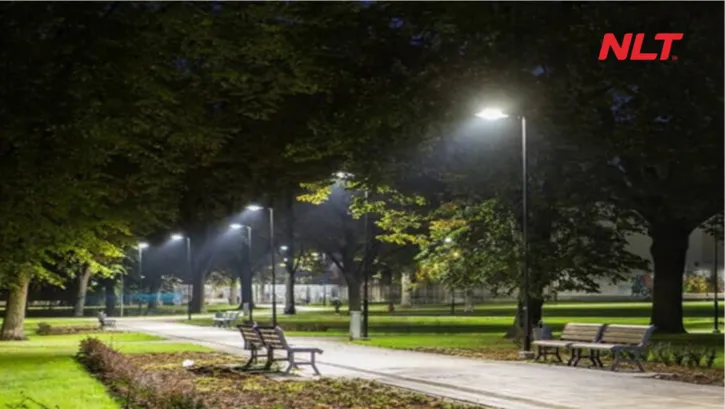
High efficacy LED and long lifetime reduce replacement frequency and maintenance costs. Diverse optical options help optimize lighting for each zone: greenery, water features, walkways, and plazas.
In areas where power infrastructure is difficult or where renewable share targets are needed, solar energy integration can reduce operating costs and dependence on the grid.
System wattage should be calculated to match actual needs, reducing outdoor lighting load while meeting technical requirements.
Lighting control by time schedule, zone, and event scenarios
With a control system, park lighting can run flexibly:
- Reduce power in low use areas after a certain hour while maintaining baseline security lighting.
- Switch lighting scenarios by season, holidays, or park events.
- Apply dimming schedules to balance safety, aesthetics, and energy savings.
Sensor integration and centralized management for the entire park
Presence sensors can increase or decrease lighting based on user flow in each area. Ambient light sensors can automate switching or adjust levels during darkness, rain, fog, and similar conditions.
A centralized management system (CMS) enables monitoring of each lighting point, energy reporting, timely fault alerts, and smarter overall park operations.
Common mistakes in park lighting and how to avoid them
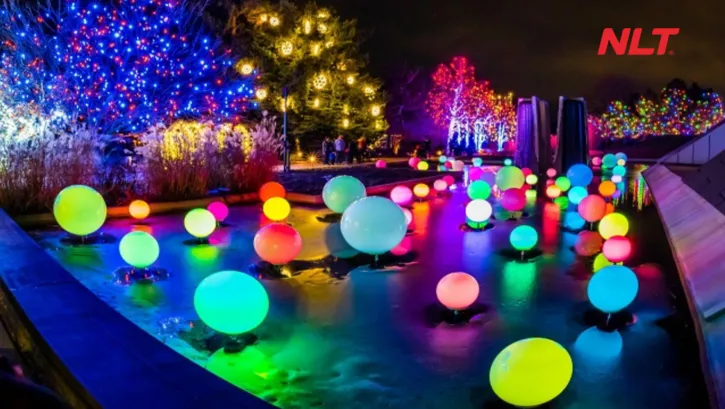
Installing lights just to “make it bright” while ignoring the landscape experience
A common mistake is treating park lighting like roadway lighting: focusing only on path brightness and ignoring greenery, water features, and architecture. Without a holistic concept, the park lacks night time experience and identity.
The solution is to treat lighting as part of landscape design, developed in parallel with architecture and planting, not as a late add on.
Overly harsh lighting, glare, and light pollution
Using high power fixtures with unsuitable optics and poorly controlled aiming can cause harsh glare, reduce comfort, and spill light into nearby residential areas and the night sky, affecting ecosystems.
Follow outdoor lighting design principles, use anti glare accessories, control beam angles, and set light levels according to standards.
Lack of coordination between landscape, water features, and internal walkways
When each area is designed by different parties, park lighting can look acceptable locally but disconnected overall, with no shared visual language. Operating scenes are difficult to synchronize, and diversified fixture types complicate maintenance.
The solution is to develop a master lighting plan from the start, define concept, layers, and common standards, then detail each sub zone afterward.
Ignoring maintenance and fixture lifetime in outdoor environments
If the focus stays on upfront cost and ignores climate exposure, corrosion, and impact resistance, fixtures degrade quickly, lighting uniformity declines, operations are disrupted, and project image suffers.
From the design stage, plan for fixture lifetime, protection ratings, and mounting locations, and arrange technical cabinets and access routes to support long term maintenance and replacement.
Park lighting is not only an infrastructure item. It is a strategic part of how a project defines its night time experience, urban image, and long term value. With proper planning, park lighting can meet safety, aesthetics, and operational efficiency at once, helping investors control life cycle costs and minimize risks caused by patchwork “install lights just to be bright” approaches.
>> See now: Binh Son beach park shines with a modern in ground musical fountain system by NLT Group
If you are preparing a new installation or upgrading landscape lighting for a park, urban area, or plaza, NLT Group can support you from solution consulting, fixture selection, design and construction, to optimizing real world operations. Contact us now for a suitable, safe, and long term effective lighting proposal.
Nam Long Technology Investment Group (NLT Group)
- Hotline: 0911 379 581
- Email: kinhdoanh@nlt-group.com
- Tax code: 0313339640
- Address: 43T Ho Van Hue, Đuc Nhuan Ward, Ho Chi Minh City