Tiếng Việt
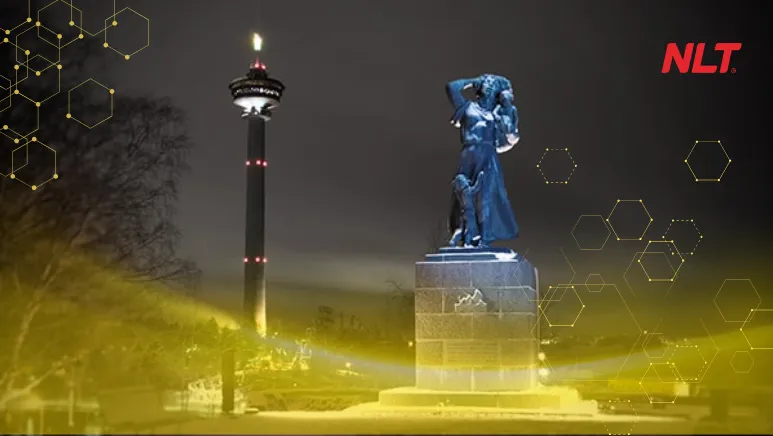
Monument lighting design requires a specialized design mindset, as the work must accurately express historical and cultural values as well as its symbolic role within the urban nightscape. So what are the key factors that determine the quality of a monument lighting design scheme? Which elements must be carefully considered to ensure both aesthetic effectiveness and long-term functional value? The following content addresses these questions in detail.
The role of monument lighting
Affirming symbolic value and historical significance
Monuments typically represent a specific historical figure, event, or period. Therefore, monument lighting is not merely about providing illumination but about highlighting and honoring the symbolic value carried by the work. When light is properly organized, it guides viewers’ attention to the main form, overall proportions, and the expressive character of the monument, thereby conveying the historical message in a complete and accurate manner.
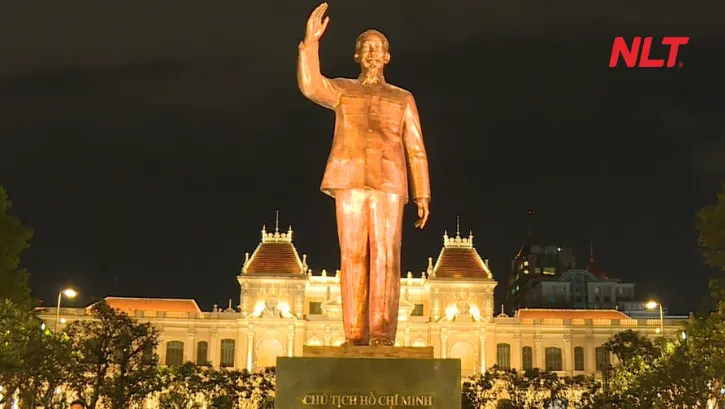
For works such as statues of President Ho Chi Minh, national figures, victory monuments, or memorials, lighting requirements are even more stringent. The light must maintain solemnity, restraint, and propriety, avoiding any elements that appear ostentatious or distort perception. When correctly designed, monument lighting preserves the depth of meaning at night, rather than allowing the structure to exist merely as a brightly lit architectural mass.
Expressing regional cultural identity and characteristics
Monument lighting serves as a medium for conveying historical identity and regional spirit through the language of artistic lighting, reflected in light composition, color tone, and contrast. When properly designed, lighting clarifies the relationship between the monument and the cultural and historical context it represents.
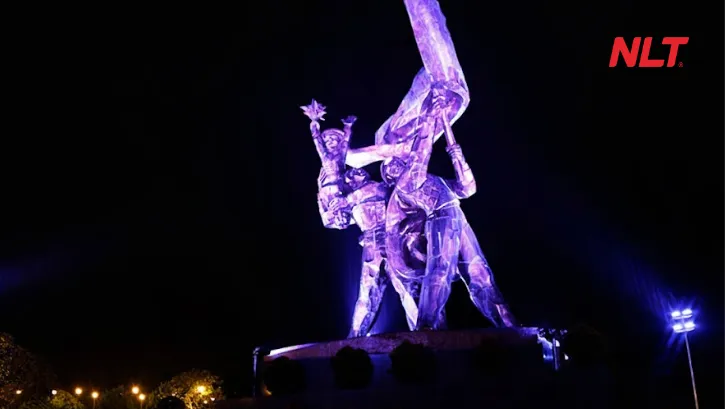
A typical example is the D1 Hill Monument in Dien Bien, closely associated with the Dien Bien Phu Victory. In practice, the lighting design uses warm light tones with clear emphasis, highlighting the monument’s form against the vast and dark backdrop of D1 Hill. This lighting approach creates a strong, solemn atmosphere and evokes the historical spirit of Dien Bien, rather than aiming for neutrality or excessive restraint.
As a result, the nighttime image of the monument becomes a distinctive visual identifier. Simply by observing the lighting and overall composition, viewers can immediately associate it with the historical context and local space the monument represents.
Contributing to local image positioning in the nighttime environment
In many localities, monuments function as spatial landmarks, appearing in central squares, historical sites, city gateways, or other significant public spaces.
At night, monument lighting plays a decisive role in maintaining this visual identity, ensuring the structure remains clear and memorable when natural light is absent.
An appropriate lighting solution highlights the main form, overall proportions, and the monument’s position within its surroundings, creating a stable and consistent image over time.
As a result, the monument is not only visible at night but also becomes a visual anchor that helps define the local image in the memory of residents and visitors alike, whether in urban areas, heritage sites, or commemorative spaces.
Key factors in monument lighting design that determine project quality
As many public projects increasingly adopt smart lighting approaches, monument lighting design must be evaluated not only for its initial visual effect but also for its controllability, durability, and long-term operational stability.
Objectives of monument lighting design
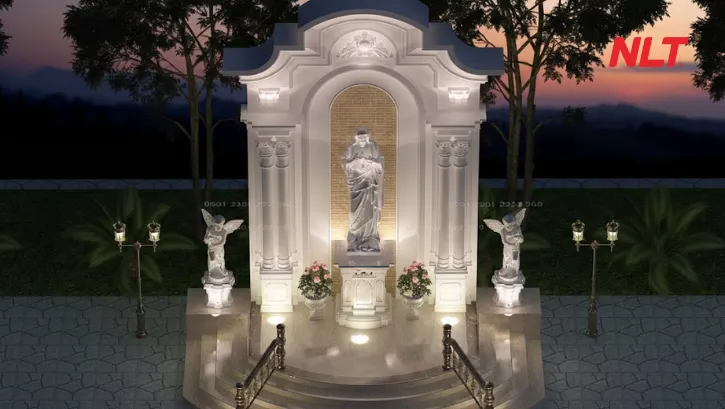
Monument lighting design should begin with a clear definition of lighting objectives, which serve as the foundation for the entire concept. The focus may be on overall form, sculptural detail, or the monument’s spiritual and commemorative value. Without a clear objective, lighting solutions easily become scattered and lack emphasis.
In addition, the level of lighting intervention must be appropriate to the nature of public space. Light should be carefully controlled to clarify the monument, preserve solemnity, and harmonize with the surrounding context, avoiding excessive display or overpowering illumination.
Selection of materials and equipment for monument lighting
- Compatibility with monument surface materials: For monuments made of natural stone or concrete, lighting should have moderate diffusion and medium to wide beam angles to reveal surface texture and form, avoiding color flattening or loss of detail. In contrast, bronze and metal monuments require stricter optical control, favoring narrow to medium beam angles and avoiding direct frontal lighting to reduce strong reflections and glare.
- Optics suitable for monument form and scale: For large-scale or tall monuments, optics should be organized in layers, prioritizing the main mass before addressing secondary details. For monuments with rich sculptural detail or grouped figures, combining multiple controlled lighting angles is more effective than simply increasing wattage, preserving proportions and visual depth at night.
- Meeting environmental and outdoor conditions: Monument lighting fixtures must suit the climate and installation environment. Generally, an IP rating of IP65 or higher is the minimum requirement. In areas with heavy rainfall, high humidity, or proximity to rivers and lakes, IP66–IP67 protection is recommended, along with corrosion-resistant housings such as powder-coated die-cast aluminum or 316 stainless steel.
- Stable lighting quality over time: Lighting for monuments must maintain consistent color and luminous output throughout operation. Selecting light sources with good color stability, combined with matched drivers and optical systems, helps prevent color shift, lumen depreciation, and uneven appearance over time.
- Suitability for long-term operation and maintenance: From the design stage, fixture placement and configuration should allow easy access for inspection, servicing, and replacement. Using standardized and compatible equipment helps control maintenance costs, prevent color mismatch, and maintain a consistent lighting image throughout the monument’s lifecycle.
Light composition and contrast control in monument lighting design
Monument lighting should be organized into clear layers, with a dominant layer emphasizing the overall form and supporting layers used selectively to highlight necessary details. This approach gives the monument depth and visual stability at night.
In addition, lighting intensity and contrast must be carefully calculated to avoid uniform illumination that flattens the form. Proper control of glare and unwanted visual effects helps preserve solemnity, safety, and the quality of surrounding public space.
Color and optics in monument lighting design
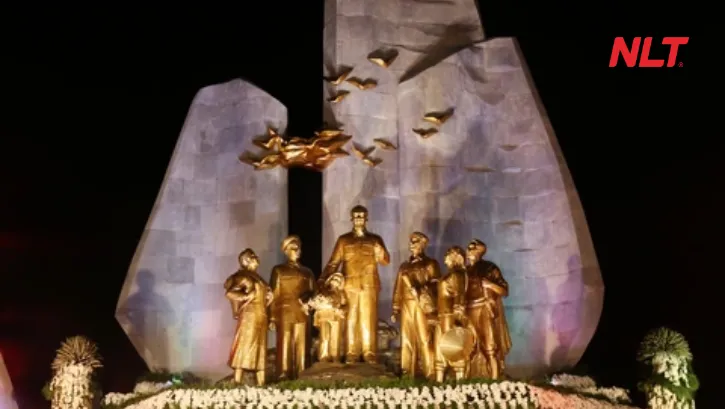
In monument lighting design, light color and optics must be selected consistently with the spirit and image of the monument. Appropriate correlated color temperature preserves material tone, clarifies form, and avoids visual distortion at night. The use of color-changing lighting should be strictly controlled and applied only where it has clear meaning and limited scope, preventing any reduction in solemnity or symbolic value.
Beyond aesthetics, color and optical solutions must also consider long-term operation and maintenance. Stable optics, simple configurations, and system consistency help maintain a uniform lighting image over time while minimizing operational risks and maintenance costs.
Common mistakes in monument lighting design
Selecting inappropriate luminaires or equipment
- Choosing equipment based on wattage instead of optics: Prioritizing high wattage fixtures without considering beam angle and light distribution can easily cause over-illumination, flatten monument forms, or obscure important sculptural details.
- Using equipment incompatible with monument materials and form: Ignoring material reflectance and project scale can lead to glare, harsh shadows, or distorted visual perception when the monument is viewed at night.
- Using generic fixtures for symbolic structures: Applying mass-market luminaires that do not meet optical performance and long-term stability requirements reduces lighting quality and fails to reflect the monument’s significance in public space.
Monument lighting design lacking clear design rationale
- Unclear lighting focus: When the design does not clearly define whether the lighting should emphasize overall form, sculptural detail, or the monument’s spiritual value, the result is often scattered illumination with no visual focal point.
- Light placement without reference to form and context: Lighting arranged based on intuition rather than analysis of form, material, and surrounding context leads to inconsistent compositions and weak justification during review and approval.
Ignoring operation and maintenance at the design stage
- Focusing on initial visuals while neglecting long-term performance: A scheme may look effective upon completion but quickly degrade if real outdoor operating conditions are not considered.
- Lack of planning for maintenance and replacement: Fixtures that are difficult to access or overly complex configurations increase maintenance costs and directly affect long-term stability and monument image during operation.
Finding a reputable monument lighting design firm in Ho Chi Minh City
NLT Group specializes in monument and landmark lighting design, with strengths in design thinking, optical control, and long-term operational feasibility. NLT Group’s solutions consistently place historical and cultural value at the center, ensuring restraint, stability, and suitability to real-world context.
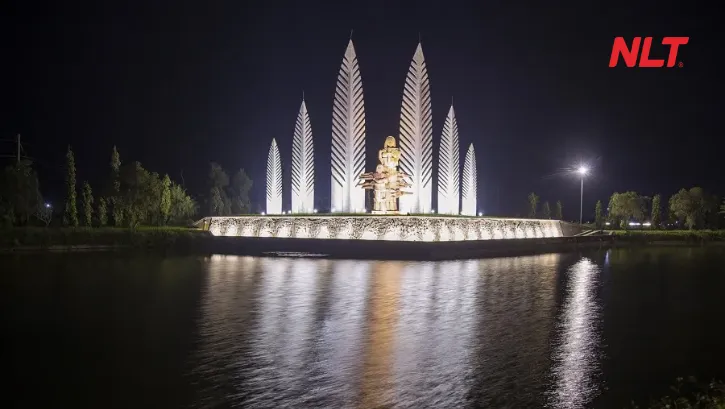
Monument lighting design aligned with project values
NLT Group develops monument lighting designs starting from the core values of each project, including historical meaning, commemorative spirit, and symbolic role in public space. Lighting is organized to clarify form, preserve appropriate tone, and respect original intent, avoiding excessive effects or inappropriate visual imposition.
High-quality equipment and optical solutions
In monument lighting design, NLT Group does not rely on generic fixtures, but selects specialized architectural lighting based on monument form, material, and actual installation conditions.
Outdoor LED luminaires, architectural floodlights, and high-power accent lights are chosen with suitable optics to reveal monument form, control contrast, and limit glare.
At the same time, optical design and fixture configuration are calculated to ensure long-term operational effectiveness, outdoor durability, and ease of maintenance.
These solutions are implemented using the lighting product ecosystem distributed and developed by NLT Group, ensuring system consistency, color stability, and sustained lighting quality over time.
>> See more: High-technology lighting products by NLT Group
Dedicated long-term after-sales support
For monuments, lighting value must be maintained throughout the operational lifecycle. NLT Group emphasizes post-design technical support, including review, fine-tuning, and professional consultation once the project enters real operation.
This approach ensures monument lighting remains appropriate to actual conditions, minimizes performance degradation over time, and preserves the intended visual image defined at the design stage.
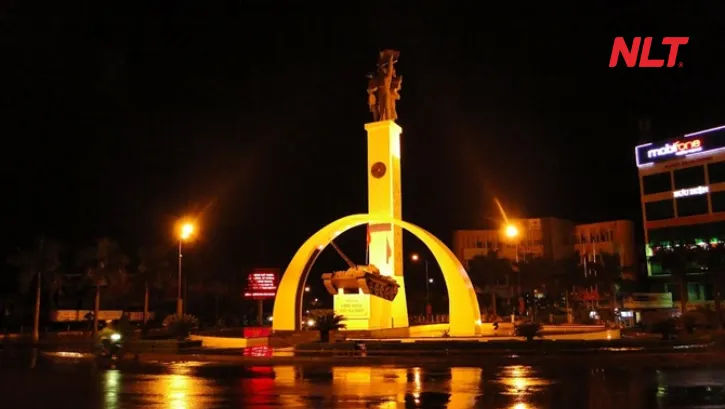
Monument lighting design is not a decorative add-on but an integral component of a project’s historical, cultural, and public-space identity. With a structured approach from consultation and design to long-term technical support, NLT Group is committed to delivering monument lighting solutions that meet professional standards, suit contextual requirements, and ensure lasting value.
If you are seeking a monument lighting design solution for an upcoming project, contact NLT Group for focused, practical consultation aligned with the specific characteristics of your monument.
Nam Long Technology Investment Group (NLT Group)
- Hotline: 0911 379 581
- Email: kinhdoanh@nlt-group.com
- TIN: 0313339640
- Address: 43T Ho Van Hue Street, Duc Nhuan Ward, Ho Chi Minh City