Tiếng Việt
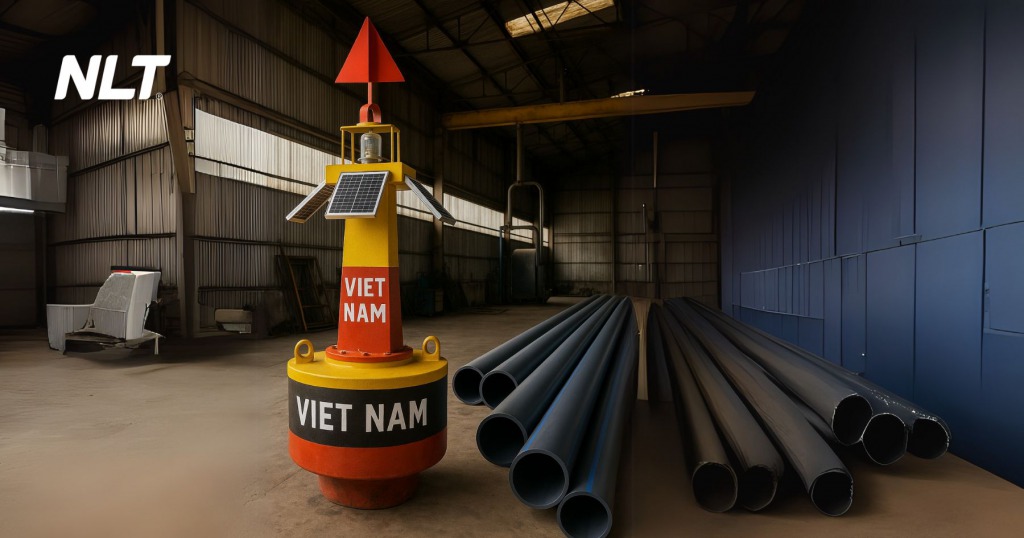
When discussing the structure of navigation buoys, people often mention floating bodies made of HDPE plastic or modern GPS technologies. However, few realize that the steel materials quietly embedded inside are the true load-bearing backbone, responsible for anchoring, positioning, and ensuring long-term stability for the entire buoy system. In this article, NLT Group analyzes the role of steel materials in buoy structures and explains why steel remains a mandatory choice in all designs that meet QCVN standards.
The role of steel materials in the structure of inland waterway buoys
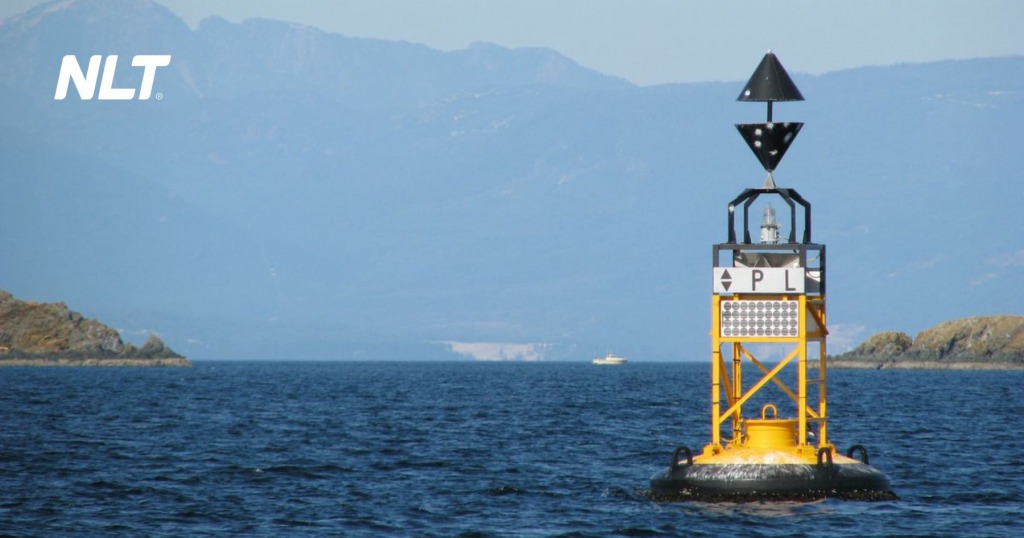
Which components use steel materials?
In a modern inland waterway navigation buoy, steel materials are not used in the floating body, which is typically made of plastic or composite, but are instead placed in positions that bear loads, impacts, or require high mechanical connectivity. Specifically, steel materials are used in the following components:
- Mooring hook (anchor shackle): the component that bears the entire tensile force from the anchor chain at the seabed, requiring high strength and torsional resistance.
- Lifting eye (lifting eye): used to lift the buoy during installation or maintenance, typically bearing loads of several hundred kilograms.
- Internal support frame: many monolithic molded buoys still incorporate an internal steel frame to enhance structural rigidity.
- Light and topmark mounting pins: components that secure the upper part of the buoy often use galvanized steel posts or brackets.
- Technical hatch cover: access covers for maintaining lights, batteries, or GPS units are usually made of stainless steel or anti-corrosion coated steel.
These components are usually hidden inside the buoy but are critical load-bearing and connecting elements that keep the entire buoy stable, properly oriented, and resistant to displacement or collapse when exposed to strong currents or minor vessel impacts.
Why steel is not replaced by lighter materials
In modern design, weight reduction is always a consideration, especially for floating equipment such as buoys. However, for the components listed above, replacing steel with aluminum, rigid plastics, or lighter materials does not meet technical safety requirements for the following reasons:
- Steel has a much higher yield strength and tensile strength than non-metallic materials. With the same cross-sectional area, steel withstands torsion, bending, and impact forces far more effectively.
- Long-term stability: aluminum and plastics are more prone to deformation under repeated loading or high temperatures, whereas steel maintains its original shape and stiffness.
- Connection capability: bolts, clamps, welds, and screws are far more compatible with steel than with composite or HDPE, making fabrication and maintenance easier.
- Economic efficiency: although heavier, steel is easy to process, easy to repair, widely available, and cost-effective, especially for mass production.
Moreover, current technical standards such as QCVN 39:2011/BGTVT clearly specify material requirements, in which many components are required to use hot-dip galvanized steel or stainless steel 304 or higher grades, and cannot be arbitrarily substituted.
Classification of steel materials used in buoys
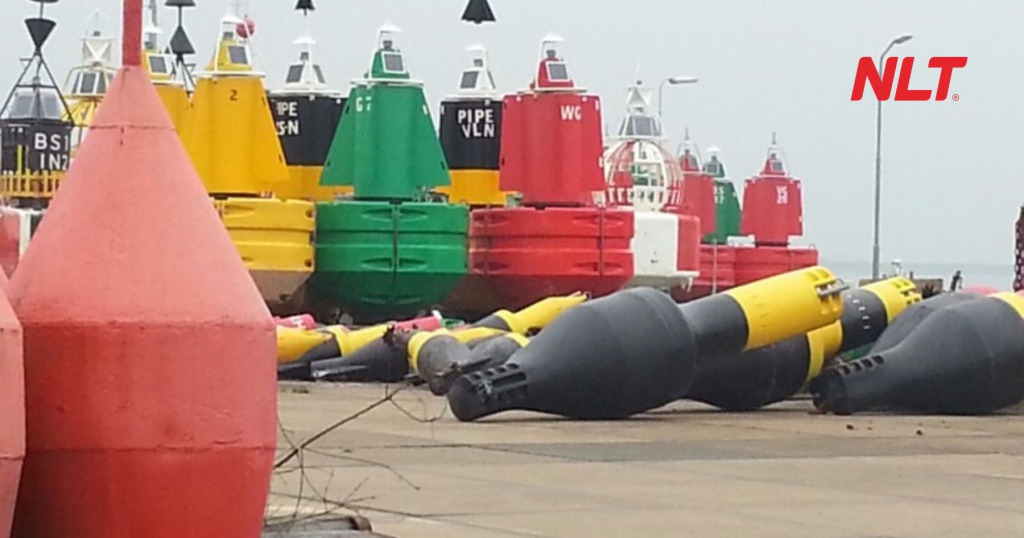
Hot-dip galvanized steel
This is the most commonly used steel material in navigation buoy structures, especially for components such as mooring hooks, lifting eyes, fastening bolts, and light brackets. After fabrication, the steel is immersed in a molten zinc bath at a temperature of approximately 450°C, forming a durable metallurgically bonded zinc coating.
Key advantages:
- Excellent corrosion resistance, especially in saltwater and brackish water environments.
- Low cost and suitable for mass production.
- Long service life, typically 5–10 years before recoating is required.
According to QCVN standards, galvanized steel components must ensure that the coating does not peel off, with a minimum coating thickness of 70–100 µm to meet technical corrosion resistance requirements.
Other corrosion-resistant steels: SUS304, hardened stainless steel
For positions requiring higher chemical resistance and load-bearing capacity, stainless steel materials are used, including:
- SUS 304: durable and corrosion-resistant, commonly used for technical hatch covers, light fasteners, and GPS mounting brackets.
- Hardened stainless steel (such as SUS316): offers superior saltwater resistance, suitable for marine environments, ports with strong waves, and areas affected by acid rain.
Although more expensive, these steel types require less maintenance and maintain performance over a longer period compared to galvanized steel. Notably, stainless steel does not require an additional external protective coating.
Structural connections between steel and HDPE or composite materials
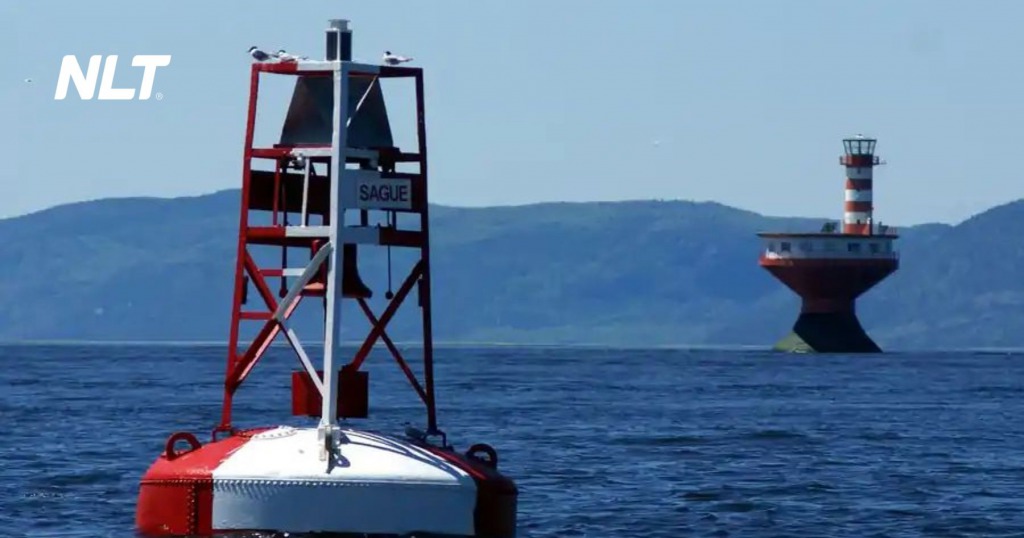
Joining steel with buoy body materials such as HDPE plastic or composite is a critical technical challenge. In practice, these connections are typically achieved through:
- Embedding steel inserts into the buoy core during monolithic molding (for HDPE).
- Mechanical fastening using stainless bolts through reinforced panels (for composite).
- Reinforcement using anti-corrosion adhesive layers combined with anti-vibration washers.
All connection points must be designed to avoid galvanic corrosion (caused by potential differences between metal and plastic materials) and prevent water ingress that could damage the connection from the inside.
Technical requirements for steel components
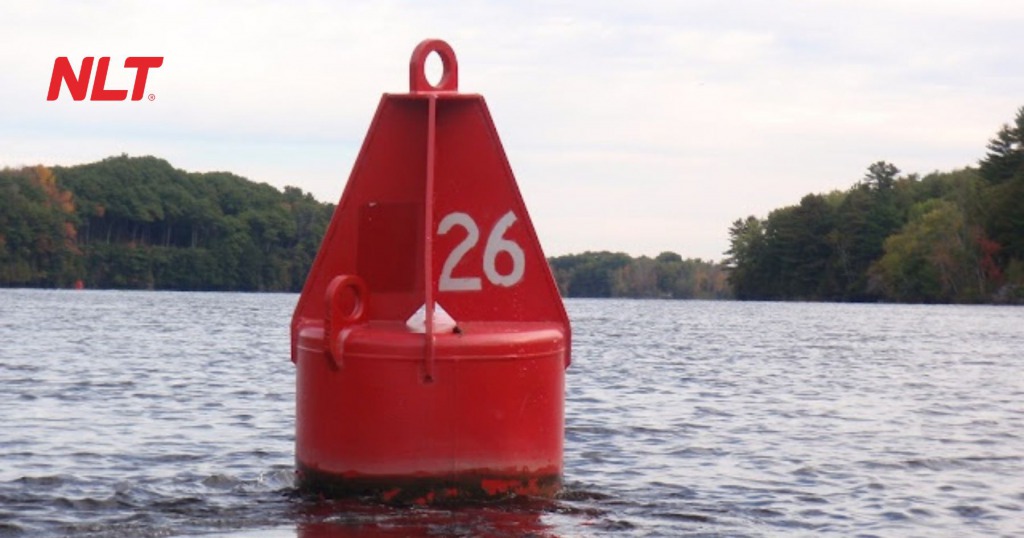
Standards for strength, load capacity, and corrosion resistance
According to QCVN 39:2011/BGTVT, steel components used in navigation buoys must:
• Withstand a minimum tensile force of 3,000–5,000 N, corresponding to the weight and anchoring force of each buoy type.
• Show no cracking, deformation, or weld failure during load testing.
• Provide corrosion resistance for at least 5 years in brackish and saltwater environments, extendable to up to 10 years when combined with epoxy or polyurea protective coatings.
Thickness requirements and specifications for shackles and lifting eyes
Some commonly required technical parameters include:
| Component | Material | Minimum diameter | Technical standard |
| Mooring hook (anchor shackle) | Galvanized steel or stainless steel 304 | Ø32–36 mm | Load capacity 5 kN, no deformation underwater |
| Lifting eye | Forged solid steel | Ø28 mm or larger | Securely fixed to the frame or buoy core |
| Light frame connecting bolts | SUS304 | M10 – M16 | Must include anti-vibration washers and thread locking |
All components must be calculated based on technical design drawings and depend on the buoy type (channel buoy, warning buoy, mooring buoy, etc.).
Inspection and acceptance of steel components before buoy assembly
Before steel materials are installed into buoys or sent for galvanizing, the following inspections must be carried out:
- Verification of dimensions, diameters, and manufacturing tolerances.
- Inspection for cracks, surface corrosion, and cleanliness prior to coating.
- Weld inspection (if applicable) using ultrasonic testing (UT) or radiographic imaging.
- Recording steel identification codes and mill certificates (CO/CQ).
After galvanizing or polishing, the coating thickness must be re-measured using specialized equipment to assess uniformity and protective performance. This acceptance report becomes part of the completion dossier for navigation buoys as required by the Ministry of Transport.
Comparison between steel materials and alternative materials
Compared with aluminum and rigid plastics
| Criteria | Galvanized steel / stainless steel | Aluminum | Rigid plastics (ABS, industrial PVC) |
| Load-bearing capacity | Very high (excellent tensile, bending, and torsional strength) | Moderate, prone to deformation | Poor, not suitable for load-bearing components |
| Impact resistance | Good, not brittle | Easily dented or deformed under strong impact | May crack or fracture under repeated loading |
| Weight | Heavy | Approximately 30–40% lighter than steel | Very light |
| Corrosion resistance | Good when galvanized or using stainless steel | Good, but prone to galvanic corrosion in humid environments | Good in freshwater, poor durability in saltwater |
| Mechanical fastening | Excellent, easy to bolt, weld, and clamp | Difficult to weld to steel, requires dedicated structures | Poor, prone to cracking when bolts are tightened |
| Suitable applications | Mooring hooks, lifting rings, load-bearing technical frames | Lightweight auxiliary brackets, topmark frames | Covers, technical lids, non-load-bearing components |
When should 100% steel be used? When should hybrid materials be applied?
100% steel materials should only be used for components that bear high loads, face impact risks, or require absolute stability (for example: seabed anchoring systems, central buoy frame shafts, lifting rings).
Hybrid structures (steel + plastic or steel + composite) are suitable for:
- Buoys requiring high buoyancy and reduced overall weight.
- Areas with human contact or exposure to mild corrosion.
General principle: components that bear loads should use steel, while components focused on buoyancy or aesthetics should prioritize plastic or composite materials.
Conclusion
No material can completely replace the role of steel in the structure of navigation buoys. Whether hidden inside the buoy or accounting for only a small portion of the total mass, steel components are the pillars that keep buoys in the correct position, orientation, and function throughout years of operation in harsh environments. Proper design, correct steel selection, and regular inspection and maintenance are the three core factors that ensure buoy systems remain safe, cost-effective, and operationally efficient over the long term.
FAQ
Do steel mooring hooks need periodic replacement?
Yes. Although galvanized steel or stainless steel offers high durability, in brackish or saltwater environments, mooring hooks may wear, bend, or crack after 3–5 years. Annual inspections are recommended, and replacement should be carried out if there are signs of degradation.
Can stainless steel 304 be used instead of galvanized steel?
Yes, especially in saltwater areas or heavy-duty anchorage zones. Stainless steel 304 offers better corrosion resistance and requires less maintenance, but its cost is approximately 2–3 times higher than galvanized steel.
Are there steel components inside buoys?
Yes, in some cases. Many monolithic HDPE molded buoys still incorporate internal steel reinforcement frames to increase rigidity, secure lighting fixtures, and ensure load-bearing capacity during lifting and installation.
Should steel frames be welded directly to HDPE?
No. HDPE cannot be structurally welded to steel due to material incompatibility. Instead, bolted connections, washers, or mechanical fastening through intermediate components should be used to avoid delamination, deformation, or cracking.
Do steel components on buoys require external protective coatings?
Yes. Even when galvanized or made from stainless steel, steel components should be additionally coated with epoxy or PU paint to protect against UV exposure and marine salinity, helping extend service life and reduce long-term maintenance costs.