Tiếng Việt
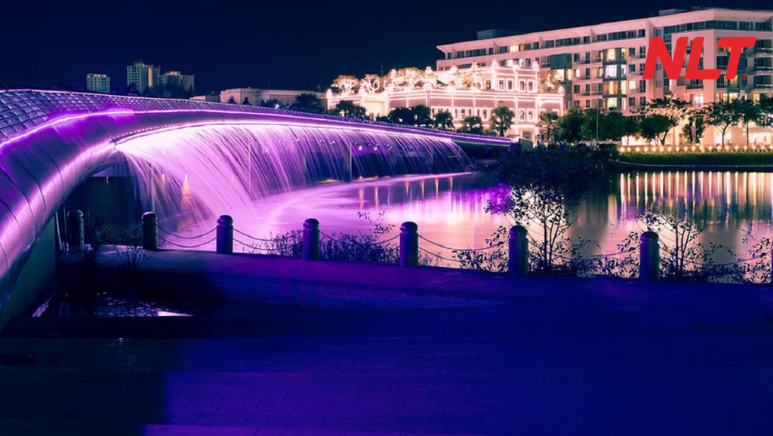
Bridge lighting systems play a critical role in traffic safety and the long-term durability of the structure. However, many projects deteriorate quickly after only a few years of operation. Light output declines, equipment corrodes, lighting poles loosen or vibrate, and electrical systems suffer damage.
Why do these problems occur so frequently? The analysis below explains the root causes and proposes solutions that address them at their source, helping bridge lighting systems operate safely and sustainably over the long term.
Why do many bridge lighting projects deteriorate early?
Đặc thù kỹ thuật của cầu khiến hệ thống chiếu sáng dễ hư hại
Bridges are structures exposed to multiple types of loads at the same time, including vehicle-induced vibration, thermal expansion and contraction, and wind loads from different directions. Although each vibration may be small, they occur continuously over long periods and place constant stress on bridge lighting systems. If vibration effects are not properly considered during design, materials and mechanical connections fatigue quickly. This leads to loosened bolts, misaligned luminaires, shifted beam angles, and a noticeable reduction in service life after only a few years of operation.
Environmental impacts
Compared with standard roadways, the environment on bridges is significantly harsher. Strong winds, direct exposure to rain, high humidity, and in many cases moisture and salt spray accelerate material degradation. These conditions speed up metal corrosion and allow water ingress into electrical components.
When materials, protective coatings, or ingress protection ratings are not selected appropriately, luminaires, fasteners, and electronic components deteriorate rapidly.
Design and construction errors affecting equipment lifespan
- Inaccurate optical calculations force luminaires to operate above their optimal power range.
- Structural vibration is ignored during design, causing lighting components to experience loads beyond their intended capacity.
- Electrical systems lack adequate lightning protection, moisture resistance, or corrosion protection.
- Installation does not follow design specifications, including incorrect bolt torque or improper aiming angles.
Individually, these issues may not cause immediate failure. Over time, however, their combined effects significantly reduce system durability and performance.
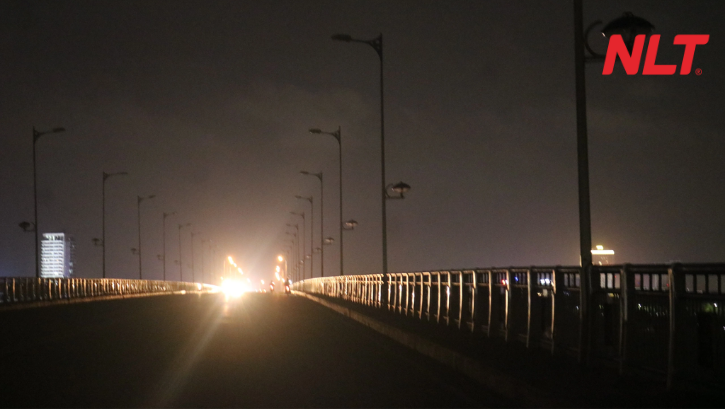
Standards and regulations applied in bridge lighting design
Vietnamese standards and transport regulations for bridge lighting
In bridge lighting design, Vietnamese standards and transport sector regulations form the technical foundation. They define requirements for illuminance, luminance, uniformity, glare control, electrical safety, and structural stability. Compliance with both sets of standards ensures that lighting solutions align with real operating conditions and support long-term safe operation.
Commonly applied standards include:
- TCVN 5828:1994 – Lighting equipment for roadways. General technical requirements for water ingress protection, mechanical strength, optical performance, and product testing.
- QCVN 07-7:2016/BXD – Technical infrastructure works. Lighting requirements covering electrical safety, lighting levels, materials, equipment, and acceptance criteria.
Tham chiếu tiêu chuẩn quốc tế (CIE, EN…) trong tính toán chiếu sáng cầu
QCVN 07-7:2016/BXD Technical infrastructure works. Lighting requirements covering electrical safety, lighting levels, materials, equipment, and acceptance criteria.
Referencing international standards in bridge lighting calculations
For bridge lighting projects with high technical demands, referencing international standards improves accuracy and verifiability. These standards provide detailed methods for optical evaluation and lighting class selection based on real traffic conditions, including:
- CIE S 025:2015 – Methods for measuring and evaluating photometric parameters of LED luminaires, supporting accurate simulation and equipment selection for bridge lighting.
- EN13201 – Road lighting standards defining road classification and requirements for luminance, uniformity, and glare limitation for each lighting class applied to bridges.
Bridge road classification and lighting classes
Bridge sections are classified according to traffic volume, vehicle speed, and functional role. Each lighting class specifies minimum luminance, illuminance, and uniformity requirements. Bridges on major transport corridors require higher lighting levels to ensure visibility, while bridges in residential areas may operate at lower levels. Proper classification prevents both over-lighting and under-lighting.
Safety, luminance, and illuminance requirements
Traffic safety depends heavily on a driver’s ability to perceive the road surface and surrounding objects. Therefore, lighting design must strictly meet the following requirements:
- Adequate luminance to ensure nighttime visibility.
- Stable illuminance and uniformity across the entire bridge deck.
- Strict control of glare to avoid distraction or loss of visual comfort.
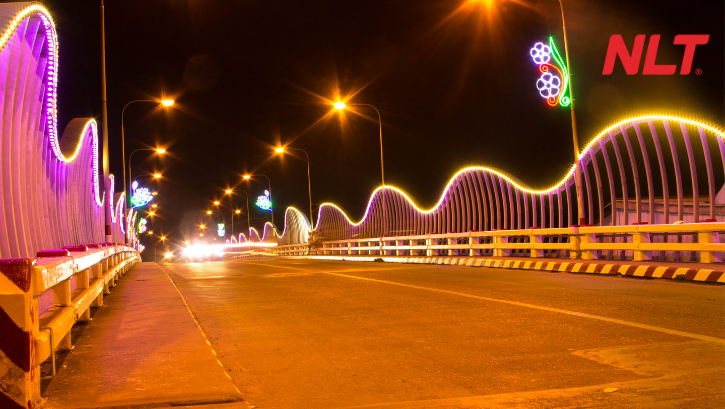
Limitations when applying standards in real projects
Standards provide general guidance, but bridge geometries and dimensions vary widely. Environmental conditions also differ significantly between urban bridges, river crossings, and coastal bridges. As a result, bridge lighting design must combine standards with optical simulations, on-site surveys, and practical implementation experience to achieve optimal performance and durability.
Different bridge types require different lighting approaches
River and coastal bridges
These bridges face the harshest environments, including high humidity, strong winds, and salt exposure that accelerates metal corrosion. Bridge lighting systems must therefore use highly corrosion-resistant materials, specialized protective coatings, and wind-load calculations to ensure long-term stability.

Urban overpasses and interchanges
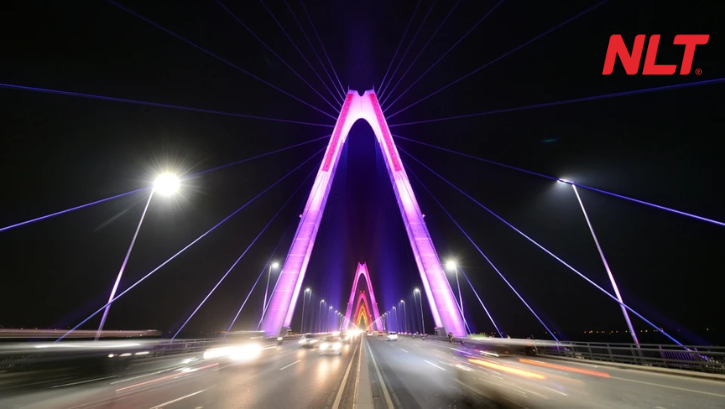
Bridge lighting is a core component of smart urban lighting, focusing on glare control and uniformity under heavy traffic volumes. Variable bridge widths and complex geometry require flexible optical design and careful luminaire placement, while maintaining visual harmony with surrounding architecture and residential areas.
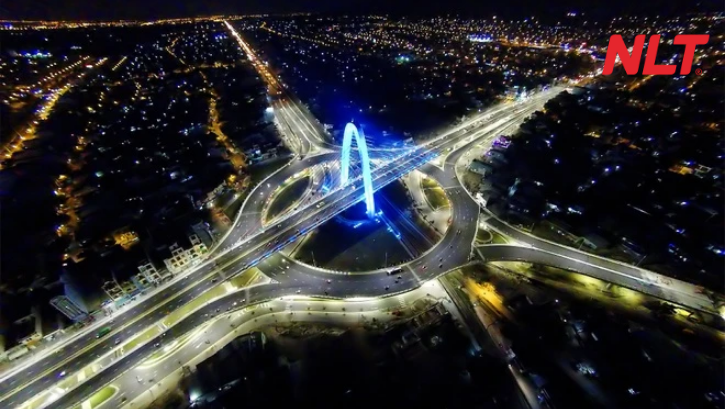
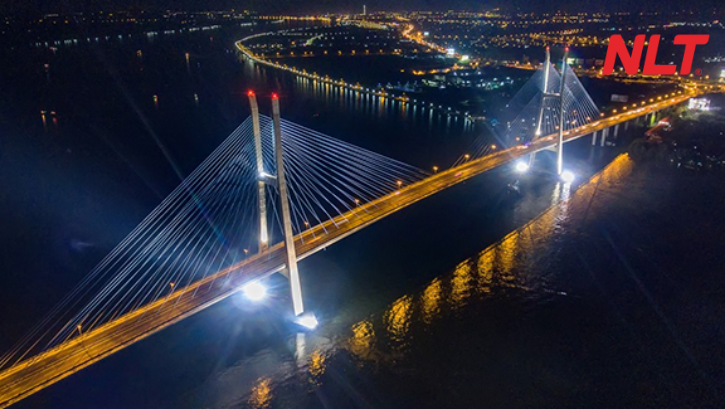
Cable-stayed and suspension bridges
Cable-stayed and suspension bridges experience larger vibration amplitudes and frequent dynamic movement. Lighting equipment must therefore be highly vibration-resistant, with poles and mounting brackets designed for repeated dynamic loads. Luminaire placement must also avoid shaded or obstructed zones created by cables and structural elements.
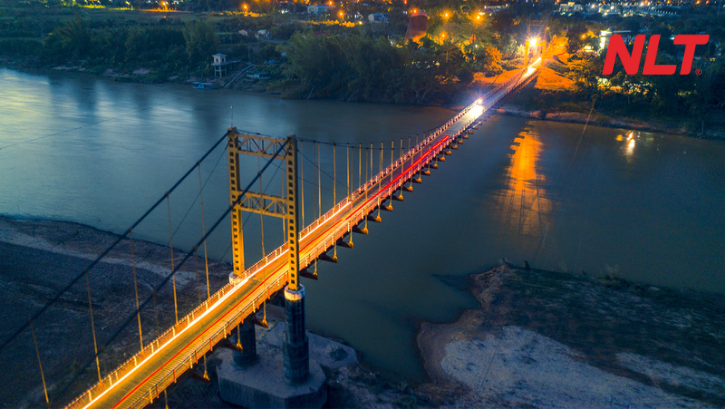
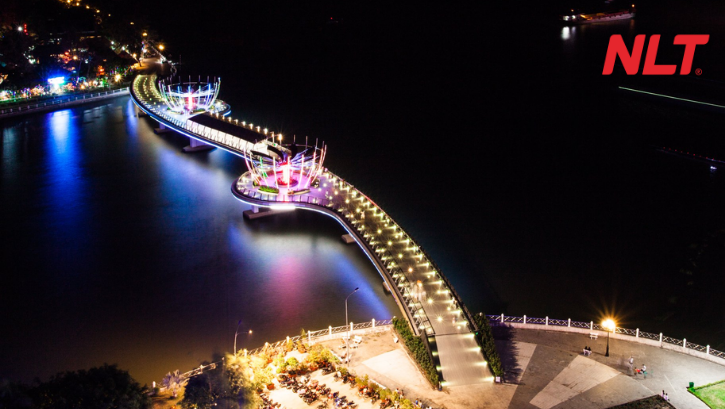
Pedestrian bridges
Pedestrian bridge lighting prioritizes safety and wayfinding rather than high illuminance levels. Lighting should be visually comfortable and glare-free. Many projects integrate lighting into handrails or architectural features, requiring compact, aesthetically refined luminaires with reliable outdoor electrical safety
Common design mistakes that cause bridge lighting projects to deteriorate
Inaccurate illuminance and luminance calculations
Illuminance and luminance directly determine visibility on bridges. When calculations are inaccurate, luminaires are forced to operate above their optimal output or fail to provide sufficient light. This accelerates equipment degradation and creates potential safety risks. The root causes are often simulations that do not reflect the actual bridge geometry or the selection of light distributions that are not suitable for real operating conditions.
Poor glare control, compromising driver safety
Glare frequently occurs on sloped, curved, or elevated bridges. Inappropriate optics selection, incorrect mounting height or aiming angle, and failure to consider driver sightlines significantly reduce visibility, especially in rain or fog.
Ignoring bridge vibration in pole and luminaire structural design
When vibration analysis is omitted, poles and brackets are prone to excessive oscillation, leading to material fatigue and loosened connections. This mistake often happens when street lighting standards are applied to bridges without adjustment for real vibration conditions.

Optics not matched to bridge geometry and deck width
Straight bridges, curved bridges, or bridges with varying widths all require different optical distributions. Incorrect optics result in uneven light distribution, overly bright zones, and dark areas, forcing higher power operation and reducing luminaire lifespan.
Failure to calculate wind loads for poles, arms, and mounting brackets
Because of open exposure and greater height, wind loads on bridges are higher than on typical roadways. Without proper calculation, repeated vibration loosens bolts, deforms mounting brackets, and shifts beam angles, undermining system stability.
Electrical system design lacking adequate protection
Humid environments and seasonal lightning activity make bridge electrical systems vulnerable when surge protection, moisture protection, or adequately rated IP enclosures are missing. Oxidation at connection points reduces efficiency and increases the risk of short circuits.
Material selection errors
Materials that do not meet protection requirements, such as non anodized aluminum, standard steel bolts, or low quality coatings, corrode rapidly under humidity, salt exposure, and vibration. This not only degrades appearance but also weakens structural integrity and reduces the durability of bridge lighting systems.
Suboptimal luminaire placement
Transition zones, curved sections, or changes in deck width require special luminaire layouts. Poor placement creates dark zones, misdirected beams, or obstruction by bridge structures, reducing lighting effectiveness and increasing safety risks.
Common installation mistakes that shorten the lifespan of bridge lighting systems
Inadequate pole foundation and anchoring
Bridge lighting poles are subjected to luminaire weight, wind load, and repeated vibration simultaneously. If foundations, anchor bolts, or base plates are not reinforced to standard, poles can quickly become unstable or misaligned, reducing durability and creating safety hazards.
Cables, junction boxes, and control cabinets lacking water and corrosion protection
Incorrect IP ratings allow water and moisture to enter electrical systems, especially on river crossings or in humid environments. This leads to oxidation, short circuits, or localized power loss, reducing reliability and increasing maintenance costs.
Incorrect luminaire tilt and aiming angles
Even small deviations in installation angles can cause glare or uneven light distribution. This typically results from the absence of specialized measuring tools or failure to recheck aiming after fixation, forcing higher power levels to compensate.
Failure to verify bolt torque, leading to excessive vibration during operation
Bridges are subject to constant vibration. Bolts that are not tightened to the specified torque loosen quickly, increasing vibration of luminaires and arms, accelerating material fatigue and premature failure.
No post installation measurement of illuminance and uniformity
Skipping post installation measurements prevents early detection of issues related to illuminance levels, uniformity, or glare. As a result, the system operates inefficiently from the outset.
Skipping comprehensive safety inspections before commissioning
Before official operation, bridge lighting systems must undergo full inspection, including insulation, grounding, lightning protection, and mechanical stability checks. Omitting this step leaves hidden issues such as leakage current, open circuits, or loose connections unresolved, increasing long term risk.
Advanced solutions to address design and installation issues at their root
Apply TCVN (Vietnam Standard) and international standards in bridge lighting design
Complying with both TCVN (Vietnam Standard) and international standards provides a clear technical basis for bridge lighting design, enabling accurate calculation of illuminance, luminance, uniformity, and glare control for each road category. This is a critical foundation for minimizing errors from the design stage.
Use professional lighting simulation software to optimize optics
Software such as DIALux or AGi32 allows designers to simulate light distribution on the bridge deck in advance, identifying dark zones, glare, or poor uniformity. Through simulation, designers can select appropriate optics and mounting positions rather than relying solely on 2D drawings.
Analyze vibration and wind loads to select suitable poles, arms, and mounting brackets
Design should be based on real data for wind speed, bridge height, and structural form. Vibration and wind load analysis helps determine the correct configuration of poles, luminaire arms, and anchor bolts, preventing oscillation, beam misalignment, and premature failure during operation.
Design the electrical system with lightning, moisture, and corrosion protection
Bridges operate in high humidity environments and are exposed to seasonal lightning. A durable electrical system for bridge lighting should include:
- Surge protection for each power line
- Junction boxes with high IP ratings
- Corrosion resistant materials or specialized protective coatings
- Drivers capable of stable operation in humid conditions
Select materials and equipment appropriate for each bridge environment
Each bridge type requires a different equipment configuration. River crossing or coastal bridges demand high corrosion resistance materials. Curved or sloped bridges require optics with strong glare control. Pedestrian bridges prioritize aesthetics and electrical safety. Incorrect equipment selection will cause rapid degradation even if the design is technically sound.
High grade corrosion resistant materials protect equipment from humidity and salt exposure
Optimize optics to control glare and improve lighting uniformity
Optical optimization is not about increasing brightness but about controlling beam direction and light distribution. Lens selection, beam angles, and distribution patterns must match bridge geometry, deck width, and pole locations to ensure safety while extending equipment lifespan.
Design redundancy for bridge electrical systems
Bridges are special structures where electrical repairs may not be immediately possible during failures. Electrical systems should therefore include appropriate redundancy, such as segmented circuits, multi layer protection, and the ability to maintain partial operation during localized faults. This improves system stability, reduces downtime, and enhances safety.
Establish a standardized installation process
A bridge lighting system only achieves quality when installation is strictly controlled:
- Precisely align luminaire positions and tilt angles using specialized measuring tools rather than visual estimation
- Control bolt tightening torque according to specified values to prevent loosening under vibration
- Ensure waterproof sealing for junction boxes and control cabinets, especially in areas directly exposed to wind and rain
- Inspect the entire system after installation, including measurements of illuminance, uniformity, and equipment stability under test loads
Technology solutions to extend the lifespan of bridge lighting systems
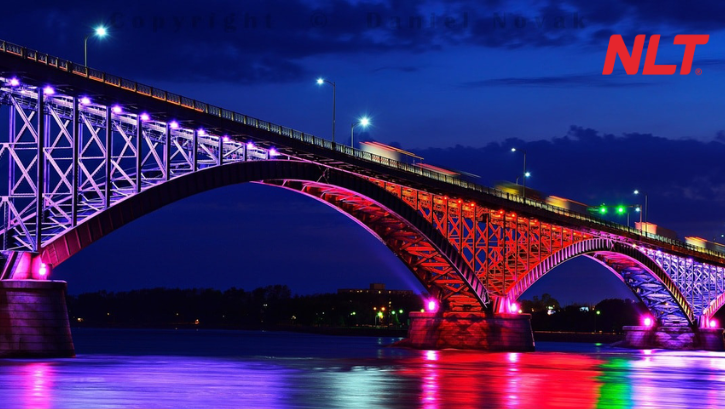
High efficiency LED luminaires with bridge specific optics
High efficiency LED luminaires maintain stable luminous output and save energy throughout their lifecycle. When combined with bridge specific optics such as glare control and asymmetric distribution, lighting can evenly cover the deck without increasing power, while reducing heat and extending chip and driver lifespan.
Drivers and power supplies with surge, lightning, and moisture protection
Drivers are the most vulnerable components in bridge environments due to humidity and seasonal surges. Modern drivers typically feature:
- Voltage surge protection
- Moisture resistant coatings
- Thermal fluctuation tolerance
- Overvoltage and overcurrent protection
These features ensure stable operation even under high humidity or sudden weather changes.
High grade corrosion resistant materials for luminaires, poles, and mounting accessories
Bridge installations should use corrosion resistant materials such as anodized aluminum, stainless steel 304 or 316, marine grade coatings, and hot dip galvanized bolts. These materials reduce oxidation, maintain structural integrity, and are especially critical for river crossing and coastal bridges.
Smart IoT based bridge lighting systems
IoT solutions enable real time monitoring of each luminaire, tracking energy consumption and providing early fault alerts. This allows maintenance to be proactive and keeps the entire system operating under optimal conditions.
Centralized control
Centralized control synchronizes the entire bridge lighting system. Typical functions include:
- Scheduled on and off control based on time or ambient light sensors
- Dimming adjustment according to traffic volume
- Management of independent power circuits
Centralized control not only reduces energy losses but also extends equipment lifespan by lowering operating load during periods of low demand.
Standard compliant design – construction – commissioning process
Site survey and assessment of bridge environmental conditions
The site survey is a foundational step to collect data on terrain, bridge deck geometry, pole locations, and specific environmental conditions such as humidity, corrosion levels, and wind speed. This information helps determine suitable equipment, select appropriate materials, and develop an accurate bridge lighting design solution from the outset.
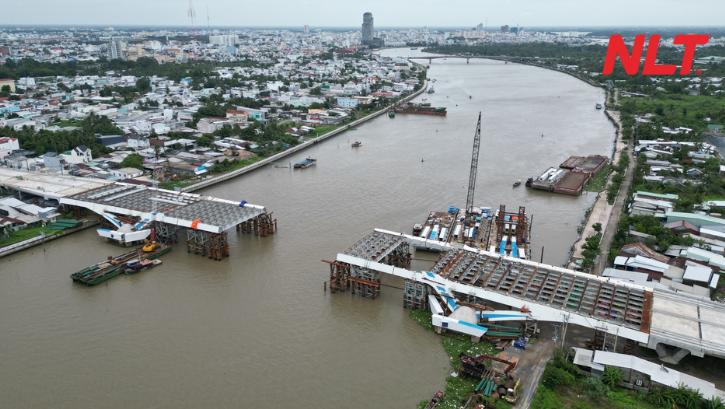
Lighting design based on optical simulation and applicable standards
Bridge lighting design is developed in accordance with standards such as TCVN, CIE, or EN13201, combined with optical simulation software to predict light distribution across the bridge deck. Simulation enables assessment of luminance, illuminance, uniformity, and glare risks, allowing optimization of optical selection and luminaire layout.
Structural design for poles and luminaires
Structural design must consider wind loads, bridge induced vibration, and installation height. Pole dimensions, arm types, and anchor bolt configurations are selected based on detailed calculations to ensure secure connections and minimize vibration during operation.
Electrical system design
The electrical system is designed with multiple layers of protection, including surge protection, moisture resistance, corrosion protection, and safe grounding. Power circuit segmentation, control cabinet selection, and cable routing must suit environmental conditions to prevent short circuits or long term performance degradation.
Construction in accordance with technical standards and item by item supervision
Bridge lighting installation must strictly follow design specifications for mounting positions, tilt angles, and bolt tightening torque. Junction boxes and control cabinets must be checked for waterproof integrity, while all work items are closely supervised to prevent deviations and ensure long term system consistency and durability.
Commissioning through on site measurements, safety checks, and detailed handover documentation
After installation, parameters such as illuminance, uniformity, and glare are measured directly on site to confirm compliance with standards. In parallel, electrical safety checks and mechanical connection inspections are carried out, and complete handover documentation is prepared to support stable operation and future maintenance.
Operation and maintenance solutions to extend the lifespan of bridge lighting systems

Establish periodic maintenance plans and evaluate luminous flux depreciation
Regular maintenance helps detect early issues such as reduced brightness, driver failure, or loosened connections. Monitoring luminous flux depreciation over time provides an accurate assessment of luminaire condition and avoids replacement that is either too early or too late. A clear maintenance plan is essential for long term system stability.
Periodic inspection of structures, connections, and corrosion on poles, luminaires, and accessories
Lighting poles, arms, bolts, and mounting brackets are subject to continuous vibration and must be inspected regularly. For river crossing or coastal bridges in particular, monitoring metal corrosion allows timely intervention before minor weaknesses become major failures.
Real time monitoring
Real time monitoring enables continuous tracking of operating status and rapid detection of issues such as lamp outages, overheating, or electrical faults. Continuously updated data allows maintenance teams to make informed decisions and reduce lighting downtime.
Training of operation teams and coordination procedures between bridge operators and solution providers
For effective bridge lighting operation, management teams must be trained in lighting technology and monitoring tools. Clear coordination procedures between bridge operators and solution providers help shorten response times and improve overall system reliability.
Lifecycle cost perspective in bridge lighting
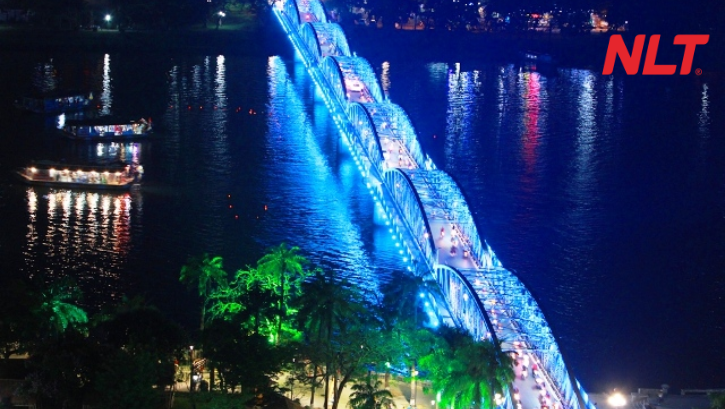
Capital cost structure of bridge lighting systems
Investment costs include luminaires, poles and arms, electrical systems, corrosion resistant materials, and installation. Cost proportions vary by bridge type and environment. Coastal bridges typically require higher spending on corrosion protection, while urban bridges prioritize optical solutions that control glare.
Operating, maintenance, and risk costs associated with premature system degradation
Operating and maintenance costs account for a significant share of total lifecycle costs. If a bridge lighting system degrades prematurely, replacement expenses, labor costs, and the risk of lighting disruption increase, directly affecting traffic safety.
Economic benefits of selecting the right solution from the start
A properly designed and selected solution from the outset ensures stable operation, fewer failures, and reduced maintenance frequency. Systems using suitable optics, durable drivers, and high quality corrosion resistant materials typically achieve longer service life and significantly lower repair costs.
Optimizing total lifecycle cost through technology and standardized design
Lifecycle cost analysis considers all expenses from initial investment through operation, maintenance, and replacement. Optimizing lifecycle cost requires accurate design, environment appropriate materials, and durable bridge lighting technology. High efficiency LED systems combined with moisture resistant, surge protected drivers and IoT monitoring typically deliver lower lifecycle costs while maintaining safety and lighting quality.
NLT Group and capabilities in delivering durable bridge lighting systems
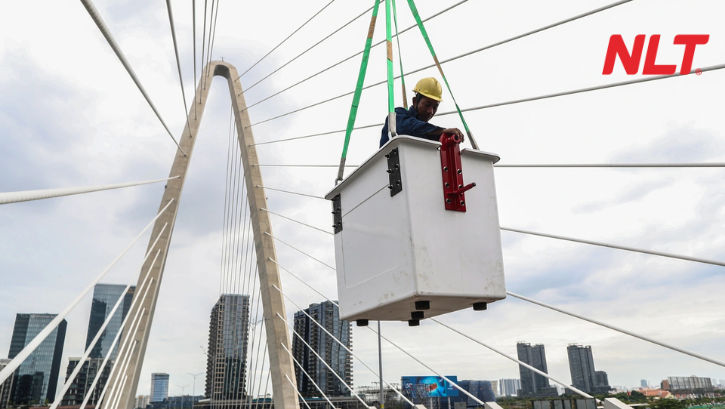
Design, simulation, and international standardization capabilities
NLT Group has a design team proficient in TCVN, CIE, and EN13201 standards, and applies professional optical simulation software to optimize illuminance, luminance, and light distribution. A standardized design process ensures lighting solutions suited to each bridge type and compliant with traffic safety requirements.
Experience in large scale bridge and transportation infrastructure projects
With experience across numerous bridge and transportation infrastructure projects nationwide, from urban overpasses to river crossing bridges, NLT Group understands the environmental and technical characteristics of bridge lighting projects. This practical experience minimizes errors and maximizes efficiency in both design and construction.
Certified equipment ecosystem for harsh environments
NLT Group provides a complete ecosystem of equipment selected for specific operating conditions, including corrosion resistant LED luminaires, moisture and surge resistant drivers, wind load compliant lighting poles, and surface treated accessories. This ensures high system stability even in humid, saline, or high vibration environments.
>> Learn more: NLT Group LED lighting products that optimize street lighting systems
Integrated construction, operation, and maintenance solutions throughout the project lifecycle
Beyond equipment supply, NLT Group delivers comprehensive solutions covering installation, supervision, operation, and maintenance. Integration across all phases ensures the system operates as designed, simplifies quality control, and reduces long term risks.
Commitment to quality and long term service life of bridge lighting systems
Through rigorous quality control processes, NLT Group commits to bridge lighting systems that are durable, stable, and cost optimized. Each project is supported technically from implementation through long term operation.
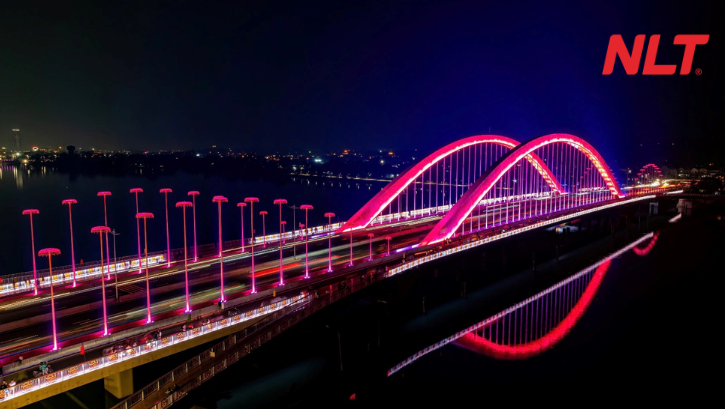
Bridge lighting demands integrated design and construction capabilities, simulation based on international standards, and lifecycle oriented operation and maintenance processes. With extensive experience across national transportation infrastructure projects, NLT Group has established itself as a trusted provider of bridge lighting solutions that meet technical, safety, and durability requirements.
If your project is seeking a long term bridge lighting partner that can optimize investment and operating costs while addressing the specific environmental conditions of each bridge type, contact NLT Group today for professional consultation on effective and sustainable bridge lighting solutions.
Nam Long Technology Investment Group (NLT Group)
- Hotline: 0911 379 581
- Email: kinhdoanh@nlt-group.com
- TIN: 0313339640
- Address: 43T Ho Van Hue Street, Duc Nhuan Ward, Ho Chi Minh City