Tiếng Việt
In the context of a fiercely competitive market, the distribution channel is the core factor determining the survival of a business. However, when the scale of goods flow expands rapidly, manual management of thousands of agents and market staff will expose serious loopholes. To clear the flow of goods and optimize operating costs, digital transformation is an inevitable solution. In which, the DMS software system is the golden key to help businesses proactively control and operate the supply chain in a smart and comprehensive way.
What is a DMS software system?

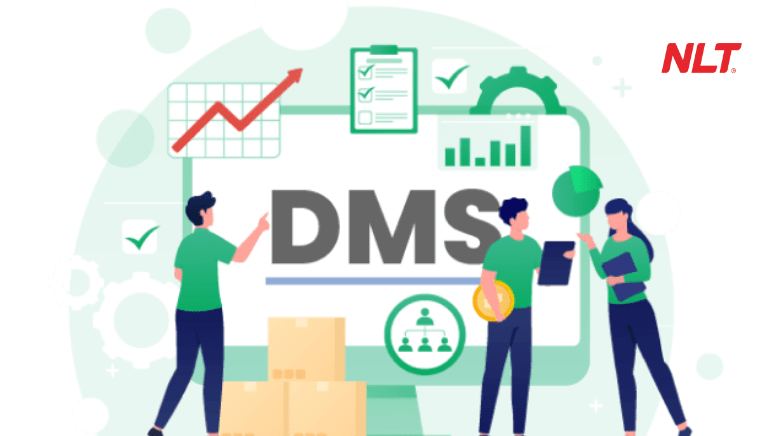
DMS (Distribution Management System), also known as a distribution channel management system, is a specialized technology solution designed to manage all activities occurring on the distribution channel from manufacturers, distributors, agents to retail outlets.
Instead of only managing the inner core of the enterprise like regular accounting software, the DMS software system focuses on synchronizing data outside the market. This solution helps control the flow of goods, cash flow, manage the performance of sales staff, and automate the ordering process in real-time.
Why do businesses need to optimize distribution channels?
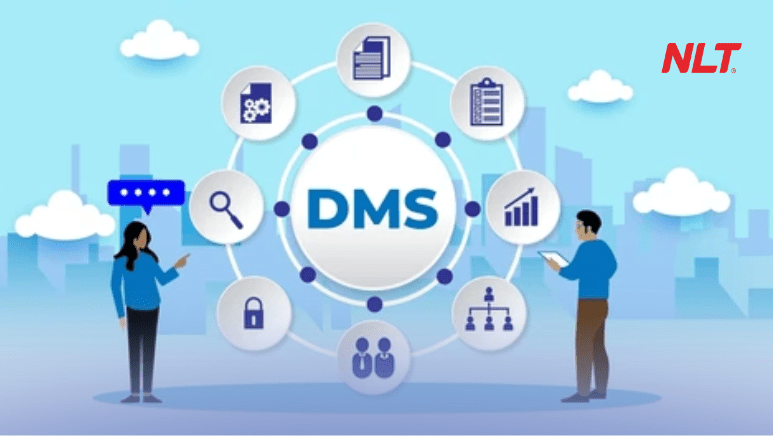
The distribution channel is increasingly expanding and difficult to control
When the distribution channel expands rapidly, manual management using books or separate Excel sheets easily makes businesses lose control of the market. This leads to uneven distribution of goods when some places run out of stock, causing loss of customers to competitors, while other places overstock, wasting capital and increasing the risk of expiration.
Scattered sales data due to the lack of a centralized management tool
Due to the lack of a DMS software system as a centralized management platform, sales data at distribution channels is always scattered and inaccurate due to the habit of independent recording. As a result, reports are delayed by weeks or months, making the board of directors unable to make production plans or sales promotion programs in time, directly reducing competitiveness.
Market sales team managed with a lack of transparency
The team of sales staff in the market is the core force but difficult to control, easily leading to coping work status, fake reports, or cutting off discount gifts of outlets. If not using the DMS software system to closely monitor, these frauds will seriously reduce sales performance and break the cohesive relationship with customers.
Distributors, agents, and outlets are not synchronously connected
The breakdown of information between intermediate links easily causes confusion and missed orders when ordering manually via phone or social networks. The lack of synchronous connection also makes outlets have to wait for Sales to arrive in person to place orders, creating a large gap on store shelves and leading to the paradox where the main warehouse still has goods but the market faces scarcity.
How does a DMS software system help optimize distribution channels?
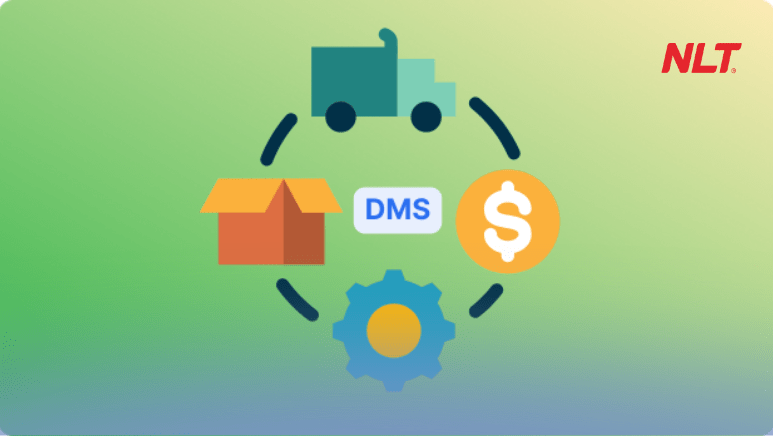
Digitize the entire sales process on a single DMS software system
Integrating a DMS software system helps convert the entire process from order recording, promotion application to warehouse release approval into an online environment. Sales staff only need to operate on the mobile application right at the outlet to complete the order. This automation process completely eliminates manual data entry errors, helping information transmit to the nearest warehouse immediately for timely packaging and transport.
Manage the market sales team in real-time
Through the GPS positioning feature integrated on the DMS software system, managers easily visually monitor the actual position and movement route of each Sales staff on a digital map. The system will automatically record the check-in and check-out times of staff at each outlet.
This solution forces staff to strictly comply with labor discipline and go on the correct assigned route. At the same time, managers can accurately evaluate work capacity based on actual data: number of stores worked, average consultation time, and actual order conversion rate.
Control orders, inventory, and liabilities accurately
As soon as an order is confirmed on the DMS software system, data is immediately synchronized and automatically updated into the main warehouse management system and the accounting department. The available stock of the product will be deducted immediately to avoid selling beyond the actual quantity.
At the same time, the software automatically checks the credit limit and liability term of that outlet. If the customer has overdue debt, the system will give a warning or lock the ordering feature, helping the business closely control cash flow, maximally preventing bad debt risks and financial loss.
Track the efficiency of distributors, agents, and outlets using a DMS software system
The DMS software system provides a panoramic picture of the health of each link in the supply chain. The software allows classifying and scoring distributors and agents according to many criteria such as: consumption volume, payment speed, and ability to maintain a stable product portfolio.
Based on these visual analyses, businesses will clearly identify which strategic partners need priority promotion and which outlets are facing difficulties. From there, the board of directors can make sales support policies, volume bonuses, or adjust discounts closest to reality and most effectively.
Automate sales reports and operational data when operating a DMS software system
The annoyance of sales staff or accountants having to stay up late to make manual reports at the weekend or end of the month is completely eliminated. When operating a DMS software system, all sales transactions, revenue, and volume are automatically aggregated in real-time.
The system provides visual dynamic charts on the progress of key performance indicators (KPIs) of each individual, team, or entire branch. Managers can extract specialized reports at any time, effectively serving periodic inspection and monitoring work without waiting time.
Support businesses to make fast decisions with actual data
The data source continuously updated from the market through the DMS software system is a solid foundation for the board of directors to make strategic decisions. Businesses no longer have to guess consumer demand based on emotions or old experience.
Looking at the actual consumption trends on the software, the production department can proactively adjust volume, and the warehousing department can plan reasonable resource allocation to each area. This helps businesses optimize the supply chain, reduce inventory costs, and always be ready to meet the market.
Important features of a DMS software system
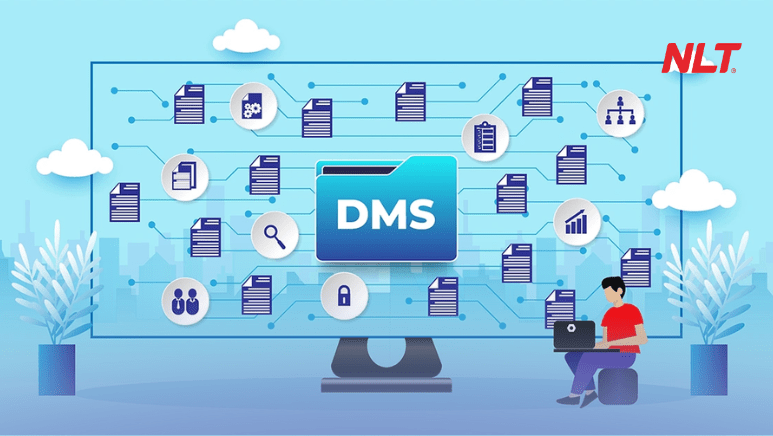
Manage sales routes and frequency of reaching outlets
Optimize sales routes scientifically based on geographical location, avoiding overlapping areas or missing customers. Staff will receive the list of outlets to visit and the shortest route right on the application, while being reminded to check stock and take photos of displays to standardize the customer care process.
Manage orders and automated ordering process through a DMS software system
This module of the DMS software system allows Sales staff to perform the entire sales process directly on mobile devices. Right at the outlet, Sales easily checks the purchase history and separate price list of the agent to create orders quickly. Orders after being sent will automatically pass approval levels and transfer straight to the warehouse, helping reduce waiting time, accelerate delivery speed, and enhance professionalism.
Manage inventory at distributors and outlets
Different from internal tools, a DMS software system brings outstanding advantages thanks to the ability to display detailed stock amounts outside the market, from the distributor’s warehouse to the retail outlet’s shelf. The system will automatically warn to import goods when inventory touches the minimum safe level. At the same time, the feature of tracking batch numbers and expiration dates helps businesses proactively regulate, promptly launch promotions to stimulate demand, and avoid the risk of destroying near-date goods.
The DMS software system helps manage liabilities, revenue, and key performance indicators (KPIs)
The system digitizes the entire process of assigning sales targets (KPIs) according to revenue, volume, or number of new outlets for each level from managers to Sales staff. At the same time, the liability status of each agent is closely controlled through the DMS software system thanks to the feature of automatically checking limits when creating orders, helping staff proactively remind of debt when going to the market and supporting accountants to recover capital quickly.
Manage promotional programs, discounts, and sales policies
The DMS software system helps fully automate complex promotional, discount, and accumulation programs in the distribution industry. When an order meets the conditions, the system automatically applies the exact offer without manual calculation. This ensures absolute transparency, thoroughly preventing Sales from cheating the budget or cutting off gifts of outlets.
Real-time data analysis reporting capability of the DMS software system
The reporting module of the system brings visual multidimensional analysis charts, helping track growth by region, team performance, and profitable product structure. Data continuously updated in real-time helps the board of directors immediately detect abnormal signs to handle timely. Applying a DMS software system brings this advantage instead of forcing businesses to wait until the end-of-month meeting to have market figures.
Benefits of a DMS software system for businesses

Increase control over the entire distribution channel
Operating a DMS software system helps businesses completely eliminate information congestion by closely controlling the movement flow of goods from the factory to consumers, thereby accurately capturing market demand and product coverage to proactively make effective business expansion strategies.
The DMS software system helps reduce data loss and misalignment in operation
Businesses will centrally store and secure all outlet information, transaction history, and purchasing habits when operating a DMS software system, helping transform market data into an invaluable asset of the company instead of depending on individuals. Thanks to this, even when changing personnel, new staff can still immediately take over the territory and care for customers smoothly without causing business interruption or worrying about data loss.
Enhance the work performance of the sales team
This technology solution frees Sales staff from manual administrative tasks such as bookkeeping, calculating order money, or making end-of-day reports. With all necessary information prepared ready on the mobile application of the DMS software system, the sales team can maximize time and skills on advising and persuading customers to increase order placement and proactively expand many new outlets.
Optimize management and operation costs of sales channels
Deploying a DMS software system helps businesses save a huge amount of operating costs thanks to process digitization, eliminating paper printing, and reducing office data entry staff through an automatic order synchronization mechanism. Besides, the route optimization feature helps staff save time, reduce travel costs, combining with tight stock control capability to help businesses reduce inventory costs and optimize working capital.
Improve order processing speed and outlet care through a DMS software system
The cycle from when an outlet develops a need, Sales records it, until delivery is shortened from a few days to a few hours thanks to the smoothness of data on the DMS software system. This fast, accurate service not only helps increase the satisfaction level of agent owners and retail stores by completely eliminating the risk of supply chain breakdown, but also firmly consolidates their loyalty to the brand.
Increase market competitiveness
Owning a smooth operating system and capturing real-time data helps businesses create an overwhelming advantage over traditional competitors. Thanks to accurately forecasting trends and reacting quickly based on figures from the DMS software system, businesses can proactively launch flash promotions or adjust prices flexibly by region, creating a launchpad to break through and rise to lead the market.
Which industries should deploy a DMS software system?

Fast-Moving Consumer Goods (FMCG) industry
- Industry characteristics: Products have a short lifecycle, high shopping frequency with a huge and dense distribution system up to hundreds of thousands of outlets nationwide.
- Role of the DMS software system: Helps businesses closely manage shelf coverage, monitor sales team performance, and accelerate product turnover speed so that products are always ready to serve consumers anytime, anywhere.
Food, beverage, and goods distribution industry
- Industry characteristics: The supply chain management process is extremely strict because products have a short shelf life and severe requirements on storage, warehousing, and transportation conditions to avoid damage.
- Role of the DMS software system: Helps closely control inventory according to FIFO or FEFO principles, while giving early warnings about product batches near expiration dates so that the sales department can promptly launch demand stimulation programs, minimizing the rate of destroying goods causing cost loss.
Pharmaceutical and medical equipment industry
- Role of the DMS software system: Helps automate separate price policies for each channel, while closely controlling batch numbers and expiration dates to ensure transparency and proper compliance with medical regulations.
- Industry characteristics: Is a conditional business field, strictly managed and separate between the hospital channel and pharmacy channel with completely different price and discount policies.
Materials, industrial equipment, and construction industry
- Industry characteristics: Diverse product portfolio, complex technical standards with large order values, mainly serving target customers who are contractors and large construction material agents.
- Role of the DMS software system: Smoothly connects the ordering stage at the field with the logistics department coordinating vehicles, while automating complex discount policies according to committed volume and closely tracking delivery progress according to each project stage.
Consumer electronics and household appliances industry
- Industry characteristics: Products have high value and strict after-sales service requirements, making businesses face many challenges in warranty management.
- Role of the DMS software system: Accurately records IMEI codes from warehouse release until reaching consumers, creating a core foundation to activate electronic warranty, closely track product journey, and thoroughly prevent territory invasion of agents.
What should businesses note when choosing a DMS software system?
The DMS software system needs to fit the actual distribution model
Each business, depending on scale and product industry, will choose different distribution strategies: distribution through exclusive distributors, through wholesale agent systems, selling directly into supermarket channels/convenience store chains, or traditional channels.
Before spending money to buy software, you need to ensure that the solution is designed with operational modules perfectly compatible with your actual model. A software, no matter how good it is, if its architectural structure does not match the logistics flow and actual cash flow of the business, it will quickly fail when put into application.
Ability to customize according to the operating process of the business
Many businesses often make mistakes when choosing software packages that are too rigid with the thought of forcing the entire organization to change according to the software. In fact, each company has its own competitive advantages lying in the price approval process, promotion policies for agents, or how to calculate staff KPIs.
Therefore, a high-quality DMS software system needs to have a flexible architecture, good configuration, and customization capability. The system must allow editing and expanding data fields, and resetting the approval process to adapt and optimize core processes that are working effectively for the business.
Easy to use for the sales team and distributors
The subjects directly operating daily with the software are the sales staff going to the field on the street and shop owners, distributors – people who often do not have high technology technical qualifications and are very afraid of complexity. Therefore, the mobile application must have an extremely minimalist, intuitive, and easy-to-understand interface.
Core operations such as visiting outlets, placing orders, and checking stock on shelves should only be encapsulated within 3-4 screen touches. In addition, the software must support an offline working mechanism – meaning it still allows placing orders and recording data normally when staff go into weak signal or disconnected areas and automatically synchronizes back when there is a connection again.
Ensure the DMS software system has a good ability to integrate with ERP and accounting
DMS is not an independent data island. To maximize power, it needs to be connected smoothly and communicate with core internal management systems behind such as enterprise resource planning systems (ERP: SAP, Oracle, Microsoft Dynamics…) or accounting and warehousing software (WMS).
When having good integration capability through standardized API ports, the data flow between the external market and the internal office will be a continuous, unbroken flow. Orders pouring in from DMS will automatically create warehouse release commands on ERP and account revenue on accounting software, helping minimize manual processing effort between departments.
The unit deploying the DMS software system needs to have technological capacity and actual experience
“Successful deployment is only half the way, the other half is long-term companionship”. Distribution channel digital transformation is a long-term journey, the system will need to be continuously refined and upgraded according to the business scale expansion. Precisely because of this, looking for a reputable technology partner, owning a strong infrastructure capacity to secure data and having extensive hands-on experience is the key factor deciding the success or failure of the project.
Understanding the importance of a long-term companion, NLT Group brings a DMS software system solution that is not only optimal at the deployment time but also has flexible customization capability and continuous upgrades according to each development step of the business. Owning strong infrastructure capacity to help secure data absolutely along with extensive hands-on experience, NLT Group commits to accompany closely from the survey stage to operational training, turning technology into a solid launchpad to help businesses digitally transform the supply chain successfully and break through to lead the market.
The DMS software system is the golden key to help businesses automate distribution channels, optimize costs, and break through revenue strongly. Please contact NLT Group today to receive advice on the most comprehensive and appropriate digital transformation solution for your business!
Nam Long Technology Investment Group (NLT Group)
- Hotline: 0911 379 581
- Email: kinhdoanh@nlt-group.com
- Tax code: 0313339640
- Address: 43R Ho Van Hue, Ward Duc Nhuan, Ho Chi Minh City