Tiếng Việt
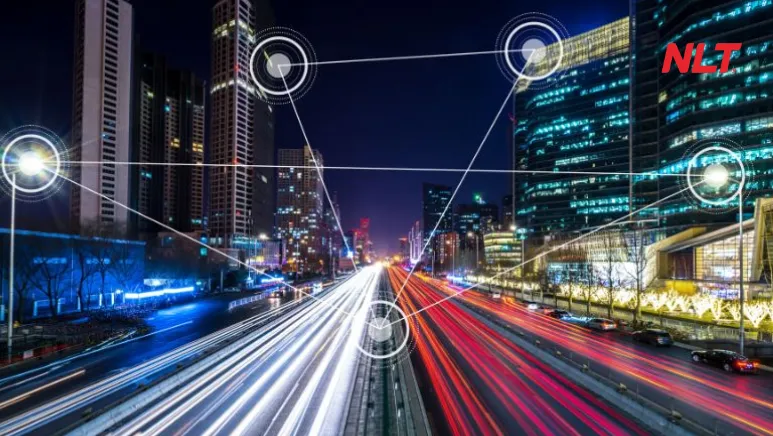
If you have ever noticed streetlights remaining at high brightness in the early morning hours, even when traffic has thinned out, it is a sign the system is running at a “fixed level”, which limits the ability to optimize both performance and operating costs. In response to this challenge, smart street lighting technology introduces a new approach, enabling cities to proactively control operations and gradually move towards data-driven infrastructure management. So what are the key benefits of smart street lighting solutions, and which factors determine their effectiveness after deployment? The following content will provide clarity on these points.
What is smart street lighting technology?
Concept of smart street lighting technology and its role in smart urban lighting
Smart street lighting technology enables remote control and monitoring through a centralized management platform. Instead of operating on a fixed on-off schedule, the system can be configured with lighting timetables and scenarios, adjust brightness by time bands or by specific zones, and continuously record operational status to support fault detection and optimize performance.
From a smart city perspective, this smart lighting solution serves as a foundational infrastructure layer, as streetlights are distributed across most road networks. Once digitized, the system strengthens lighting operations management, supports data-driven decision-making, and creates conditions for phased integration with other urban systems over time.
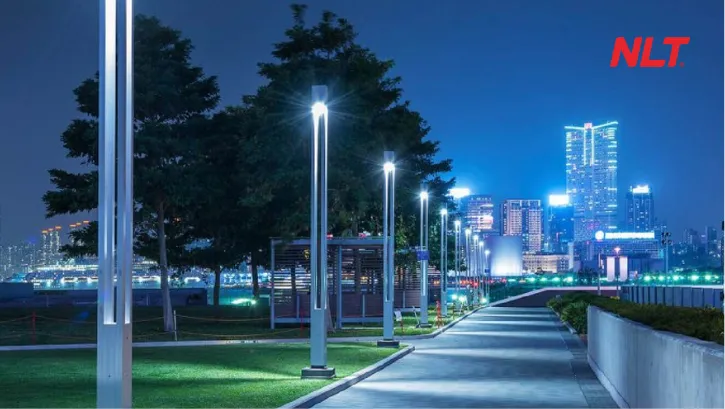
The difference between smart street lighting technology and traditional street lighting
| Criteria | Traditional street lighting | Smart street lighting technology |
| Operation method | On/off via control cabinet or fixed timer schedule | Controlled by schedules/scenarios, by groups or by each luminaire |
| Brightness control | Limited, difficult to match actual demand | Flexible by area, time period, and real-world demand |
| Operational data | Little or no data at the individual luminaire level | Status data available by luminaire/group for monitoring |
| Fault detection & response | Issues often found late, manual inspections required | Early alerts, rapid identification of fault location |
| Maintenance | Route inspections with fragmented, manual records | More proactive with data, easier to standardize procedures |
| Performance evaluation | Difficult to quantify energy savings | Consumption data available to evaluate and optimize operations |
| Management objective | Provide basic lighting under a fixed operating plan | Ensure lighting and manage operations based on data to optimize overall efficiency |
What does a smart street lighting system include?
LED luminaires and optical design
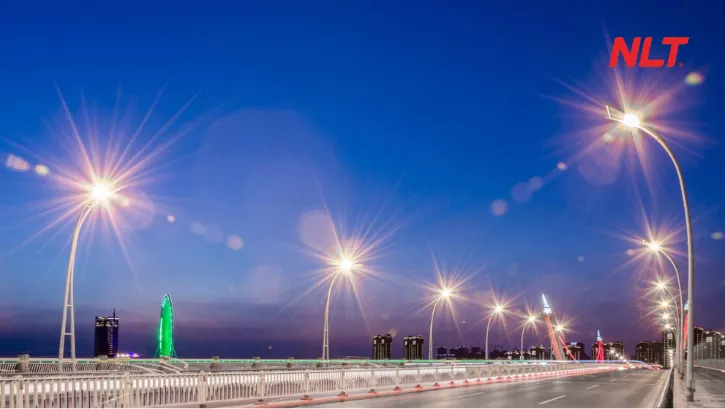
LED luminaires are the components that produce light directly. However, the quality of roadway lighting is largely determined by optical design (lenses, beam angles and light distribution). With smart street lighting technology, the optical layer should ensure:
- Light is distributed accurately onto the roadway surface, minimizing spill light and wasted light.
- Appropriate uniformity, avoiding overly bright spots and under-lit areas.
- Glare control, especially at intersections, bends, and on highly reflective road surfaces.
>> Read more: What is LED, and why is it the foundation of modern street lighting systems?
Drivers and controllers
A driver is a component responsible for power supply and plays a decisive role in the operational stability of a luminaire. In lighting control systems, the driver should support dimming functions and incorporate appropriate protection mechanisms to reduce the risk of failures. Working alongside the driver is the controller, which may be integrated into the luminaire or installed externally, and is responsible for:
- Receiving control commands from the central system.
- Transmitting operational status data to the management platform.
- Executing operating schedules and area-based dimming scenarios.
The stability of both the driver and controller is a critical factor, as it directly affects fault diagnostics and maintenance efficiency.
Communication connectivity and network infrastructure
For a smart street lighting system to operate reliably, the connectivity layer must be robust enough to transmit control commands and status data consistently. Common deployment options include cellular networks, RF mesh, PLC, or hybrid models depending on the area. The selection should be based on:
- Existing network infrastructure and the specific characteristics of each urban area.
- Luminaire density, distances and physical obstacles that may affect signal quality.
- Requirements for control latency and data update frequency.
- Long-term transmission and operating costs.
Centralized management software platform
The centralised management software acts as the “control hub” of smart street lighting technology, enabling unified operation within a single system. Core functional groups typically include:
- Managing luminaire locations by route or zone on a digital map.
- Managing device information and operation/maintenance history.
- Controlling operating schedules and group-based dimming scenarios.
- Monitoring system status, alerts, and fault statistics.
- Reporting energy consumption and aggregating data for performance evaluation.
A key requirement is that the software aligns with the operating team’s workflows, offers clear and intuitive interfaces, and provides transparent access control to ensure effective use.
Sensors and urban system expandability
Sensors represent an advanced layer, deployed in line with operational objectives and local management strategies. At the same time, the system should be designed with an open architecture to facilitate scalability and integration with other urban platforms over time. This forms the foundation for smart street lighting technology to deliver sustainable value, rather than being limited to optimization on individual routes alone.
Why do cities need to upgrade to smart street lighting systems?
Pressure to reduce public electricity budgets
Public lighting represents a recurring expense that is difficult to cut, as it is directly linked to safety. A more practical approach is to optimize lighting based on actual demand through measures such as dimming during off-peak hours, adjusting lighting by road segments or zones, and avoiding off-schedule operation. Across large networks, these “small but consistent” optimizations can result in significant differences in total annual electricity costs.
>> Read more: Why does traditional lighting drive up electricity costs?
The need for centralized operations management and reduced manual dependence
Manual inspection models require substantial resources, lead to slower incident response, and provide limited data to evaluate maintenance quality or performance acceptance based on defined metrics. By shifting to centralized management, the system can support route-based status monitoring, rapid fault localization, and the standardization of KPIs and SLAs for operations. This represents a key distinction between smart street lighting technology and traditional operating approaches.
Green urban development and optimized infrastructure assets
Green urban development demands efficient energy use and sustainable infrastructure management. When lighting networks are digitized, operating authorities gain the ability to track equipment lifecycles, plan replacements based on actual operating conditions, and optimize operating modes to extend asset lifespan. This lifecycle-based approach enhances investment efficiency and aligns with the direction of modern urban development.
Easy to deploy in phased stages
The system can be rolled out in phases to manage risk and ensure consistency: pilot on key routes, measure outcomes, standardise equipment and operating procedures, then scale by area. With this approach, smart street lighting technology helps avoid widespread investment before performance data is available and before an operating model has been fully aligned.
7 key benefits of smart street lighting technology
Energy savings
Efficiency gains come not only from using LED technology, but primarily from the ability to control lighting flexibly by time and by zone. The system can be configured with lighting scenarios tailored to each type of route:
- Central roads maintain higher lighting levels during peak hours.
- Residential streets gradually reduce brightness after midnight while still ensuring safety.
- Parks and public squares apply dedicated scenarios based on actual usage patterns.
The key point is that dimming scenarios must comply with lighting standards and safety requirements. Proper dimming means providing lighting that matches real demand, not reducing brightness arbitrarily. When implemented correctly, smart street lighting technology optimizes energy consumption while maintaining lighting quality.
Reduced maintenance costs
Traditional maintenance approaches often incur higher costs due to reliance on field inspections, difficulty in quickly isolating faults, and reactive handling based on public feedback. With centralized monitoring, the system supports:
- Real-time or periodic fault alerts.
- Rapid identification of affected routes, luminaire groups, or individual luminaires.
- Maintenance planning based on operational data rather than estimates.
As a result, unnecessary inspections are reduced, response times are shortened, and widespread component replacement is avoided. Cost savings are achieved not by “doing less”, but by “doing right”.
Improved traffic safety
Night-time safety depends on illuminance levels, uniformity, and glare control, especially at intersections, roundabouts, curves, and areas with complex traffic conditions. Through zone-based deployment and operational scenarios, smart street lighting helps to:
- Improve stable visibility on road surfaces.
- Reduce localised dark spots or harsh glare that can cause visual discomfort.
- Prioritize appropriate lighting for critical locations based on operational zoning.
Enhanced urban security
Lighting directly influences the perception of safety. Prolonged outages, localized darkness, or unstable lighting often lead to public complaints and concerns. With monitored operation, cities can:
- Detect and resolve extended lighting outages more quickly.
- Configure suitable lighting modes for sensitive areas in line with urban planning.
- Establish a foundation for phased integration and expansion when policies allow.
The core value lies in reducing reactive operations, thereby improving the quality of public services at night.
Infrastructure management
This benefit becomes particularly evident to investors and project management teams after a period of operation. With reliable data, the system enables:
- Route- and zone-based management with up-to-date operational status.
- Standardised reporting to support budget management and maintenance planning.
- Contractor performance evaluation based on KPIs and SLAs rather than subjective judgement.
- Transparent operational records for acceptance, audits, and periodic inspections.
In other words, operations become data-driven, verifiable, and clearly accountable.
Lifecycle cost optimization
The lifecycle cost of a lighting system typically includes:
- Initial capital investment.
- Annual energy and operating costs.
- Maintenance and component replacement costs.
- Additional costs arising from prolonged failures and public feedback.
Smart control systems have a strong impact on the two largest long-term cost components: energy and maintenance, while also reducing costs caused by service disruptions. When assessed over a 5–10 year period, the overall efficiency picture is often significantly different from a comparison based solely on equipment purchase prices.
Improved investment efficiency
Investment efficiency increases when project outcomes can be measured, operations standardised, and deployment scaled in stages. Smart street lighting technology supports:
- Lower recurring costs and stronger operational control.
- Fewer incidents and complaints through faster response and status-based management.
- Standardised equipment, processes, and performance metrics for wider replication.
This also enables local authorities to adopt a pilot – evaluate – standardize – scale approach, aligning well with different investment scenarios.
>> Read more: The long-term operational value of smart lighting investments
Conditions for the 7 benefits to deliver as expected
Lighting design that meets standards and well-defined control zoning
Lighting design must comply with urban lighting standards and the functional objectives of each route. At the same time, control zoning should accurately reflect operational characteristics such as primary roads versus secondary roads, residential areas versus commercial zones, and areas with high night-time activity versus low-activity areas. Without proper zoning, dimming scenarios are difficult to optimise, and the effectiveness of smart street lighting technology is significantly reduced.
Selecting integrated equipment suitable for the installation environment
Outdoor equipment must be designed to withstand temperature, humidity, dust, and specific environmental conditions (coastal areas, industrial zones, or residential neighborhoods). Consistency in equipment types and standards helps ensure stable operation, reduces compatibility issues, and simplifies spare parts management and maintenance replacement.
Choosing connectivity solutions and management platforms appropriate to system scale
As system scale increases, requirements for stability, scalability, and user management become more demanding. When selecting communication solutions and centralied management platforms, it is essential to consider signal reliability, phased scalability, annual operating costs, and readiness for integration with other urban systems. These factors are critical to ensuring the long-term sustainability of smart street lighting systems after deployment.

Clearly defined operational KPIs and periodic maintenance processes
To prevent performance from declining over time, clear KPIs and operational procedures must be established. These typically focus on luminaire uptime rates, response and repair times, electricity consumption by route or zone, and compliance with defined dimming scenarios. Transparent KPIs support effective maintenance contractor management, standardize public service quality, and provide a solid basis for evaluating the effectiveness of smart street lighting technology.
Ensuring electrical safety and surge protection for outdoor systems
Electrical protection and surge suppression are mandatory to minimize the risk of widespread damage. This becomes even more critical when electronic components such as controllers and communication modules are added to the system. Proper protection design helps reduce operational disruptions, limit unplanned costs, and optimize total lifecycle costs.
Common mistakes when deploying smart street lighting technology
Deploying smart street lighting but operating it like a traditional system
Many projects have invested in control and monitoring platforms, yet retain traditional operating practices, resulting in limited performance improvements. Common issues include:
- Operating at 100% output throughout the night.
- No control zoning by route or area.
- Failing to use data for proactive maintenance and performance evaluation.
When operating models remain unchanged, smart street lighting technology struggles to deliver clear benefits in terms of cost savings and service quality.
Lack of zone-based and time-based dimming scenarios
Dimming should be designed as structured scenarios based on road type, zone, and time period. Applying a single fixed reduction level or relying on subjective adjustments typically results in limited energy savings and unstable performance as traffic patterns vary seasonally or over time.
Selecting unstable drivers or equipment, leading to widespread failures
Unreliable equipment often results in operational issues that are difficult to control, such as:
- Recurrent faults with unclear root causes.
- Increased maintenance costs, longer outages, and more public complaints.
- Higher risk of large-scale failures due to voltage irregularities, harsh environments, or surge events.
For this reason, piloting, testing, and standardizing the equipment portfolio are mandatory steps before scaling a smart street lighting system.
Absence of acceptance criteria for energy savings and operational performance
Acceptance based solely on whether lights are “on” is insufficient. For smart street lighting solutions, acceptance criteria should include:
- Dimming scenarios operating as designed.
- Complete, consistent, and traceable monitoring and reporting data.
- Clearly defined fault alert and response procedures.
- Methods for measuring energy savings before and after deployment (baseline versus post-implementation).
Without these criteria, it is difficult to demonstrate effectiveness or enable further optimization.
Failure to plan for system scalability from the outset
A pilot with a few hundred luminaires may operate smoothly, but scaling up introduces new platform and management requirements, such as:
- User management, access control, and activity logs.
- Data processing capacity and reporting by route or zone.
- Configuration standardisation, firmware synchronisation, and version control.
- Operational and maintenance processes capable of supporting large-scale deployment.
Without designing for scalability from the outset, projects risk becoming constrained at the expansion stage, reducing the overall investment efficiency of smart street lighting technology.
Proposed roadmap for deploying smart street lighting technology in cities
Defining deployment objectives and assessing the current lighting system
First, the city should clearly define its priorities: expected energy savings by phase, targets for reducing faults and public complaints, shortening response and repair times, improving safety on key routes, and standardising operational data to support long-term management.
In parallel, a comprehensive assessment of the existing public lighting system is required, covering luminaire types, remaining service life, energy consumption by route; the condition of control cabinets and power supply systems; pole, cabling, grounding infrastructure, and installation environment; as well as the capability of operating teams, maintenance procedures, and reporting mechanisms. The clearer the objectives, the more appropriate the smart street lighting solution will be, and the easier it will be to control costs.
Piloting smart street lighting on key routes and safety-critical areas
The pilot phase should focus on representative areas with high social impact, such as central roads with heavy traffic, critical points including intersections, roundabouts, curves, or high-risk zones, areas with frequent lighting complaints, and locations that require enhanced urban image such as tourist routes and public squares. The pilot scale should be large enough to demonstrate measurable results while remaining within manageable risk limits.
Measuring pilot results through energy savings and incident reduction metrics
To support acceptance and scaling decisions, baseline conditions and measurement methods should be defined from the outset. Key indicators typically include energy consumption by route or area before and after deployment; number of incidents, response times, and repair durations; compliance with dimming scenarios; and feedback from the community or managing authorities where reporting channels exist. Clear data makes budget approval and performance evaluation of smart street lighting systems significantly more straightforward.
Standardizing equipment and operating models to enable scaling
Before expansion, core elements must be standardized: approved equipment lists and standard configurations; dimming scenario templates by road type and area; fault alert, response, and periodic maintenance procedures; operational KPIs and SLAs; and software access control and data governance responsibilities. Standardization ensures consistent deployment and prevents fragmented operating practices across different areas.
Phased expansion by area and integration with urban management systems
Following piloting and standardization, expansion should proceed by clusters of routes or by area to optimize operations: prioritizing zones with the highest energy-saving potential or urgent safety needs; deploying interconnected route clusters to facilitate monitoring and maintenance; and gradually integrating with urban management platforms as part of local digital transformation plans. Most importantly, expansion must be matched with adequate operational capacity, processes, and resources. Only then can smart street lighting maintain sustainable performance after deployment.
>> Read more: Public lighting operation workflows for consistent implementation from pilot to scale-up.
Smart street lighting technology does more than simply “switch on” a city, it delivers lighting that matches real demand, enables data-driven operations, and optimizes long-term costs. When implemented systematically, from design and equipment selection to operating processes, the solution delivers clear benefits in energy savings, reduced incidents, improved safety, and standardized infrastructure management, forming a solid foundation for sustainable urban digital transformation.
If you are looking for a solution to reduce energy consumption, minimize incidents, and manage public lighting through data, NLT Group can support you from initial assessment and pilot measurement through standardization and large-scale deployment. Contact NLT Group for tailored consultation for your routes or areas.
Nam Long Technology Investment Group (NLT Group)
- Hotline: 0911 379 581
- Email: kinhdoanh@nlt-group.com
- TIN: 0313339640
- Address: 43T Ho Van Hue Street, Duc Nhuan Ward, Ho Chi Minh City
Frequently asked questions about smart street lighting technology
Should medium-sized and small-sized cities invest in smart street lighting technology?
Yes. Medium-sized and small-sized cities are often well suited for piloting, standardization, and operational training. The key is selecting a solution that matches actual needs and implementing it through a phased roadmap to maintain effective control over performance.
Can existing lighting systems be gradually upgraded to smart street lighting?
Absolutely. Many local authorities adopt a phased upgrade approach, prioritizing key routes first while gradually expanding the management platform and upgrading electrical infrastructure as needed.
How is energy savings from smart street lighting measured?
A baseline must be established before deployment, followed by post-deployment measurement using the same methodology, routes, and operating timeframes. The results are then compared against defined dimming scenarios and metering or management platform data to ensure transparent acceptance.
With smart street lighting technology, when should sensors be used and when is schedule-based control more appropriate?
Schedule-based control is well suited to routes with stable usage patterns, while sensors are more appropriate for areas with fluctuating demand such as parks, promenades, or locations with highly variable activity levels. In practice, many of the most effective projects combine both approaches, using schedules as the foundation, with sensors added where necessary.