Tiếng Việt
As inland waterway transportation increasingly requires higher levels of accuracy and safety, relying solely on traditional navigation buoys is no longer sufficient to meet practical demands. IoT technology is becoming the solution by transforming each buoy into a smart monitoring device that can track position, detect incidents, and transmit real time data to the operation center. So how has IoT technology changed navigation buoy systems, and which solutions are suitable for waterways in Vietnam? The article below provides a comprehensive and up to date overview.
What is IoT technology?
Basic definition of IoT
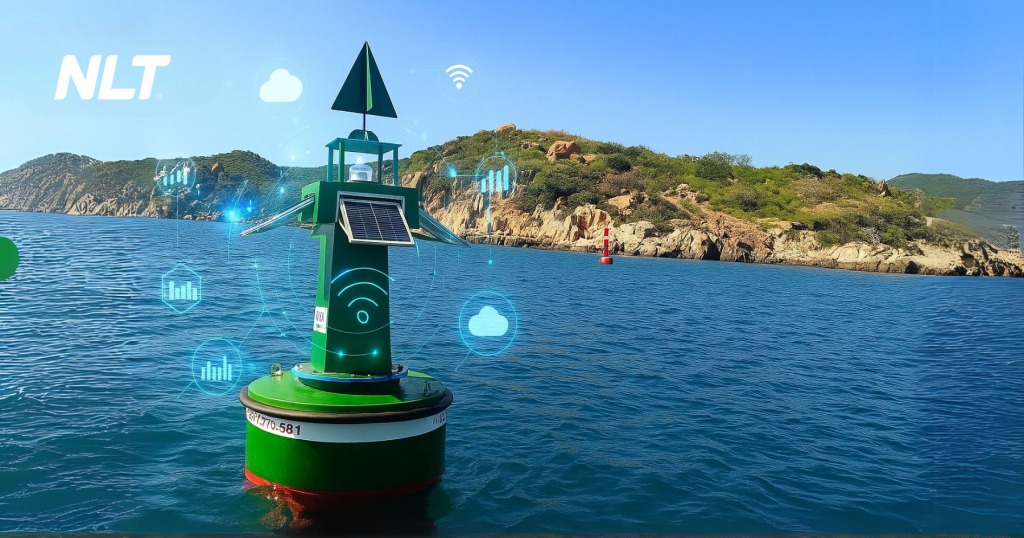
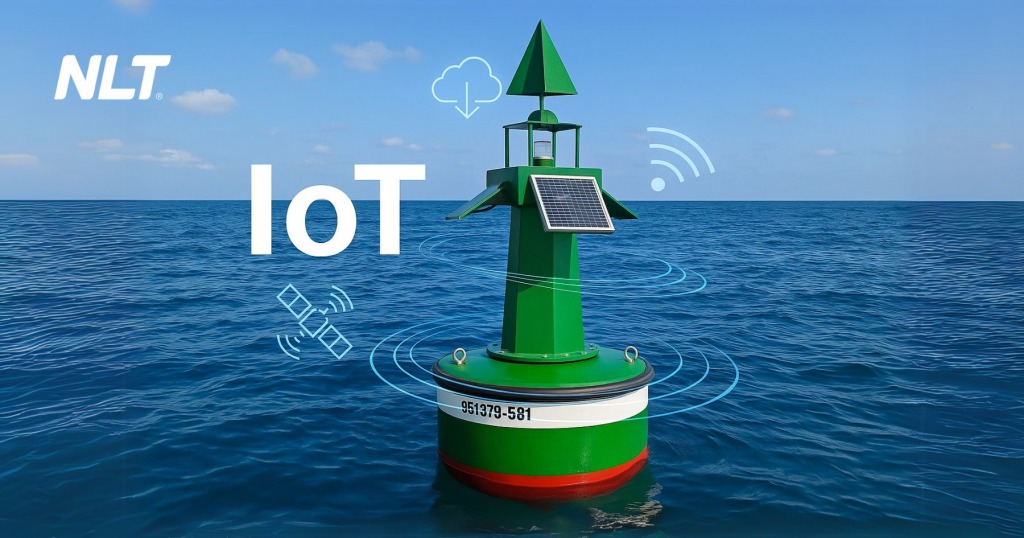
IoT (Internet of Things), also known as the Internet of Everything, is a system that connects physical devices through the Internet to collect, transmit, and process data. Each device in an IoT system can be equipped with sensors and has the ability to identify itself and communicate with other devices without human intervention. In inland waterway transportation, applying IoT to navigation buoys helps transform traditional equipment into “living” devices that remain continuously connected and ready to respond in real time.
Core components of an IoT system
A true IoT system is not simply about adding sensors to equipment, but rather a synchronized network consisting of multiple technology layers working together seamlessly. Below are the three core components that form a complete IoT system.
Sensor devices
These are the “eyes” and “ears” of the system. On waterway buoys, sensors may include:
- GPS sensors: help track the exact position of the buoy
- Vibration or acceleration sensors: detect collisions or drifting
- Light sensors: identify navigation light failures
- Environmental sensors: such as water temperature, salinity, depth, or current speed
With these sensors, field data is continuously recorded without the need for direct human monitoring.
Network connectivity (wireless, LPWAN, NB-IoT)
Data from buoys is meaningless if it cannot be transmitted. This is where network connectivity plays a critical role. Depending on the area and available infrastructure, common connection types include:
- 4G/5G: suitable for nearshore areas or locations with stable mobile network coverage
- LPWAN (Low Power Wide Area Network): low energy consumption, suitable for outdoor devices
- NB-IoT (Narrowband IoT): ideal for deep coverage in weak signal areas, especially suitable for devices with low data transmission requirements
The choice of connectivity depends on distance, cost, and the ability to maintain signals under real field conditions such as rivers, canals, or estuaries.
Central operation software
This is the “brain” of the entire system. All data from buoys is transmitted to a central operation platform, which may be a management application or integrated into a digital map such as GIS Cloud. This software:
- Displays real time buoy positions
- Analyzes data and triggers alerts when abnormalities are detected
- Logs all buoy status data for easy incident investigation
- Supports management decision making such as maintenance scheduling, replacement planning, or channel adjustment
IoT in transportation infrastructure is more than just cameras
When mentioning IoT in transportation, many people immediately think of smart street cameras or vehicle tracking systems. However, in inland waterway transportation, IoT applications open a new horizon where each buoy can “communicate” with the system and actively contribute to safe navigation.
IoT technology in buoys not only enables equipment monitoring but also allows integration with hydrometeorological stations, port operation centers, or digital traffic planning maps. As a result, management authorities can go beyond monitoring to analyze trends, forecast channel congestion risks, or identify areas with abnormal currents in order to proactively regulate traffic flow.
Applications of IoT technology in waterway navigation buoys
Real time buoy position tracking
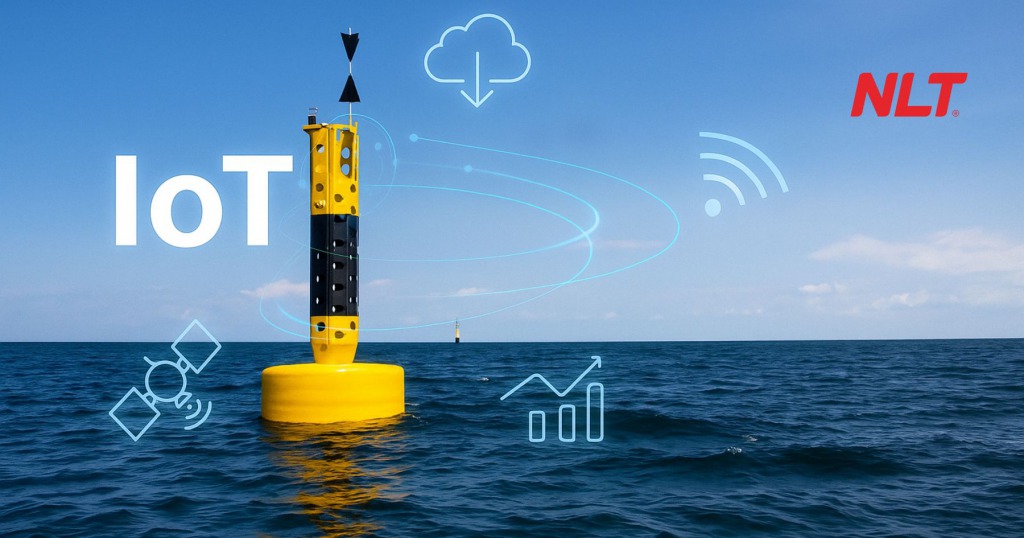
When integrated with GPS positioning and IoT connectivity, each buoy automatically transmits its exact location to the operation center in real time. This allows management units to avoid dispatching inspection vessels while still knowing precisely where each buoy is located, whether it is operating properly, and whether it remains within the designated navigation channel. This is especially important on rivers with high traffic density or in areas with strong currents where buoy drifting is a constant risk.
Drift detection and alerts
One of the most notable advantages of IoT based smart buoys is the ability to automatically detect when a buoy drifts from its original position. The system continuously compares actual coordinates with predefined reference coordinates. If the deviation exceeds the allowable threshold, an alert is immediately sent to the operation center, enabling technical staff to respond promptly and prevent minor issues from escalating into serious accidents. This represents a shift from passive management to proactive governance in inland waterway transportation.
Navigation light operation alerts
Lighting systems on buoys play a critical role in night navigation or low visibility conditions such as fog. With traditional buoys, determining whether the light is functioning relies entirely on periodic manual inspections. In contrast, smart buoys use light sensors to detect illumination status. If the light fails to operate at the designated time, the system records the fault and sends an alert to the server. This not only enhances navigation reliability but also reduces potential risks for passing vessels.
Environmental data transmission (temperature, salinity, current)
Beyond navigation, smart buoys can also serve as effective environmental monitoring devices when equipped with sensors measuring water temperature, salinity, current speed, or depth. This data is collected and transmitted to the server at scheduled intervals, providing authorities with a scientific basis to assess hydrological changes, detect abnormal currents, or identify erosion risks along riverbanks. Such insights support the development of effective and predictive response solutions.
Integration with GIS Cloud digital maps
All data from the smart buoy system is synchronized with GIS Cloud digital maps, forming a comprehensive and intuitive management platform. On the map, managers can easily monitor the status of each buoy, review operational history, receive fault alerts, or generate periodic reports with just a few actions. This integration also enables data sharing among channel management units, inland waterway authorities, and traffic regulation forces, improving coordination efficiency and enabling faster data driven decision making.
Outstanding advantages of IoT enabled buoys compared to traditional buoys
Safer, more accurate, faster response
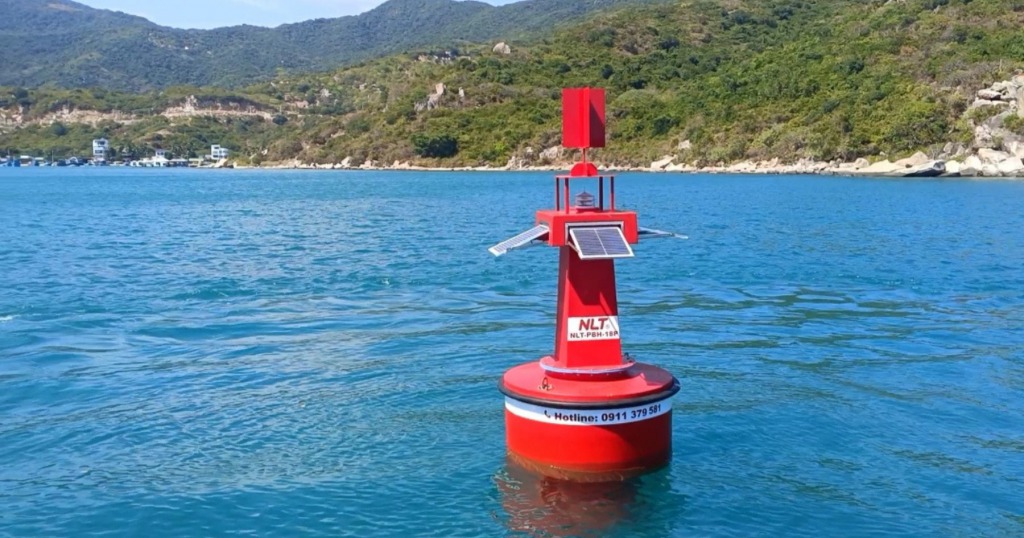
The clear difference between traditional buoys and IoT integrated buoys lies in their ability to automatically monitor and respond promptly to abnormalities. When a buoy drifts from its designated position, the system immediately issues an alert. If the navigation light stops operating, an error signal is sent to the operation center. This significantly reduces the risk of accidents for vessels navigating along the route, especially at night or in adverse weather conditions where visual detection is limited.
Optimized manpower and reduced operating costs
Continuously updated data and automatic fault alerts help reduce manpower pressure, save labor and inspection vessel costs, and improve overall system efficiency. This is an ideal solution in the context of limited local inland waterway management resources.
Centralized data, easier decision making
Data is the most valuable asset in the digital era. With IoT technology systems, all buoy data is systematically stored in real time, forming a centralized database for management, analysis, evaluation, and decision making. Indicators related to position, operation status, equipment condition, and environmental changes are fully recorded, supporting periodic maintenance planning and early risk warnings before issues escalate into incidents.
Increased transparency in monitoring
Another critical benefit is transparency. When all buoy operations are remotely monitored, fully logged, and clearly alerted, managers gain comprehensive control tools while eliminating inaccurate reporting or irresponsible operation.
NLT Group – A provider of smart buoy solutions integrated with IoT technology
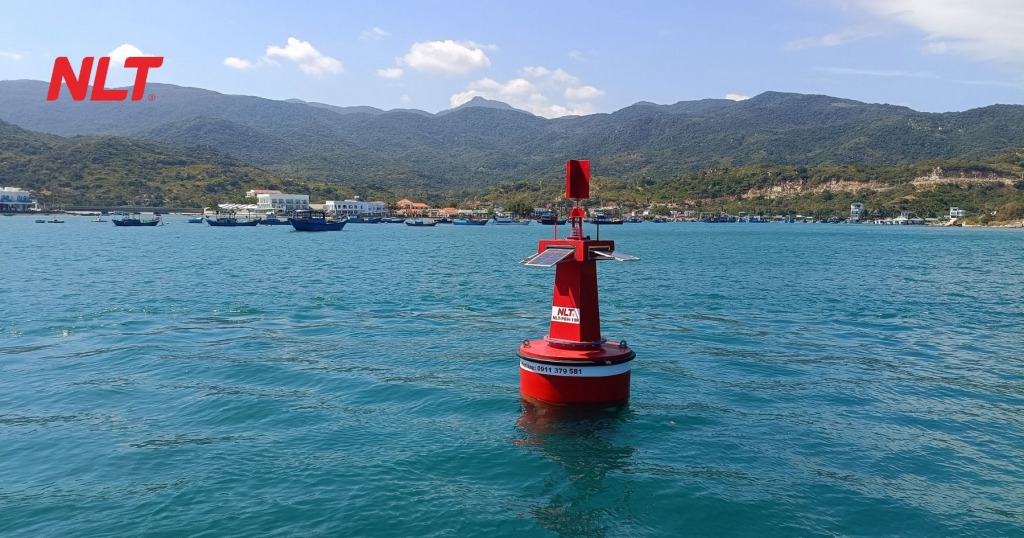
When mentioning pioneering units in deploying IoT technology for inland waterway navigation buoys in Vietnam, NLT Group cannot be overlooked. With a foundation as a company specializing in smart transportation solutions and waterway signaling equipment, NLT Group has successfully developed smart buoy systems integrating GPS positioning sensors and real time data connectivity. With a strong commitment to quality and technology driven development, NLT Group is gradually affirming its leading role in modernizing Vietnam’s inland waterway transportation sector.
Challenges in deploying IoT technology in waterway buoy systems
Uneven network infrastructure
- Many river routes in remote areas or estuaries lack stable 4G or 5G coverage.
- Some regions do not support NB IoT or LPWAN networks, making real time data transmission difficult.
- Flexible combinations of multiple transmission technologies are required to ensure stable connectivity.
High initial investment costs
- Smart buoys typically cost three to five times more than traditional buoys depending on configuration.
- Systems require additional central equipment such as servers, data software platforms, and backup power supplies.
- This becomes a barrier for many local authorities with limited budgets without central level support.
Requirement for synchronization between hardware and software
- If hardware and software are not compatible, systems may encounter operational errors or fail to utilize full functionality.
- Standardization of devices and data protocols is necessary to ensure integration among different solution providers.
Trends and future development directions
Multifunctional buoys combining signaling and data collection
A growing trend in inland waterway transportation is the development of buoys that not only serve navigation purposes but also:
- Collect data on water temperature, salinity, and current flow
- Detect risks of erosion or abnormal tidal conditions
Integrating multiple sensors into a single device helps reduce costs and improve investment efficiency.
Integration of AI for incident analysis and prediction
- Data collected from hundreds of buoys can be analyzed using artificial intelligence.
- AI can predict drifting risks, equipment failures, or channel congestion trends.
Integrating AI into monitoring systems enhances proactive management and minimizes unexpected risks.
Expansion of connectivity within digital waterway transportation ecosystems
The future of inland waterway transportation lies in a connected ecosystem of technological components:
- Digital traffic maps such as GIS Cloud
- Hydrometeorological monitoring stations
- Port operation and dispatch centers
- Alert applications for vessel operators
This is an inevitable direction toward building a modern, sustainable, and intelligent waterway transportation infrastructure.
>> See more: New technologies in navigation buoys: what advantages does solar energy offer?
Conclusion
IoT technology is opening a new direction for inland waterway transportation by turning traditional buoys into smart devices capable of self monitoring and real time data transmission. With the participation of pioneering organizations such as NLT Group and the accelerating trend of infrastructure digitalization, the application of IoT integrated buoys is no longer an option but will become a standard in the near future.
Nam Long Technology Investment Group (NLT Group)
- Hotline: 0911 379 581
- Email: kinhdoanh@nlt-group.com
- TIN: 0313339640
- Address: 43T Ho Van Hue Street, Duc Nhuan Ward, Ho Chi Minh City
Frequently asked questions (FAQ)
1. Can IoT integrated smart buoys operate without electricity:
Yes. The buoys use integrated solar energy and are designed to operate completely independently without connection to the power grid.
2. If there is no 4G coverage in the area, can the buoy still transmit data:
Yes. Many buoy models support NB IoT or LPWAN connectivity standards, allowing data transmission in weak signal conditions with low power consumption.
3. Is the installation cost of smart buoys much higher than traditional buoys:
The initial cost is higher due to integrated sensors and communication modules, but long term efficiency helps reduce maintenance and labor costs while improving operational safety.
4. Where is buoy data stored and is it secure:
Data is transmitted to central software through secure connections and stored on cloud platforms or internal servers depending on the deployed system.
5. Does NLT Group provide warranty and technical support services:
Yes. NLT Group provides a full service package from survey, manufacturing, installation to warranty, maintenance, and operational training in accordance with inland waterway industry standards.