Tiếng Việt
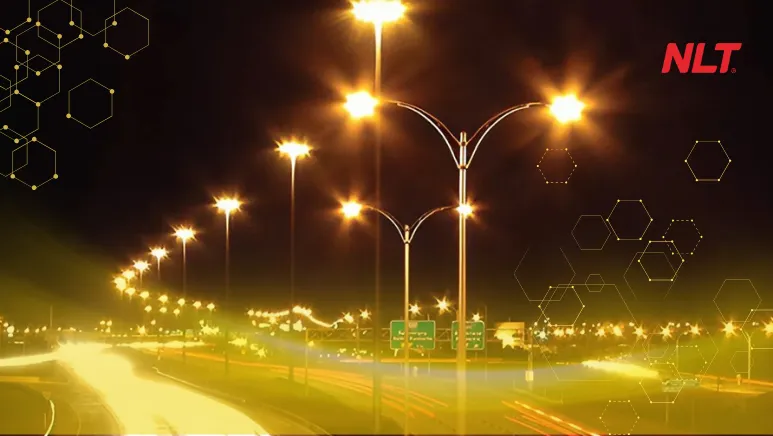
To operate stably, the implementation of IoT smart street lighting systems must be based on a clearly defined set of standards from the very beginning, covering electrical infrastructure, outdoor equipment installation methods, connectivity configuration, and monitoring software. When standards are properly established, design, construction, and acceptance follow a unified framework, minimizing discrepancies between documentation and actual conditions. The following content summarizes the key implementation standards to be understood before deploying a project.
Overview of IoT smart street lighting systems
Definition of IoT smart street lighting systems
IoT smart street lighting systems are public lighting solutions managed centrally through a data connectivity platform. Each luminaire or group of luminaires can be monitored and controlled remotely by schedule, by zone, or according to predefined operational scenarios.
When implementing IoT-oriented smart street lighting systems for road lighting, electrical infrastructure, connectivity, and management data are organized in a synchronized manner to ensure stable operation and facilitate future expansion.
Key characteristics of IoT smart street lighting systems
The system is structured around centralized management and data-driven operation, allowing clearer control along road sections rather than manual handling of individual points. From this foundation, the system typically demonstrates the following characteristics:
- Remote control by schedule and by zone.
- Automation based on predefined operational scenarios.
- Early fault detection and rapid fault localization.
- Feature expansion aligned with project objectives through appropriate sensors.
- Storage of operational data to support asset management and maintenance.
Benefits of implementing IoT smart street lighting systems
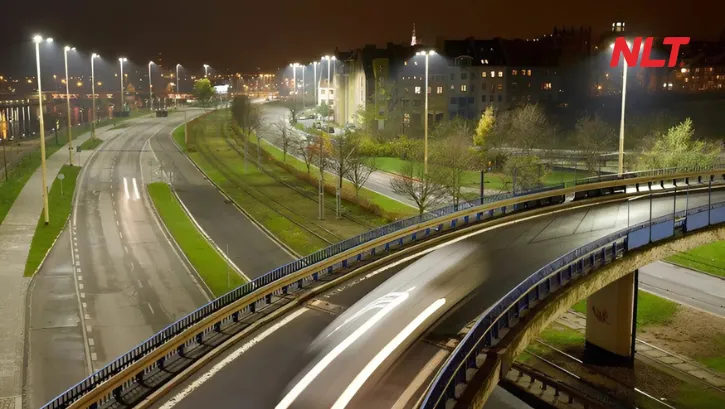
When IoT smart street lighting systems are implemented according to standards and synchronized from the beginning, acceptance becomes easier and operational stability improves. With scenario-based control and centralized monitoring, the benefits are clearly reflected in the following aspects:
- Reduced energy consumption through dimming by time period and by zone.
- Shortened fault response time through alerts and precise fault localization.
- Improved lighting quality and enhanced traffic safety at night.
- Clearer asset management through operational data and history.
- Easier expansion when increasing route scale and management zones.
>> See more: 7 key benefits of smart street lighting technology
Objectives of implementing IoT smart street lighting systems
Adequate brightness, uniform illumination, and glare control
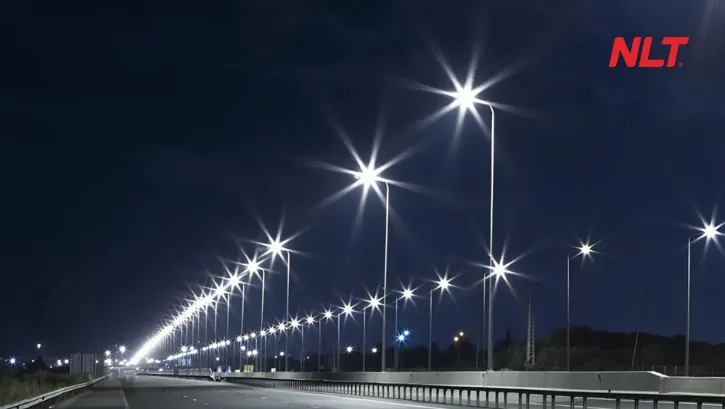
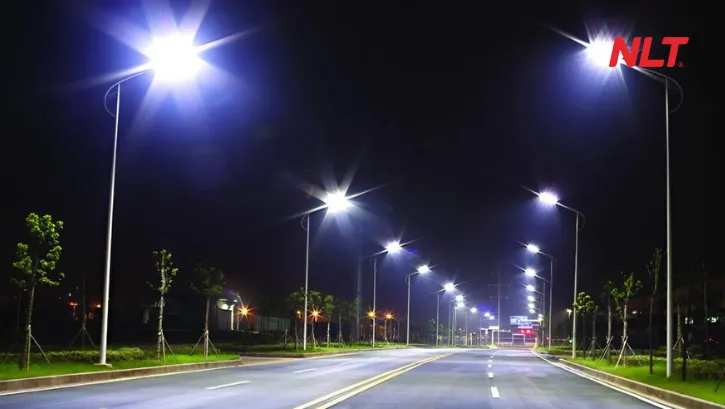
When implementing smart street lighting systems, the primary objective is to ensure that the design is accurately realized on site, achieving the required brightness level, uniform light distribution, and glare control. Therefore, strict control is required over installation position, pole height, outreach arm length, lighting direction, and power configuration for each road segment, as these factors directly determine actual lighting quality.
Operation by time schedule and by zone
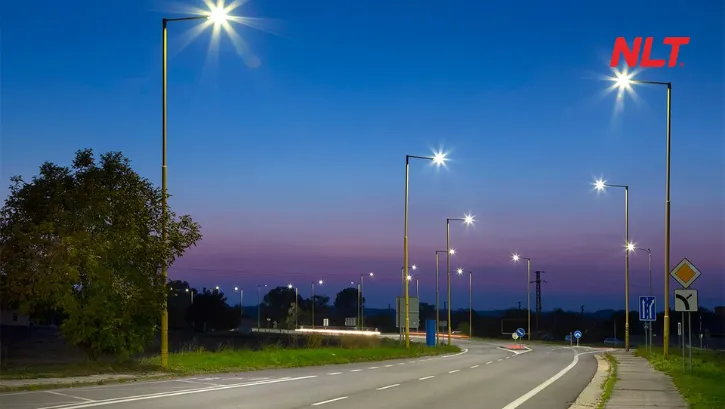
After installation, the system must operate according to predefined scenarios and support zoning by route and by area. In implementing smart street lighting systems, control zoning, dimming schedules, and control feedback must be verified during the commissioning phase so that investors can operate the system flexibly according to real-world requirements.
Monitoring, alerting, and rapid fault handling
Another critical objective is accurate data transmission and correct fault alerts. Therefore, during implementation, each luminaire, electrical cabinet, and control device must be clearly identified, stably connected, and configured to trigger alerts according to the correct scenarios. This enables rapid fault localization by individual point or cluster, reducing manual inspection time.
Scalability and synchronization as project scale increases
Many projects are deployed in phases, so implementation must be standardized from the outset to avoid system inconsistency during expansion. For IoT smart street lighting systems, electrical infrastructure, device naming conventions, control configurations, and operational procedures must be unified, ensuring that adding more luminaires remains synchronized and minimizes the need for reconfiguration.
Standards for implementing IoT smart street lighting systems
Connectivity and appropriate communication protocols
In the implementation of IoT smart street lighting systems, connectivity standards must ensure stable data transmission and safe operation during network interruptions. Key requirements include:
- A suitable connectivity model by individual luminaire, by cabinet or cluster, or by management zone.
- Site surveys covering signal coverage, interference points, and on-site signal quality testing.
- On and off control and dimming functions with clear status feedback.
- Connectivity stability testing across different time periods.
- Devices equipped with local operating schedules to ensure lighting continuity during temporary connection loss.
Sensor integration aligned with operational objectives
Sensors used in IoT smart street lighting implementation must be selected based on actual operational needs, avoiding excessive or unnecessary installation. Standards should clearly define:
- The list of sensors required for monitoring, alerting, or automation.
- Installation locations that ensure water resistance, dust protection, vibration resistance, and ease of maintenance.
- Data conventions, transmission frequency, and alert trigger thresholds.
- Testing procedures to ensure correct data display and accurate alert operation.
Centralized monitoring and control software
Software is the primary operational tool after implementation. For IoT smart street lighting systems, the software must provide:
- Device management by location, route, and zone with clear identification codes.
- Real-time monitoring of online status, offline status, and device faults.
- On and off control and dimming by schedule, by group, and by operational scenarios.
- Alert classification by severity level and handling purpose.
- Reports on energy consumption, control history, and operational incidents.
- User role management and operation logs for traceability when required.
System safety and data security
In implementing IoT smart street lighting systems, safety must be controlled both electrically and in terms of system access:
- Role-based access control for operation, monitoring, and administration.
- Complete handover of user accounts, connection configurations, and device data.
- Prevention of unauthorized direct access to cabinets, control devices, and management systems.
- Logging of login activity, configuration changes, and control operations.
Energy optimization and operational cost efficiency
Operational optimization is effective only when configurations are correct and verified on site. During implementation, it is necessary to ensure:
- Dimming principles based on time periods and usage zones.
- Configuration of luminaire groups and route groups aligned with actual site conditions.
- Measurement and verification of lighting levels after commissioning to cross-check software settings against field conditions.
- Energy consumption reports by route as a basis for adjusting operational scenarios.
Scalability and future integration capability
Scalability depends on early standardization during implementation of IoT smart street lighting systems:
- Naming conventions and device coding by route, pole, or zone.
- Clear and non-overlapping management zoning structures.
- Complete handover data to facilitate integration when project scale is expanded.
Operational stability and reliability
System stability is strongly influenced by on-site implementation quality. Standards should emphasize:
- Waterproof connections implemented correctly and designed for easy inspection.
- Electrical cabinets with moisture protection, tidy wiring, and minimized interference and oxidation.
- Proper grounding, lightning protection, and overvoltage protection in compliance with standards.
- Full testing of all operational and alert scenarios before acceptance.
Compliance with lighting standards and electrical safety requirements
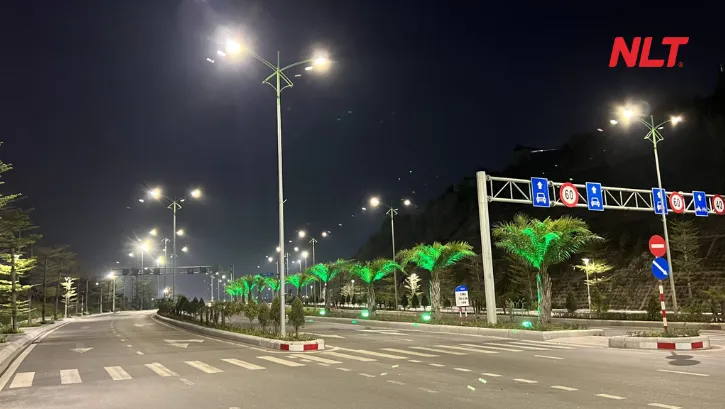
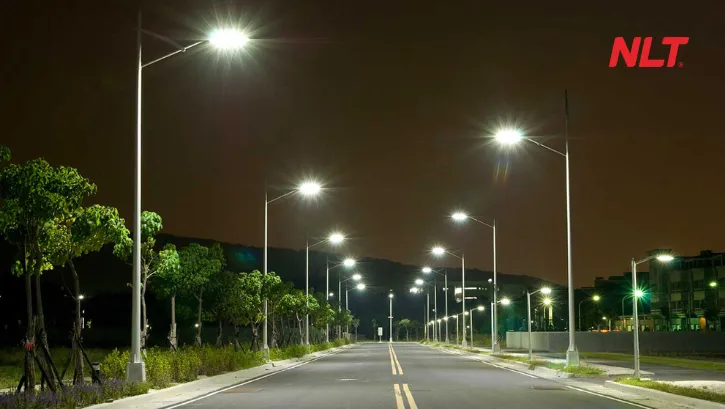
In implementing IoT smart street lighting systems, both design requirements and current electrical safety standards must be reviewed concurrently to ensure lighting quality and stable real-world operation, including:
- Lighting performance criteria in design documents such as illuminance, uniformity, and glare control to ensure traffic safety along the route.
- Electrical installation requirements for outdoor lighting areas, complying with low-voltage electrical installation standards applicable to outdoor and public lighting under TCVN 7447-7-714 to control power supply layout, protection measures, and environmental suitability.
- Electrical safety regulations during installation, including correct wiring according to schematics, proper insulation, overcurrent protection, clear phase separation, and pre-energization inspection to reduce operational risks.
- Grounding systems designed, installed, and tested in accordance with grounding standards for structures and equipment under TCVN 9358:2012 to reduce leakage risk and enhance operational safety.
- Lightning protection and overvoltage protection calculated and deployed in a coordinated manner along the route to limit damage from surges and lightning induction under TCVN 9385:2012 especially for open areas or long routes.
- Outdoor equipment requirements suitable for the operating environment, including dust and water protection, corrosion resistance, and watertight integrity at junction boxes and cable entry points.
>> See more: Urban lighting standards for public spaces to help you define the right criteria from the outset
Core components in implementing IoT smart street lighting systems
Smart LED luminaires
LED luminaires provide direct illumination along the roadway, featuring high efficiency and a service life suitable for outdoor operation. What differentiates LED luminaires in an IoT system is their ability to work with control units to enable dimming by schedule or by zone, allowing lighting to be organized more flexibly based on actual usage needs.
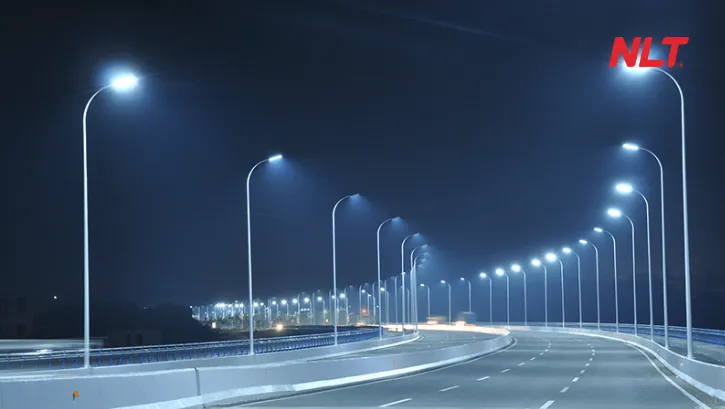
When implementing IoT smart street lighting systems, selecting luminaires with appropriate optics and stable light quality directly determines uniformity and glare control on the road surface.
>> See more: Ultra energy-saving LED lighting ranges by NLT Group
Central control unit
The control unit manages and operates the lighting system by receiving status data from field devices and executing control commands based on predefined configurations. With a control unit in place, the system can operate by groups, routes, or zones rather than relying on manual on and off control for the entire line.
In IoT smart street lighting implementation, the control unit also serves as the foundation for monitoring, logging alerts, and enabling faster fault localization during actual operation.
>> See more: Why is the control cabinet a decisive component in public lighting operation?
Smart sensors
Sensors provide the system with real-world data to support monitoring and automation aligned with operational objectives. Depending on project requirements, sensors may track environmental conditions or on-site operational status, thereby triggering alerts or supporting dimming scenario adjustments.
For IoT smart street lighting implementation, sensors are most effective when data is correctly transmitted to the management system and clearly displayed for the operating unit.
Management software
Management software is the centralized platform for monitoring and control after the implementation of IoT smart street lighting systems is completed. The software enables route-based status monitoring, operational scheduling, brightness adjustment by scenarios, and receipt of fault alerts.
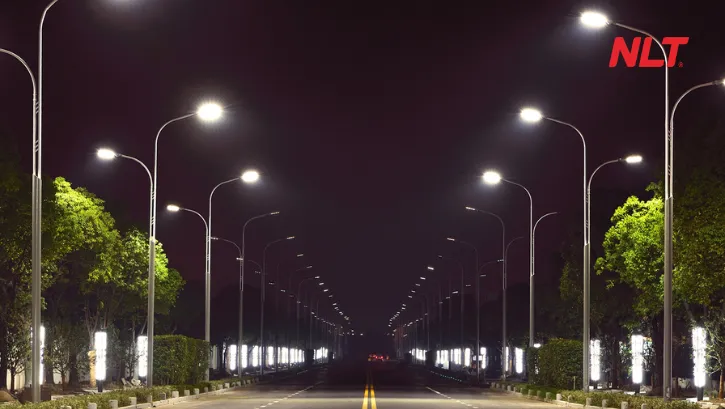
At the same time, the software delivers operational reports such as energy consumption, device status, and alert history, allowing maintenance activities to be data-driven rather than relying on scattered manual inspections.
Communication system
The communication system is the data pathway connecting luminaires, control units, sensors, and management software, ensuring stable transmission of control commands and operational data. Depending on deployment conditions, different connectivity solutions may be applied to suit coverage areas and roadway characteristics.
In IoT smart street lighting implementation, stable communication determines control latency, continuous status updates, and the long-term reliability of alerts during operation.
Implementation and construction process for smart IoT street lighting systems
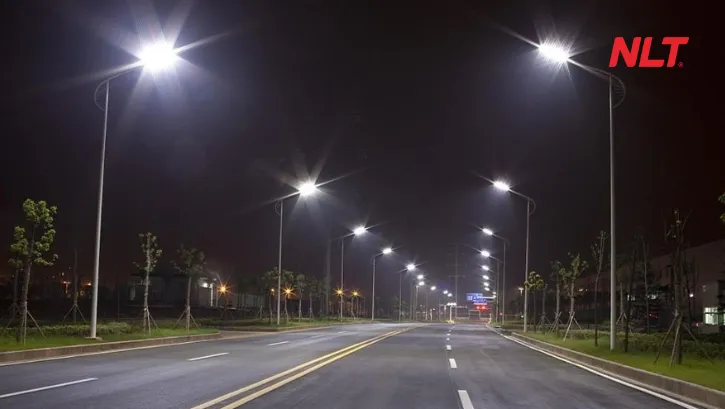
Initial survey and consultation
Before implementing a smart IoT street lighting system, a comprehensive site survey is required to ensure the design aligns with actual conditions and to limit variations during construction. Survey contents typically include:
- Existing route conditions, obstructions, curved or sloped sections, and areas requiring prioritized lighting.
- Available infrastructure such as power supply sources, electrical cabinets, pole locations, cable routes, and site reinstatement conditions.
- Operating environment factors such as flooding, dust, vibration, or saline exposure to define outdoor durability requirements.
- Operational requirements by area, dimming schedules, and incident handling procedures.
- IoT deployment scope by individual luminaire or by cabinet, including monitoring and alert requirements.
Lighting system design
To ensure accurate implementation and verification, the design documentation for smart street lighting system construction should clearly present the following elements:
- Luminaire layout, pole spacing, mounting height, outreach arms, and aiming angles to achieve sufficient and uniform illumination while limiting glare.
- Selection of equipment configurations suitable for the route environment and dimming objectives.
- Electrical diagrams, protective devices, grounding systems, lightning protection, and surge protection.
- Control zoning, luminaire grouping principles, device identification codes, and status feedback requirements.
- Acceptance criteria including lighting measurements and control and alert testing.
Construction planning
A construction plan helps control progress and quality at each stage, avoiding rework after completion. When planning the construction of a smart IoT street lighting system, the following items should be standardized:
- Phased schedule covering foundation works, pole erection, cable installation, luminaire installation, cabinet installation, IoT configuration, and commissioning.
- Incoming material checklists, waterproofing requirements, and sample testing records.
- Equipment management conventions by route, area, and control group.
- Safety measures, barriers, and site reinstatement plans.
Implementation of the smart IoT street lighting system
The construction phase should follow a clear sequence to facilitate sectional acceptance and reduce repetitive errors:
- Constructing foundations and erecting poles at correct alignment, elevation, and verticality, with proper site reinstatement.
- Installing cables, ensuring watertight connections, route marking, and junction point management.
- Installing luminaires and adjusting aiming angles by route segment to minimize light spill and glare.
- Installing cabinets and control equipment with moisture protection, orderly wiring, and clear circuit labeling.
- Synchronizing device codes, physical locations, and control groups for integration into the management software.
Configuration and operational testing
After installation, testing based on real operating scenarios is required to finalize IoT system quality before acceptance. For smart street lighting system construction, key steps include:
- Checking online and offline connectivity by area and verifying data transmission stability.
- Configuring control groups and dimming schedules by time and by area.
- Testing alerts, verifying control feedback, and confirming device status responses.
- Conducting on-site lighting measurements by route segment and making adjustments if necessary.
- Recording commissioning logs as a basis for acceptance.
Handover and maintenance
Handover must include complete documentation and data to ensure stable operation and convenient maintenance after smart street lighting system construction:
- As-built documentation for routes, cabinets, cable runs, and installation locations.
- Equipment lists by code, location, control group, and applied dimming configurations.
- Acceptance records for electrical systems, grounding, lightning protection, lighting measurements, and control and alert testing.
- Operating manuals, common incident handling procedures, and periodic maintenance plans.
>> See more: Smart urban lighting design and construction process from survey to operational handover
Common mistakes in implementing smart street lighting systems
Water ingress at connection points causing flickering
Flickering issues often appear after rainfall or in humid areas when water penetrates connection points and causes unstable electrical circuits. During smart street lighting system implementation, common causes include:
- Cable joints or luminaire cable entries not properly waterproofed, with moisture protection applied incorrectly.
- Water ingress leading to oxidation of terminals, increasing contact resistance and causing repeated flickering and fault alerts.
- Junction boxes installed in areas prone to water accumulation without adequate shielding or drainage solutions.
Inadequate grounding and surge protection
On long routes, this group of issues may cause widespread damage after storms due to electrical surges and lightning propagation. Therefore, in smart street lighting system implementation, the following points must be strictly controlled:
- Grounding systems not consistently implemented along the route or grounding resistance failing to meet requirements.
- Surge protection devices missing or installed in incorrect locations, preventing effective suppression of grid-induced surges.
- Insufficient testing prior to acceptance, resulting in issues only becoming apparent during actual incidents.
Incorrect aiming angles causing localized dark spots or glare
Many routes appear to have sufficient installed power, yet lighting remains uneven, with localized dark areas or glare due to incorrect aiming angles compared to the design. In smart street lighting system implementation, common issues include:
- Incorrect beam direction or tilt angle, causing light distribution to deviate from the intended roadway surface.
- Minor misalignment in outreach arms or mounting positions, creating noticeable differences on site.
- Lack of inspection along individual route segments, especially at curves, slopes, or areas obstructed by objects blocking light.

Unclear zoning in control configuration
Systems equipped with IoT may still operate inefficiently due to grouping and scheduling that do not reflect actual site conditions. To ensure effective smart street lighting system implementation, the following issues should be avoided:
- Overlapping control groups with naming conventions not aligned by route or management zone.
- Dimming schedules incorrectly applied to groups, causing priority areas to be dimmed at inappropriate times.
- Lack of standardized zoning conventions from the outset, resulting in time-consuming fault localization.
Lack of device code management complicating maintenance
This group of issues may not cause immediate malfunctions but will slow maintenance and increase confusion over time. In smart street lighting system implementation, this typically occurs when:
- Device codes do not match actual installation locations, making it difficult to identify faults reported by software along the route.
- Devices are replaced without updating system data, leading to discrepancies in operational history and alerts.
- Absence of a device inventory by route and zone, resulting in inconsistent periodic maintenance planning.
Acceptance checklist for smart street lighting system implementation
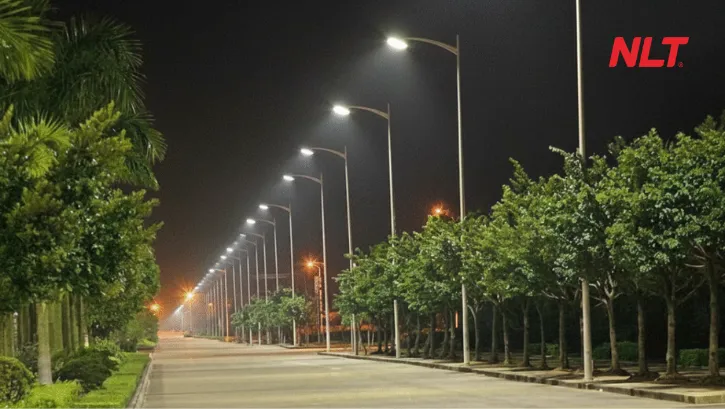
Poles, foundations, and installation safety
- Foundations constructed at correct locations, elevations, and dimensions per design documents, with tidy site restoration and no safety hazards.
- Poles erected vertically, outreach arms oriented correctly, secure connections, and no abnormal vibration.
- Bolts, nuts, base plates, and technical box covers complete and tightened to required torque.
- Signage, barriers, working-at-height procedures, and traffic safety measures properly implemented.
Electrical systems, grounding, lightning protection, and surge protection
- Connections made according to diagrams, clear circuit labeling, no leakage, and no abnormal heat generation.
- Grounding systems implemented consistently along the route, with measured and recorded grounding resistance.
- Lightning and surge protection devices installed at correct locations with correct specifications and verified operational status.
- Electrical cabinets dry, moisture-resistant, neatly wired, and safe for operational handling.
On-site lighting measurements by route segment
- Measurement of illuminance and uniformity at representative route segments according to acceptance plans.
- Review of localized dark spots, uneven lighting, and glare risks, with locations recorded for adjustment.
- Comparison of measurement results with design criteria and investor requirements.
- Preparation of measurement records including locations, measurement times, and operating conditions.
Testing of connectivity, control, and alerts
- Devices correctly displayed as online or offline with accurate codes, locations, and management zones.
- On and off control and dimming by schedule and group operating stably with clear status feedback.
- Alerts correctly displayed for fault types such as loss of connection, device faults, cabinet faults, or sensor-based alerts where applicable.
- Control logs, alert histories, and consumption data recorded for future monitoring.
As-built documentation and maintenance guidelines
- As-built drawings for poles, cable routes, cabinets, and connection diagrams updated to reflect actual installation.
- Device inventory by code and installation location, including control groups and configuration details.
- Acceptance records for mechanical, electrical, lighting, and IoT components, including commissioning logs where applicable.
Current smart IoT street lighting solutions
Individual luminaire control via IoT
In smart lighting, this solution enables control down to each individual luminaire, making it suitable for projects that require detailed monitoring and fast fault localization. During smart street lighting system implementation, this approach is typically organized as follows:
- Each luminaire is equipped with a controller or connection node, updating its status in real time.
- On and off control and dimming are configured by schedule or by area directly through the software platform.
- Fault alerts are generated for each luminaire, allowing precise identification of the location requiring intervention.
- Operational data is stored to support maintenance activities and asset management.
Group-based luminaire control via IoT
This solution manages lighting by route or group, optimizing deployment costs and simplifying operation for long road sections. In smart street lighting system implementation, group-based control typically includes the following characteristics:
- Control is centralized at cabinets or clusters, with operating zones defined by road sections or management areas.
- Operating schedules can be adjusted by time of day, season, or actual usage demand.
- Cluster-level status monitoring and zoned fault alerts support fast response and corrective actions.
- Suitable for projects requiring rapid deployment and standardized area-based management.
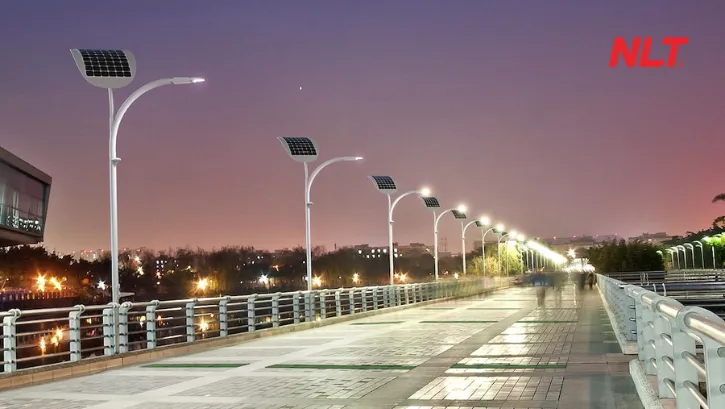
Solar-powered lighting systems
Solar-powered luminaires are suitable for areas where grid power is difficult to access, new roads, internal routes, or locations requiring quick installation. In smart street lighting system implementation, this solution is often considered when:
- Reducing dependence on electrical cable infrastructure and prioritizing standalone, point-based installation.
- Optimizing operating costs in areas with limited on-site management.
- Integrating IoT to monitor battery status, charging performance, and fault alerts.
- Applicable in areas with good solar exposure and stable lighting requirements based on predefined scenarios.
>> See more: 5 key things to know about solar lighting before making an installation decision
Individual luminaire dimming
Individual luminaire dimming focuses on optimizing energy consumption based on operating scenarios and is commonly applied to routes with varying traffic volumes by time of day. During smart street lighting system implementation, dimming is typically deployed as follows:
- Establishing brightness levels for peak and off-peak time periods.
- Flexible adjustment by area to avoid uniform dimming across the entire route.
- Reducing power consumption and extending luminaire lifespan by operating at appropriate power levels.
- Combining with IoT control to monitor dimming effectiveness by individual route segments.
Implementing a smart street lighting system is not simply about “installing luminaires and connecting IoT,” but rather about standardized coordination across optical design, electrical infrastructure, outdoor wiring, control configuration, and management data. When standards are correctly defined from the outset and closely aligned with on-site conditions, the lighting route will achieve the required illumination levels, operate clearly by area, provide rapid fault alerts, and remain ready for expansion as the project scale increases.
If you are looking to implement a smart street lighting system through a turnkey approach covering consultation, design, installation, commissioning, and operational handover, please contact NLT Group for route surveying, configuration proposals aligned with project objectives, and development of implementation standards tailored to your project needs.
Nam Long Technology Investment Group (NLT Group)
- Hotline: 0911 379 581
- Email: kinhdoanh@nlt-group.com
- TIN: 0313339640
- Address: 43T Ho Van Hue Street, Duc Nhuan Ward, Ho Chi Minh City