Tiếng Việt
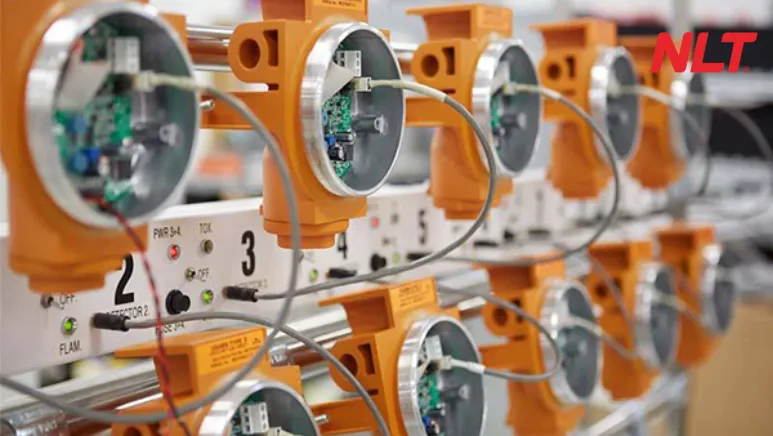
Smart gas sensors are an essential solution for industrial parks and high-rise buildings, environments where even a minor gas leak can lead to fire, explosion, or serious operational disruption. With high detection accuracy, multi-level alerts, and real-time IoT monitoring, NLT’s system enables businesses to identify risks early, ensure safety, and maintain stable, uninterrupted operations.
What is a smart gas sensor? How is it different from a conventional gas detector?
Definition of a smart gas sensor
A smart gas sensor is a device that detects gas leaks using high-sensitivity sensing technology, combined with IoT connectivity and real-time data transmission to a centralized monitoring system. Beyond on-site alarms, the device sends alerts through internal networks or cloud platforms, allowing enterprises to monitor remotely, respond promptly, and automatically activate safety scenarios when needed.
This type of sensor is particularly suitable for environments requiring continuous operation, such as factories, production plants, technical rooms, and basements of high-rise buildings.
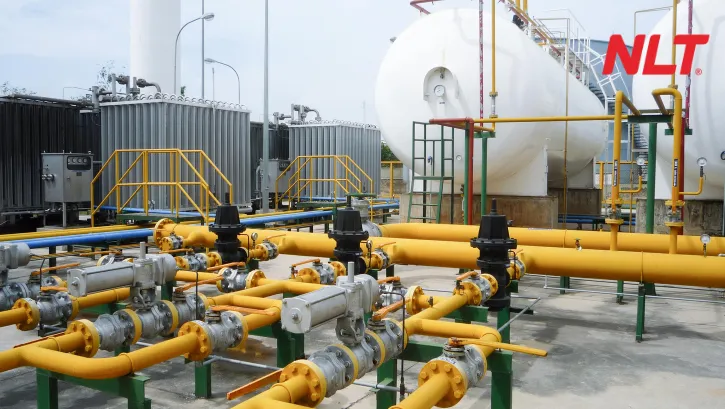
Key differences between smart gas sensors and traditional gas detectors
Although both serve the purpose of gas leak detection, smart gas sensors provide significantly more advanced monitoring and alert capabilities compared to conventional gas detectors:
| Criteria | Smart gas sensor | Traditional gas detector |
| Operating principle | Continuous monitoring with high sensitivity; detects even minor leaks | Triggers an alarm only when gas concentration exceeds a fixed threshold |
| Alert capability | Multi-level alerts: audible/visual alarms, IoT notifications, and signals sent to a central monitoring system | On-site alerts only via buzzer/light |
| Connectivity | IoT/Cloud-enabled with real-time data transmission | No connectivity; no data transmission |
| Incident response | Supports automatic gas valve shut-off and activation of safety protocols | No automatic response; fully dependent on human intervention |
| Monitoring scope | Centralized monitoring of the entire system from a control center | Manual monitoring with standalone, independent devices |
| Suitable applications | Factories, industrial parks, technical buildings, and systems requiring continuous operation | Small-scale, low-risk areas without centralized monitoring requirements |
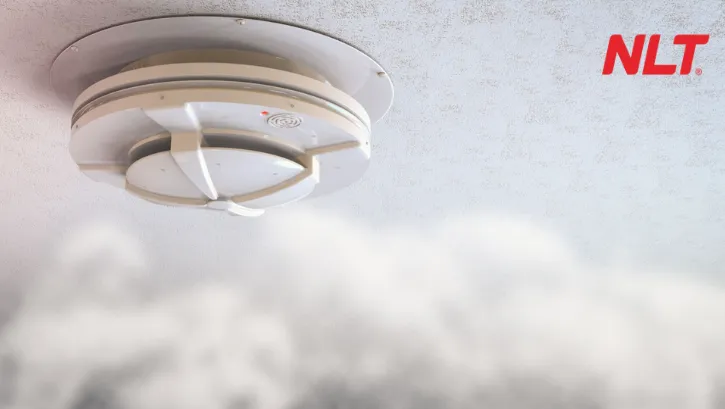
As a result, smart gas sensors are far more suitable for modern facilities that require continuous monitoring and rapid response to gas leakage risks.
Why should industrial parks and high-rise buildings install NLT Group’s smart gas sensors?
High-accuracy sensors with multi-level alerts
NLT Group’s smart gas sensors use highly sensitive probes that can quickly detect even slight changes in gas concentration. When abnormalities are identified, the system activates multi-level alerts via audible alarms, indicator lights, and signals sent to the central monitoring system, enabling operators to receive information immediately.
4.0 monitoring system – automated 24/7 alerts
Built on IoT and Cloud platforms, NLT’s Gas Monitoring 4.0 system operates continuously 24/7 and displays real-time device status. All alerts are automatically recorded and transmitted, allowing timely response even when no technicians are on site.
Proactive early leak detection to minimize incident risks
With continuous measurement and real-time data updates, the sensors can detect gas leaks at an early stage—before gas accumulates to levels that could cause fire or explosion. Early detection helps businesses reduce technical risks and significantly enhance operational safety.

Protecting people, assets, and uninterrupted operations
The system helps prevent hazardous situations, limits fire and explosion risks, and protects equipment and infrastructure. As a result, production and building operations remain uninterrupted, meeting the strict continuity requirements of industrial environments.
Supporting compliance with safety, fire prevention, and technical standards
NLT Group’s smart gas sensor solutions fully meet safety monitoring requirements, fire prevention regulations, and technical standards for gas-using facilities. Installing this system helps enterprises pass inspections, evaluations, and safety acceptance processes more smoothly.
NLT masters core technology – customized deployment for each enterprise
NLT Group has full control over core IoT, sensor, and monitoring platform technologies, along with extensive experience deploying smart gas systems across various facility models. Based on each client’s operational characteristics, NLT designs appropriate sensor configurations to ensure long-term, stable system performance.
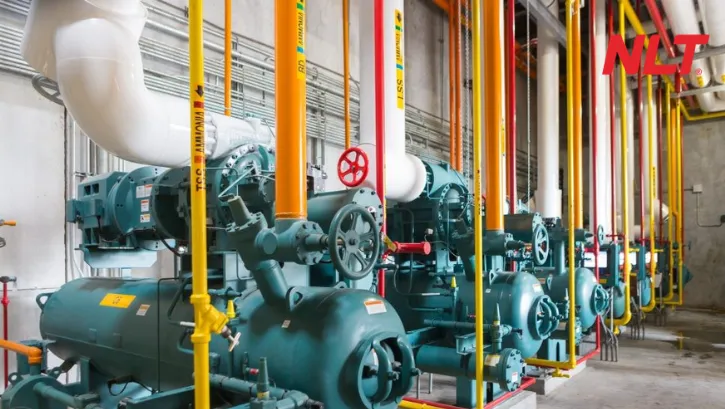
What makes NLT Group’s smart gas sensor solution stand out?
NLT Group’s smart gas sensor solution is developed using high-sensitivity sensing technology combined with IoT and Cloud platforms, enabling continuous monitoring, timely alerts, and comprehensive gas system safety. Each project is tailored to actual operational needs, creating a stable, accurate monitoring architecture aligned with facility scale.
Architecture of the NLT Group smart gas sensor system
The system follows a centralized monitoring model, with sensors installed at high-risk leakage points and connected directly to control cabinets or monitoring platforms. Data is continuously updated, enabling early anomaly detection and minimizing response time during incidents.
Flexible integration with existing building or factory systems
NLT’s solution easily integrates with existing technical systems such as central control cabinets, fire protection systems, building management systems (BMS), and auxiliary alarm devices. This integration helps optimize investment costs and shorten deployment timelines.
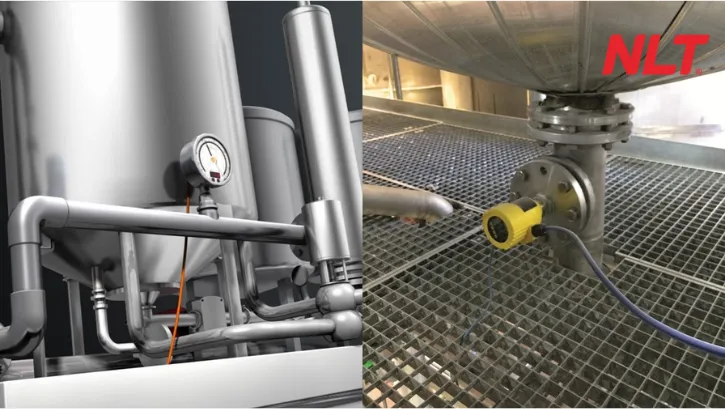
Designed for industrial environments and high-rise buildings
Sensors are selected based on specific application areas, including production zones, gas storage areas, technical rooms, basements, and high-risk explosion zones. The devices operate reliably under harsh conditions, ensuring durability and accuracy throughout long-term operation.
NLT Group’s end-to-end support: consulting, design, installation, and maintenance
NLT Group conducts site surveys, calculates sensor configurations, handles installation, and provides operational guidance. Systems are tested, commissioned, and calibrated in accordance with safety standards. In addition, NLT delivers periodic maintenance services to ensure long-term stability and ongoing compliance with safety requirements.
Implementation process for NLT Group’s smart gas sensor system
Step 1 – Site survey and gas risk assessment
NLT’s technical team conducts on-site surveys to assess current conditions, identify potential leakage points, and evaluate the risk level of each area. The survey data serves as the foundation for designing an appropriate sensor configuration.
Step 2 – Proposing a smart gas sensor system configuration
Based on the analysis results, NLT selects suitable sensor types, quantities, installation locations, and IoT connectivity methods. The configuration is designed to optimize costs while fully meeting required safety standards.
Step 3 – Installation and integration with existing systems
Sensors are installed in compliance with technical standards and integrated with related systems such as control cabinets, fire protection systems, BMS, or on-site alarm systems. All connections are thoroughly tested to ensure stable operation.
Step 4 – Testing, acceptance, documentation handover, and training
NLT conducts full system testing and simulates gas leakage scenarios to evaluate alert performance. After acceptance, the client receives complete technical documentation along with detailed operation and management guidance.
Step 5 – Periodic maintenance, calibration, and long-term operational support
The system is maintained and calibrated regularly to ensure sensor accuracy and reliable alerts. NLT accompanies clients throughout the operation lifecycle, providing technical support whenever needed.
What should businesses prepare before deploying a smart gas sensor system?
Review the existing gas system
Businesses should reassess pipelines, valves, gas supply and storage areas, and locations with previous incidents. This review helps identify high-risk points, enabling NLT Group to propose an appropriate sensor configuration.
Identify priority installation areas
High-risk areas should be prioritized, such as technical rooms, gas storage areas, basements, zones with heat-generating equipment, or areas with high gas flow. Prioritization helps optimize costs and maximize monitoring effectiveness from the initial phase.
Plan an investment budget by phases
Businesses should define a suitable budget based on the current gas system and risk levels of each area. Depending on needs, deployment can be carried out in 2–3 phases instead of installing the entire system at once.
In the initial phase, NLT Group typically recommends installing sensors in the highest-risk areas (basements, gas storage areas, heating zones, or main pipelines). Subsequent phases expand coverage to secondary areas, technical rooms, or pipeline junctions.
The entire system is designed with an open architecture, allowing additional sensors, control cabinet upgrades, or IoT expansion without modifying or disrupting the existing operational system.

With extensive experience implementing Gas Monitoring 4.0 systems for factories, industrial parks, and technical buildings, NLT Group delivers smart gas sensor solutions that meet safety standards, operate reliably, and suit each facility model. The system is built on an open architecture, ensuring seamless integration and continuous monitoring throughout its lifecycle.
If your business is looking for an accurate, safe, and reliable gas leakage monitoring solution, contact NLT Group for expert consultation and the most suitable system configuration for your project.
Nam Long Technology Investment Group (NLT Group)
- Hotline: 0911 379 581
- Email: kinhdoanh@nlt-group.com
- TIN: 0313339640
- Address: 43T Ho Van Hue Street, Duc Nhuan Ward, Ho Chi Minh City